

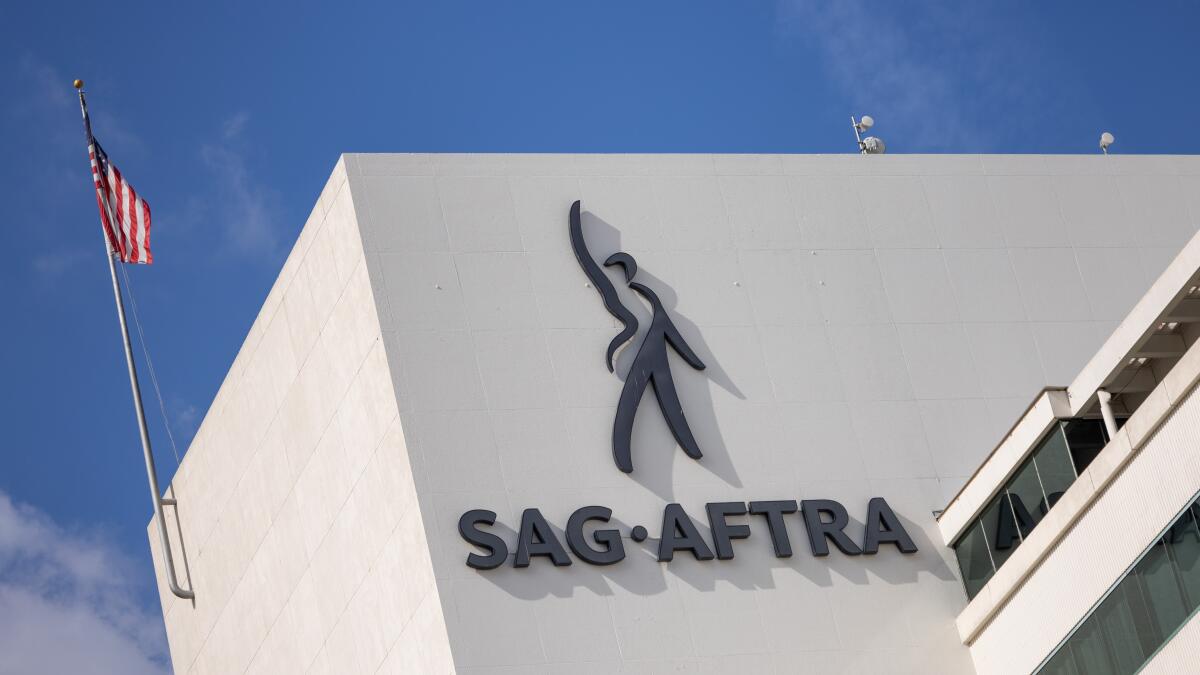
SAG-AFTRA Enters Crucial Leadership Election
Hollywood’s performers union, SAG-AFTRA, is at a crossroads as it prepares to elect a new president during a time of great uncertainty. The union, representing 160,000 members, is still reeling from the 118-day strike of 2023 and facing pressing issues including the rise of artificial intelligence, the decline of in-state film production, and escalating healthcare costs.
Sean Astin, a familiar face thanks to his roles in “The Lord of the Rings” and “Rudy”, is seeking to succeed Fran Drescher as president. His opponent, Chuck Slavin, is a Massachusetts-based background actor and union activist. The election, with results to be announced on September 12, could chart the union’s course for years to come.
Astin’s Strategy: Unity and Negotiation
Astin, 54, enters the race with considerable name recognition and backing from two previously competing factions within the union. His running mate is actress Michelle Hurd, known for her work in “Star Trek: Picard” and “Anyone But You.” Astin emphasizes conflict resolution and collaborative negotiation as his core strengths.
“The greatest positive I have is in conflict resolution,” Astin said. “I’m very good at helping people see issues from the other person’s point of view.”
Astin aims to build on the contract gains secured by Drescher, who led the union through its last strike. Under her leadership, the union won protections around AI and streaming bonuses. However, many members feel more work needs to be done, especially as AI technology continues to evolve rapidly.
Slavin’s Platform: Aggressive Reform and Transparency
Chuck Slavin, 46, presents himself as a grassroots candidate motivated to bring stronger leadership to SAG-AFTRA. A longtime union member who rose through the ranks on the New England board, Slavin is running as an independent alongside Peter Antico, a stunt coordinator and actor.
Slavin has pledged to take a firmer stance with studios, even suggesting a strike authorization vote before negotiations begin. “I wouldn’t go in with a plushie like Fran did,” he said, referencing Drescher’s symbolic heart-shaped toy. “I would go in with a strike authorization.”
His campaign has not been without controversy. Past social media posts have drawn criticism, but Slavin has defended them as satire. “I’ve done some stand-up comedy and political satire,” he said. “Those jokes obviously didn’t land.”
AI, Streaming and Runaway Production
Both candidates agree that artificial intelligence represents a growing threat to performers’ livelihoods. Astin sees the current AI protections as a baseline from which to strengthen future agreements. He supports the use of watermarking technology to ensure actors are compensated when their work is used to train AI models.
Meanwhile, Slavin argues the current deal conceded too much, too soon. He voted against the 2023 contract, citing insufficient AI safeguards. He also voiced support for compensating background actors when their images are digitally scanned and reused.
The issue of runaway production — when studios film projects outside the U.S. for cost savings — is another sticking point. Slavin criticized Astin for participating in “The Lord of the Rings”, which was filmed in New Zealand under nonunion conditions. Astin countered that the production didn’t break union rules at the time and emphasized the need to organize more nonunion work into union jurisdiction.
Union Future and Industry Outlook
Astin and Slavin both advocate for expanding union jurisdiction, increasing residuals from streaming platforms, and lobbying government officials to keep productions in the U.S. They also support converting more nonunion productions into union-covered projects.
Astin acknowledges criticism that he can appear temperamental but says he’s working to address it. He has declined to participate in a debate, citing what he calls the “toxicity” of his opponent’s campaign. Slavin has called that response a form of “deflection and projection.”
As the entertainment industry continues to shift—from traditional film and TV to digital content on platforms like YouTube, Instagram, and TikTok—union leadership will play a pivotal role in shaping the opportunities and protections available to performers.
“I’m optimistic,” Astin said. “It’s clear to me that it’s in both parties’ interest to achieve a good deal.”
This article is inspired by content from Original Source. It has been rephrased for originality. Images are credited to the original source.