

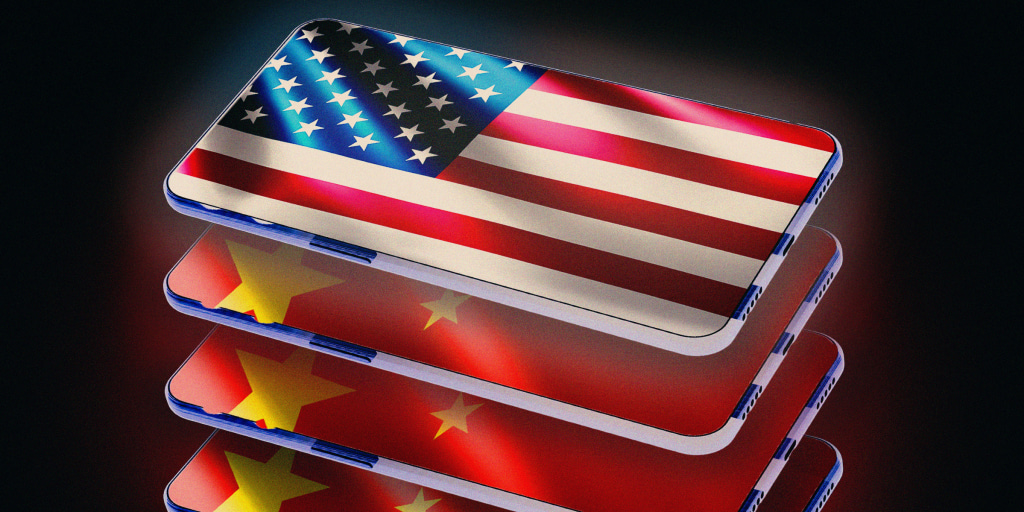
Silicon Valley’s Growing Use of Chinese AI
As artificial intelligence continues to evolve, Silicon Valley startups are increasingly building their platforms on free and open-source AI models developed in China. These models, such as DeepSeek’s R1 and Alibaba’s Qwen, offer powerful, customizable capabilities that are gaining traction as viable alternatives to more expensive and proprietary American systems.
Misha Laskin, a former Google engineer and theoretical physicist, voiced his concerns earlier this year about the rapid progress of Chinese open-model AI systems. He observed how closely these models were approaching the performance frontier traditionally led by American companies. In response, Laskin founded Reflection AI, a startup recently valued at $8 billion, to create a competitive American open-source model.
“You’re starting to see glimpses of open-model companies actually driving the frontier of intelligence in China,” said Laskin, emphasizing the global implications of these developments.
Performance and Cost Advantages
For many startups, cost and performance are driving factors in choosing Chinese models. Michael Fine, head of machine learning at Exa—a search company backed by Lightspeed Venture Partners and Nvidia—explained how Chinese models have enabled faster and cheaper deployment on their own hardware. “We often replace expensive closed models like GPT-5 or Gemini with open models that we can run ourselves,” said Fine.
Chinese models are often categorized as “open-weight,” meaning developers can download, modify, and deploy them freely. This contrasts with proprietary models from American firms like OpenAI and Anthropic, which are accessible only through paid APIs or controlled data centers.
Industry Adoption and Privacy Benefits
Jerry Liu, founder of the productivity app Dayflow, highlighted the growing user preference for open-source models. Around 40% of Dayflow’s users now opt for Chinese open models like Qwen, which perform tasks such as screen summarization reliably and at a lower cost. “Qwen is as good as GPT-5 for my use case,” Liu said, noting that using proprietary models could cost the company up to $1,000 per user annually.
Privacy is another critical factor. Dayflow processes data locally on each user’s device using open-source models. Liu emphasized his personal stance: “Would I use a product where my entire screen was beaming up to some random guy’s cloud? Hell no.”
Developer Ecosystem and Open-Source Momentum
Chinese open models also benefit from a robust developer ecosystem. Antonio Vespoli, co-founder of Circlemind AI, noted that developer resources for Chinese models are now more plentiful than for American alternatives. Platforms like Airbnb rely heavily on Alibaba’s Qwen, and companies such as Kilo Code report that seven of their 20 most-used models are Chinese, with six being open-source.
Charles Zedlewski of Together AI explained that open models allow developers to start with a solid base and then customize it to add unique capabilities. “The resources around Chinese models make them the default starting point for many developers,” he said.
China’s Strategic Embrace of Open AI
Unlike the U.S., where private companies dominate AI development, China’s government plays a proactive role in promoting open-source technologies. In a recent address, President Xi Jinping advocated for global cooperation in this space. China’s economic planning authority has also committed to supporting open-source AI ecosystems.
Chinese companies like Alibaba release new models at an accelerated pace—roughly every 20 days—compared to the 47-day average of U.S. companies like Anthropic. Nathan Lambert, a senior researcher at the Allen Institute for AI, noted, “The balance of power has been shifting rapidly in the last 12 months.”
Challenges and Risks
Despite their advantages, Chinese models are not without controversy. Concerns about intellectual property and national security persist. Some experts allege that models like DeepSeek may have built upon foundational work done by American companies. Additionally, the U.S. government has flagged models like Qwen for potential links to China’s military, a claim Alibaba strongly denies.
These apprehensions extend to the market perception. Tim Tully of Menlo Ventures noted that enterprise customers often hesitate to use Chinese-based models due to perceived political risks. Menlo Ventures, an investor in Anthropic, believes American closed models still offer superior tooling and user experience.
America’s Open-Source Response
Recognizing the strategic importance of open AI, U.S. policymakers and companies are beginning to respond. The White House’s AI Action Plan now encourages the development of open-weight models. In a significant move, OpenAI released its first open-source model in five years, citing the importance of democratizing access to powerful AI.
Meanwhile, the Allen Institute launched Olmo 3, an open-source model designed to support rapid development of trustworthy features. The institute’s ATOM Project aims to restore America’s leadership in open models. “If we want to be the preeminent nation in the AI era, we cannot cede such a critical piece of the ecosystem to any nation,” Lambert stated.
The Road Ahead
As the AI landscape continues to evolve, the competition between Chinese open-source models and American closed-source systems is intensifying. While the U.S. still leads at the performance frontier, Chinese models are rapidly closing the gap. Whether America can regain its open-source momentum remains a pivotal question for the future of global AI leadership.
This article is inspired by content from Original Source. It has been rephrased for originality. Images are credited to the original source.