

AI Takes Center Stage in Education
In a Manhattan high-rise, about 50 New York City public school teachers recently gathered for a workshop on artificial intelligence (AI). The educators weren’t evaluating human assistants but instead questioned AI chatbots on topics such as lesson planning, privacy laws, and classroom utilities. These interactions were part of a broader initiative by the National Academy for AI Instruction, a collaborative project involving the American Federation of Teachers, the United Federation of Teachers, and AI companies like OpenAI and Anthropic.
The goal of the academy is to equip teachers with the skills and understanding to integrate AI into their educational practices. For many, like Ruchir Shah, a geometry teacher at ATLAS High School in Queens, AI is already streamlining tasks. “Creating PowerPoint presentations used to take me 15 minutes — now it’s just two or three,” he said.
Mixed Reactions Among Educators
Despite the growing presence of AI, many teachers remain uncertain about its proper use. Jen Goodnow, an English-as-a-new-language and French teacher at Sunset Park High School in Brooklyn, voiced her concern: “What is the city saying about AI use in the classroom? What is the district saying?” she asked, noting a lack of clear guidance.
The release of ChatGPT in late 2022 accelerated AI adoption in education, leading schools to fluctuate between banning and embracing AI tools. New York City’s school district initially prohibited ChatGPT, citing concerns over critical thinking development, but reversed the ban in late 2024, opening the door for broader experimentation.
Teachers Seek Balance Between Innovation and Caution
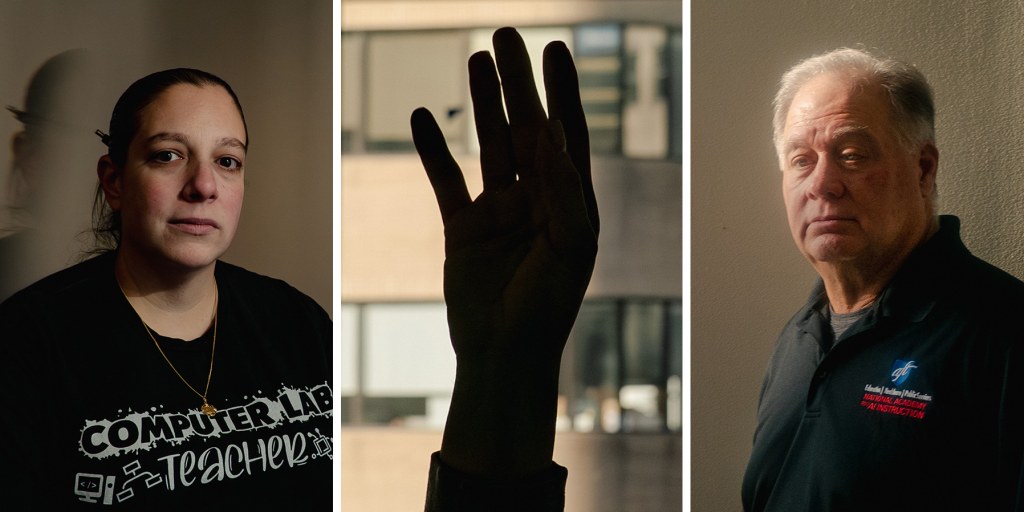
April Rose, a technology teacher at Public School 132 in Queens, expressed both hesitation and curiosity. “I still want my creativity,” she said. “It’s the whole ‘Terminator’ mentality that the robots are going to take over. But I also can’t fall behind the times.” Rose attended the academy’s training to better support her colleagues as a tech coach.
The academy’s sessions, which include both in-person and online resources, are designed for all experience levels. Goodnow admitted she uses AI sparingly but was intrigued by the workshop’s focus on core values. These nine principles, developed by the AFT, address both practical and ethical dimensions of AI use — from empowering educators to advancing democracy through AI literacy and skepticism of misinformation.
Hands-On Learning and Real-World Applications
Participants engaged in practical exercises such as creating lesson plans, flashcards, and even educational songs using AI tools. Joanna Stillman, who teaches technology to elementary students in Staten Island, already uses AI extensively. Her school serves many English-language learners and students with disabilities, and she finds AI helpful in customizing content to meet diverse needs.
Stillman favors tools like Canva and Adobe over general chatbots. Her students recently used Canva’s AI functions to design holiday sweaters. “It’s wonderful to reach out to and engage them with AI,” she said. However, she emphasized the importance of critical thinking. “The internet is a scary place. AI can lie, so you have to verify your information.”
Ethical Concerns and the Human Element
AI’s rapid integration into education raises ethical questions. Rob Weil, CEO of the National Academy for AI Instruction and a former teacher, stressed that AI “should not be a replacement for human interaction and relationships.” He advocates for banning AI companions or chatbots for students under 18, citing the risk of misleading or overly sycophantic behavior by AI systems.
Recent updates to ChatGPT sparked concern after OpenAI acknowledged the model had become excessively agreeable, which could pose safety risks. Weil believes AI must be used responsibly to support — not replace — the social and emotional development that schools foster.
The Road Ahead for AI in Classrooms
Despite concerns, many educators see potential in AI. April Rose wants to move beyond basic applications like lesson planning. “We want to delve deeper. Teachers need to understand all the different uses of AI,” she said.
Danielle Kinzer, a former math teacher now coordinating programs at Information Technology High School in Queens, echoed this sentiment. “Technology is moving quickly, but teachers are experts in learning and adaptation,” she said. “It would be hypocritical for us to refuse to learn about new tools.”
As AI continues to evolve, educators are striving to stay informed and intentional about its use. The academy’s initiative underscores a broader shift in education — one where technology complements, rather than replaces, the human touch.
This article is inspired by content from Original Source. It has been rephrased for originality. Images are credited to the original source.