

The Transformative Potential of AI in Medicine
Artificial intelligence (AI) is revolutionizing the field of drug discovery, offering a powerful tool to streamline processes that are traditionally time-consuming, costly, and uncertain. On average, it takes up to 15 years and more than $2 billion to bring a new drug to market. AI’s ability to analyze vast datasets efficiently presents a way to expedite this journey from the lab to the pharmacy.
According to a study published in Nature Medicine, AI is already being used to identify disease biomarkers, simulate interactions between drugs and biological targets, predict safety and effectiveness, and manage clinical trials. These advancements not only promise speed but also enhance precision in developing new therapies.
Real-World Applications of AI in Drug Development
In Australia, biotech leader CSL is leveraging AI to accelerate the creation of more personalized and effective treatments. Similarly, the CSIRO’s Virga supercomputer is being deployed to enhance early-stage drug discovery.
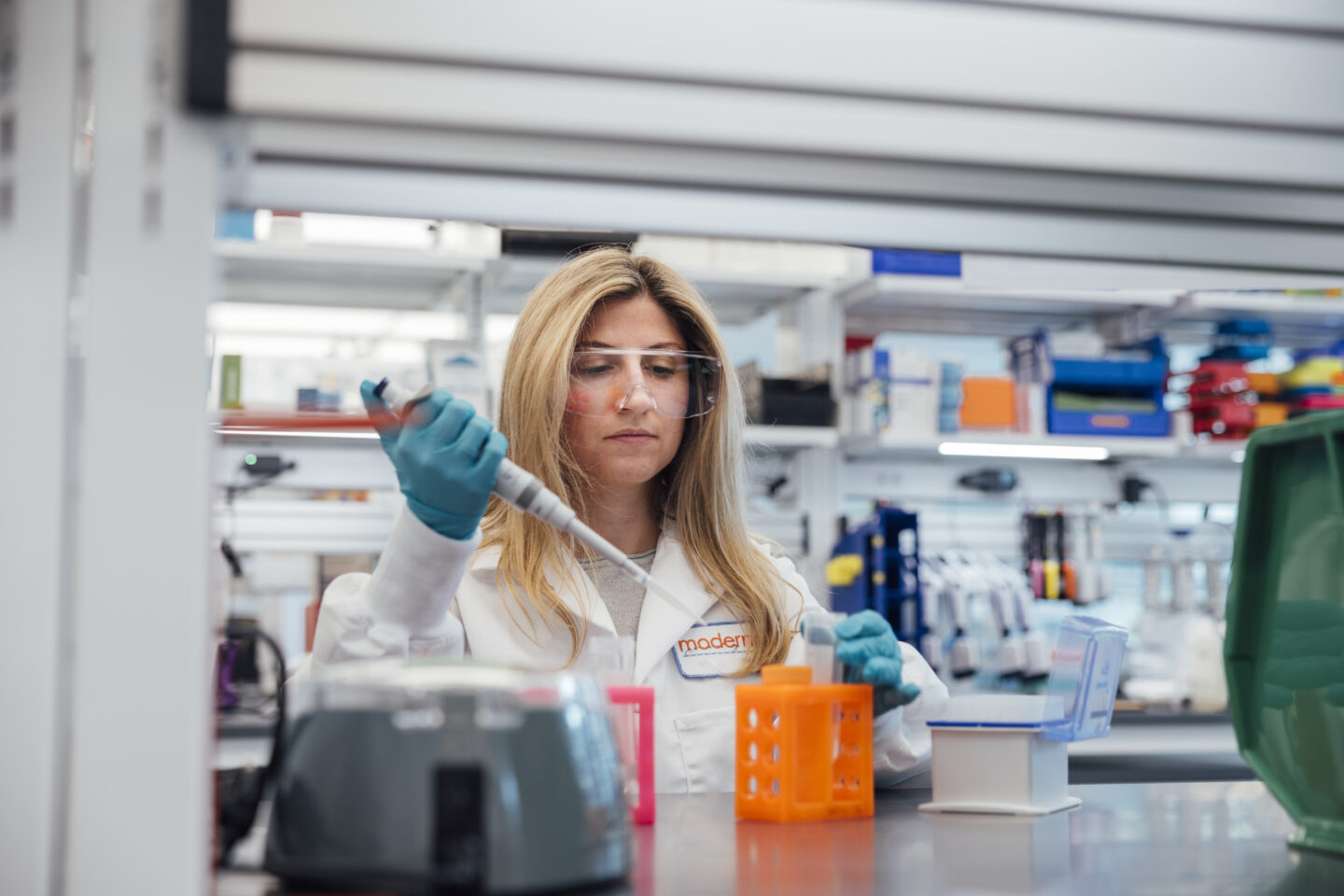
Global pharmaceutical company Moderna has integrated AI throughout its drug development pipeline. Brice Challamel, Moderna’s Head of AI and Product Innovation, explains that AI models help optimize mRNA sequence design at the earliest stages of development, enhancing stability, efficiency, and protein expression. “There are billions of potential mRNA designs for a single protein,” he says. “AI helps navigate this complexity beyond what traditional science can manage.”
AI also supports later stages, assisting in data analysis, operational efficiency, and even supply chain and manufacturing processes. One notable example is Moderna’s work on individualized neoantigen therapies (INT) for cancer. AI algorithms analyze tumor and blood samples to identify patient-specific mutations and select up to 34 neoantigens. These are then encoded into mRNA sequences to train the immune system to target cancer cells more effectively.
Balancing Innovation with Oversight
Despite the promise, caution is advised. Challamel emphasizes the importance of human oversight at every stage of AI deployment. “We work in a highly regulated industry where patient safety is paramount,” he notes. “AI outputs are never used in isolation. Every decision goes through a structured expert-in-the-loop process.”
Transparency and traceability are vital, especially as regulatory bodies demand clarity on how AI-derived insights are produced. Moderna ensures that every AI-influenced decision is backed by auditable evidence, aligning with strict governance protocols.
Challenges in Data Quality and Bias
One of the most significant challenges in applying AI to drug discovery is ensuring data quality. A 2023 review in Pharmaceuticals found that the accuracy of AI predictions is heavily dependent on the integrity and diversity of data. “AI is only as good as the data it’s trained on,” says Challamel. Moderna has made significant investments in digital infrastructure to ensure clean and consistent datasets across all functions.
Another hurdle is the high failure rate in clinical trials—about 90% of drug candidates do not make it past this stage. Tony Kenna, President of the Australian Society for Medical Research (ASMR), notes that AI has yet to demonstrate clear benefits in improving these outcomes. However, companies like QuantHealth are exploring the use of AI to create digital twins—virtual patient models that simulate disease progression and treatment efficacy.
Ethical and Security Considerations
Ethical concerns are also surfacing. A study in Fundamental Research highlighted the importance of ethical AI use, particularly in handling sensitive patient data. Misuse is a real risk; researchers have even demonstrated how AI models designed to find therapeutic compounds could be repurposed to create chemical weapons.
Shane Huntington OAM, CEO of ASMR, warns that similar legal and ethical issues—such as those seen in copyright cases involving AI in the media industry—could arise in drug development. “AI systems must be carefully restricted in terms of data access to avoid intellectual property violations,” he says.
Human Expertise Still Essential
AI tools often struggle to assess the quality of scientific research, which can lead to flawed or biased outputs if poor-quality data is included. Kenna points out that negative results from failed experiments are underreported, which hampers AI model training. “AI tools can’t yet reliably distinguish good science from bad,” he says.
Another concern is overconfidence in AI-generated predictions. Machine learning models frequently fail to quantify uncertainty, resulting in misleading conclusions. In drug development, this can lead to the suggestion of molecules that are chemically impossible to synthesize. Keeping humans in the loop is essential to mitigate these risks.
Looking Ahead: A Cautious Optimism
Security and privacy remain top priorities. Moderna has implemented secure, internal AI systems to protect sensitive data. “AI can be a powerful accelerator,” Challamel concludes, “but only when paired with rigorous human oversight, transparency, and compliance.”
While AI holds immense promise for transforming drug development, its successful integration into medicine hinges on ethical use, high-quality data, regulatory compliance, and the irreplaceable value of human expertise.
This article is inspired by content from Original Source. It has been rephrased for originality. Images are credited to the original source.