

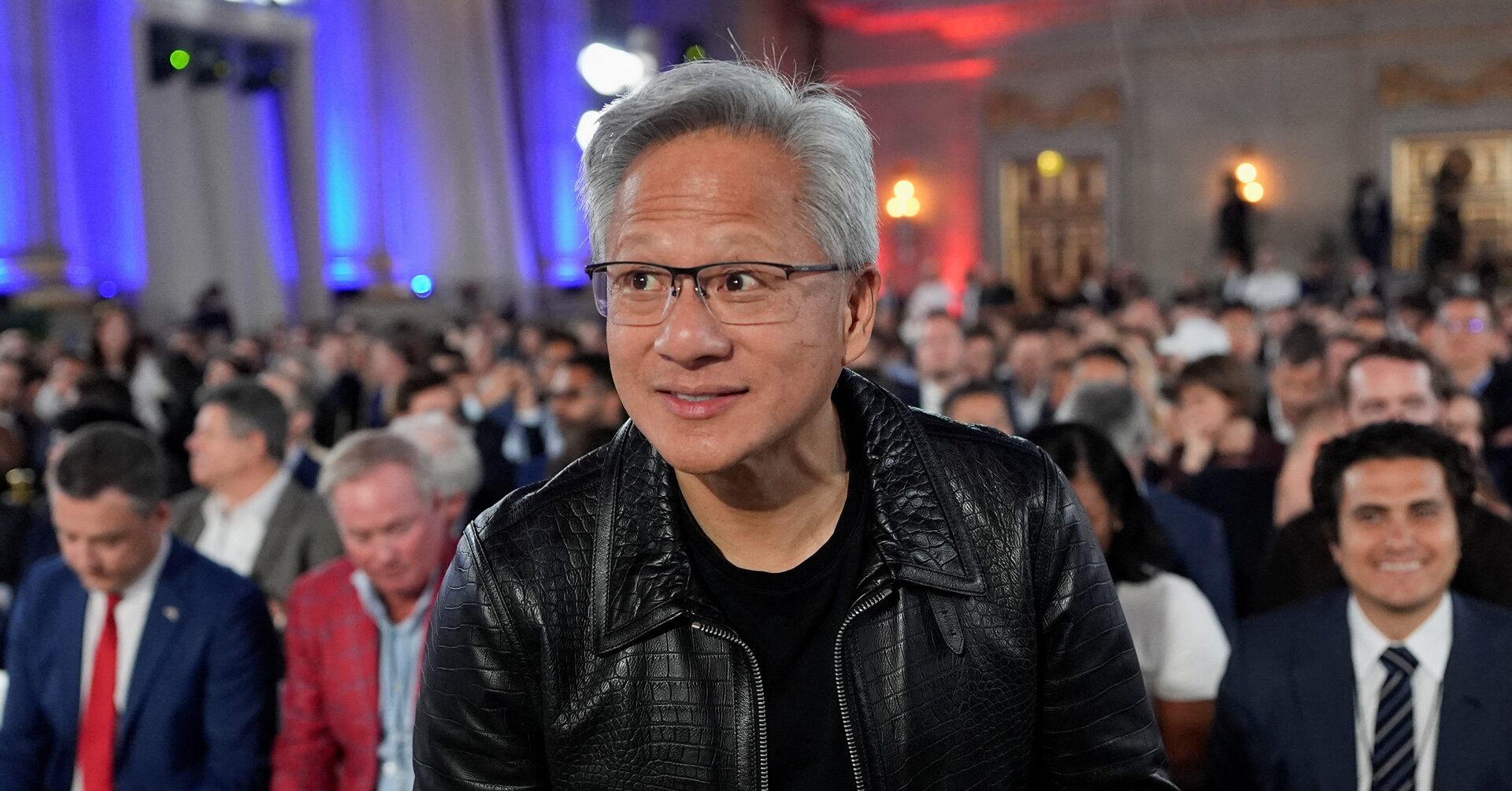
Nvidia CEO Confirms Ongoing Discussions with the White House
WASHINGTON, Aug 28 — Nvidia CEO Jensen Huang has confirmed that discussions are underway with the White House regarding the potential sale of a less advanced version of its next-generation AI chip to China. Speaking during a recent interview on Fox Business News, Huang stated that the process will take time, but emphasized that the dialogue has officially begun.
“The conversation will take a while,” Huang noted, “but President Trump understands that having the world build AI on the American tech stack helps America win the AI race.”
Trump Open to Limited AI Chip Sales to China
Earlier this month, former President Donald Trump indicated an openness to allowing Nvidia to sell a scaled-down version of its upcoming AI chip, known as the Blackwell chip, to China. This version is expected to be 30-50% less capable than the original, high-performance model.
The proposal aims to balance economic interests with national security concerns, as tensions between the U.S. and China over technological supremacy continue to escalate.
National Security Concerns Remain
Despite the administration’s willingness to consider such sales, there is significant pushback from national security experts and China hawks in Washington. Critics argue that even limited access to advanced technology could empower China’s military capabilities.
“Allowing even a stripped-down version of the Blackwell chip into Chinese markets could be a slippery slope,” said one defense analyst. “It risks giving Beijing a technological edge that could be repurposed for military use.”
Nvidia’s Strategy Amid Export Restrictions
Nvidia has been navigating U.S. export restrictions for some time. In May, Reuters reported that the company was preparing a lower-cost variant of its Blackwell AI chip specifically for the Chinese market. The move was seen as a strategy to maintain its presence in one of the world’s largest tech markets without violating U.S. export control laws.
This new chip is designed to comply with regulations while still offering Chinese companies a competitive AI solution, albeit with reduced capabilities.
Global Implications of AI Technology Sales
The outcome of these discussions could have far-reaching implications for the global tech industry. As the U.S. and China continue to compete for dominance in artificial intelligence, the decisions made by companies like Nvidia and policymakers in Washington will shape the future of AI development and deployment.
Industry insiders are closely watching how the Biden administration—or a potential new Trump administration—navigates these complex issues. The stakes are high, as AI technology is increasingly seen as a cornerstone of future economic and military power.
Balancing Innovation and Geopolitical Strategy
Huang’s comments reflect a broader debate within the tech industry about how to responsibly innovate while adhering to national security policies. “Our goal is to support global AI adoption,” Huang said, “but we must do so within the framework of U.S. law and international standards.”
As the conversation unfolds, Nvidia remains committed to engaging with government officials to find a path forward that aligns with both its business goals and the strategic interests of the United States.
Looking Ahead
While no final decisions have been made, the ongoing dialogue between Nvidia and the White House suggests that a compromise may be possible. Any resolution, however, will likely be scrutinized both domestically and internationally.
For now, all eyes remain on Washington as policymakers weigh the benefits of economic engagement against the risks of technological proliferation.
This article is inspired by content from Original Source. It has been rephrased for originality. Images are credited to the original source.