

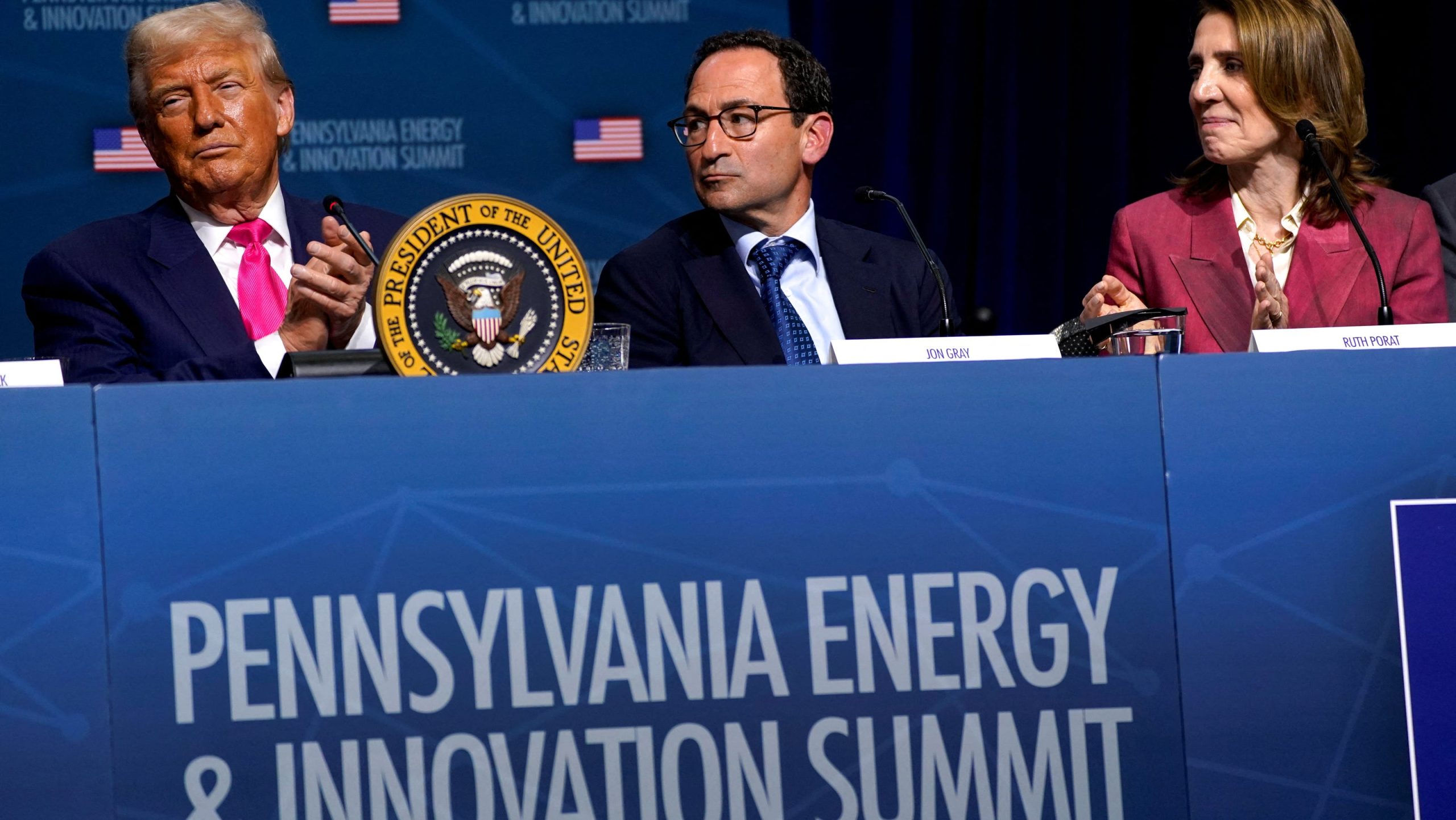
Trump and Industry Giants Unite for AI Future
In a bold move to position the United States at the forefront of artificial intelligence, former President Donald Trump joined forces with top executives from leading technology and energy companies at a summit in Pittsburgh. The event, hosted at Carnegie Mellon University, marked the unveiling of a sweeping $90 billion investment aimed at expanding artificial intelligence and energy infrastructure across the country.
“This is a really triumphant day for the people of the Commonwealth and for the United States of America,” Trump declared during his speech, emphasizing the transformative nature of the initiative.
Strategic AI Investments Announced
The Energy and Innovation Summit brought together representatives from tech giants such as Google, Microsoft, Meta, and Alphabet, as well as energy leaders like Exxon Mobil. These corporations are making significant financial commitments to fuel the rapid growth of AI-powered technologies and the infrastructure required to support them.
Google revealed a landmark $3 billion electricity deal with Brookfield Asset Management, securing up to 3 gigawatts of U.S. hydropower through 20-year power purchase agreements. The hydropower will be generated from two facilities in Pennsylvania, underscoring the state’s central role in the national AI strategy.
Cloud computing firm CoreWeave also announced a $6 billion investment to build a state-of-the-art AI data center, further cementing the region’s position as a future AI hub.
Major Players and Financial Backing
Notable attendees at the summit included industry heavyweights such as Larry Fink of BlackRock, Darren Woods of Exxon Mobil, Brendan Bechtel of Bechtel Group, and Dario Amodei of AI research firm Anthropic. International investors like Khaldoon Al-Mubarak of Abu Dhabi’s Mubadala and Rene Haas of chip designer Arm were also present, highlighting the global interest in U.S.-based AI development.
Blackstone President Jon Gray detailed a $25 billion plan to invest in data center and energy infrastructure in Pennsylvania, marking one of the largest single commitments unveiled at the event.
Policy Support and Regulatory Streamlining
The White House is reportedly preparing several executive actions to facilitate the expansion of AI infrastructure. Among the proposals are efforts to streamline the permitting process for data centers by creating a nationwide Clean Water Act permit. This measure would eliminate the need for state-by-state approvals, accelerating construction timelines.
Additionally, the administration is exploring initiatives to provide federal land for the development of data centers and to ease the grid-connection process for new energy projects.
In January, Trump directed the creation of a comprehensive AI Action Plan aimed at making “America the world capital in artificial intelligence.” The report, which includes input from the National Security Council, is expected by July 23. Trump plans to commemorate its release with a keynote address during an event titled “Winning the AI Race,” hosted by AI and crypto advisor David Sacks and his co-hosts from the All-In podcast.
Rising Energy Demands and Concerns
The surge in AI development has contributed to unprecedented energy demands, with U.S. power consumption reaching record highs in 2024 after nearly 20 years of stagnation. The expansion of cloud computing and data centers is driving this spike, prompting new partnerships between the tech and power sectors.
One such collaboration involves Constellation Energy and Microsoft, who are exploring the possibility of restarting the Three Mile Island nuclear power plant in Pennsylvania to meet growing electricity needs.
Despite these advancements, the rapid pace of AI growth has raised concerns over potential power shortages, higher electricity costs, and increased risk of blackouts. These issues could pose challenges to maintaining momentum in the tech sector’s global race against competitors like China.
U.S. Eyes Global AI Leadership
As the U.S. and China continue to vie for technological dominance, the Pittsburgh summit signified a pivotal moment in the American strategy to secure leadership in artificial intelligence. The collaboration between government officials and corporate leaders reflects a unified commitment to innovation, economic growth, and national security.
With billions in investment, streamlined regulations, and a renewed focus on infrastructure, the United States is betting big on its AI future—one that aims to set the pace for the rest of the world.
This article is inspired by content from Original Source. It has been rephrased for originality. Images are credited to the original source.