

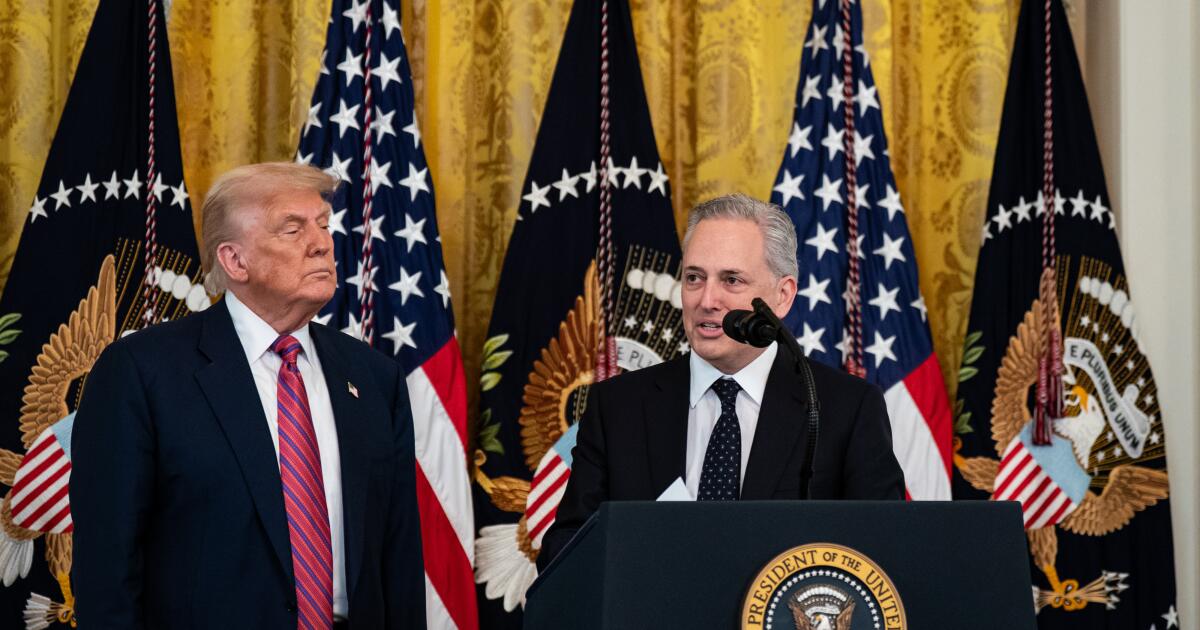
Trump Administration Unveils Bold AI Strategy
The Trump administration has launched a sweeping new initiative aimed at accelerating the development and deployment of artificial intelligence (AI) technologies across the United States. Announced on July 23, 2025, the plan is designed to eliminate federal red tape that could hinder technological advancement and to cement the U.S. as the global leader in AI innovation.
Tech Industry Influence and Policy Shaping
President Trump’s approach to AI regulation signals a departure from prior administrations, particularly that of former President Biden. While Biden emphasized the need for ethical safeguards, Trump’s strategy focuses on removing regulatory barriers. The plan has been heavily influenced by tech industry leaders, many of whom supported Trump’s 2024 campaign through donations and public endorsements.
David Sacks, a venture capitalist and Trump’s AI and crypto advisor, highlighted the stakes: “Artificial intelligence is a revolutionary technology with the potential to transform the global economy and alter the balance of power in the world. To remain the leading economic and military power, the United States must win the AI race.”
Massive Tech Investments in U.S. Infrastructure
Following Trump’s election, companies such as OpenAI, Oracle, and SoftBank pledged a combined $500 billion investment in AI infrastructure over the next four years. Elon Musk, who contributed over $280 million to Trump’s campaign, has taken on a role in optimizing government spending. Apple, often criticized by Trump for overseas manufacturing, committed to investing $500 billion domestically.
Regulatory Shift: From Guardrails to Growth
Trump’s AI Action Plan reverses Biden’s earlier executive order that had imposed regulatory guardrails around AI development. The administration argues that excessive regulation could stifle innovation and delay the deployment of transformative technologies. Instead, the new plan advocates for streamlined permitting processes, especially for data centers that are essential for powering AI systems.
These data centers, while vital, also raise environmental concerns due to their high water and energy consumption. Nonetheless, the administration maintains that speeding up infrastructure development is critical to keeping pace with global competitors such as China’s DeepSeek.
Balancing Innovation and Public Concerns
The rapid advancement of AI has sparked widespread debate over its societal impact. From potentially replacing jobs to spreading misinformation through AI-generated content, the technology presents complex challenges. Critics, including civil rights and environmental groups, warn that the unchecked expansion of AI could erode democratic values and harm public welfare.
In response to the administration’s plan, over 80 advocacy organizations released a “people’s AI action plan” urging for more inclusive and ethically grounded AI policies. “We can’t let Big Tech and Big Oil lobbyists write the rules for AI and our economy at the expense of our freedom and equality, workers and families’ well-being, even the air we breathe and the water we drink,” the statement read.
Job Creation and Economic Promise
Despite fears of job losses, the Trump administration asserts that AI will complement, not replace, human labor. “AI will improve the lives of Americans by complementing their work — not replacing it,” the plan states. The construction of AI infrastructure is expected to generate high-paying jobs and spur economic growth in various sectors.
The plan also calls for the National Institute of Standards and Technology to revise its AI risk management framework. It recommends removing references to misinformation, Diversity, Equity and Inclusion (DEI), and climate change, arguing that such language stifles innovation.
National Security and Global Strategy
National security is a core component of the AI Action Plan. The administration proposes exporting the full AI technology stack — including hardware and software — to allied nations while restricting access to adversarial countries. This strategic positioning aims to fortify the U.S.’s global standing and prevent sensitive technologies from falling into the wrong hands.
Key industry figures have expressed support for the plan. Aaron Levie, CEO of Box, described it as “quite strong,” saying it focuses on the positive impacts of AI while removing barriers to innovation. Fred Humphries, Microsoft’s Vice President of U.S. Government Affairs, praised the plan for its emphasis on workforce development and infrastructure readiness.
Looking Ahead
As the U.S. ramps up its AI efforts, the balance between rapid innovation and responsible regulation remains delicate. While the Trump administration’s plan promises economic opportunity and technological leadership, it also raises questions about oversight, equity, and long-term societal impact. Whether this deregulation-first approach will yield sustainable results is yet to be seen, but it marks a significant pivot in America’s AI policy trajectory.
This article is inspired by content from Original Source. It has been rephrased for originality. Images are credited to the original source.