

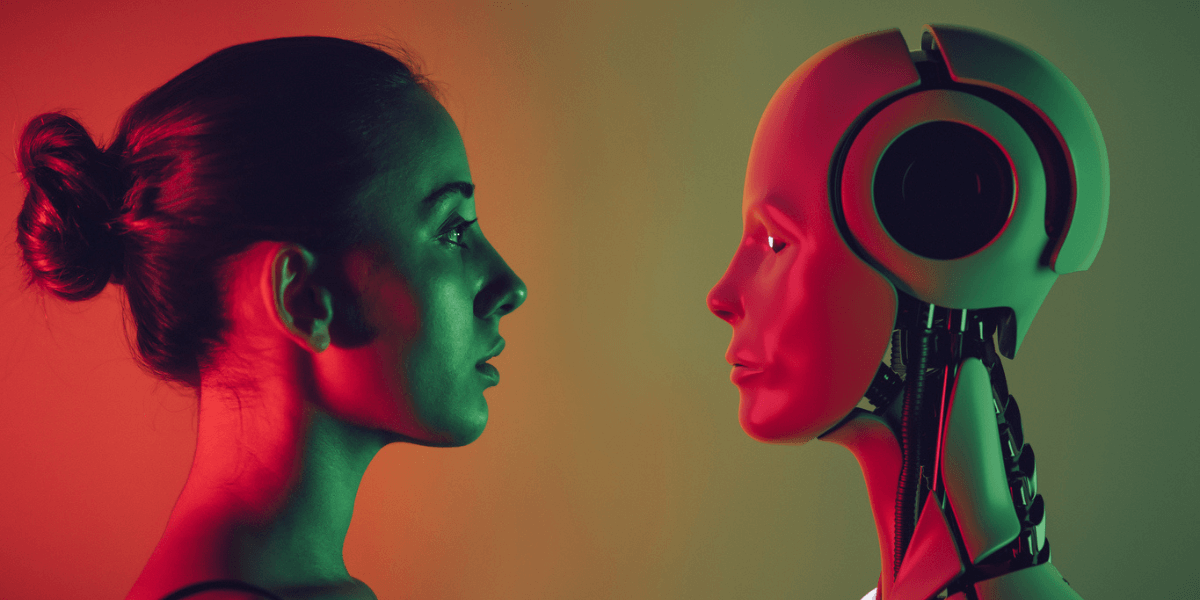
Exploring the Dual Nature of AI Innovation
During LA Tech Week 2024, held from October 13-19, 2025, the USC Viterbi School of Engineering’s Information Sciences Institute (ISI) convened a panel of leading voices to tackle one of the most urgent issues in modern technology: the breathtaking pace of artificial intelligence (AI) advancement. The discussion, moderated by Yolanda Gil, Senior Director of AI and Data Science Initiatives at USC Viterbi, offered a nuanced look at both the extraordinary promise and the unsettling uncertainty surrounding AI.
Panelists included researchers, industry pioneers, and government officials. Their conversations made clear that AI is evolving so rapidly that even its creators struggle to keep up. Jonathan May, a principal scientist at ISI and a USC computer science professor, summed up the mood: “It’s exciting. I don’t know that that’s necessarily positive.”
Unprecedented Speed of Change
May pointed to OpenAI’s Sora video generation tool as both impressive and unnerving. “It’s the buzziest thing lately,” he said. “Potentially scary and maybe not the direction we should be going.”
Karl Jacob, a strategic advisor to ISI and a serial entrepreneur, compared AI’s evolution to the internet boom. “Back then, things changed daily. We’re seeing that again now.”
Trelynd Bradley, deputy director of innovation at the California Governor’s Office of Business and Development, highlighted AI’s role in a broader tech revolution. He noted that AI and other emerging sectors are experiencing some of the highest growth rates in U.S. economic history. California, home to 35 of the world’s top 50 AI companies, has attracted 68% of U.S. venture capital in the first half of the year—largely due to AI.
Defining a Shape-Shifting Technology
Adam Russell, director of ISI’s AI division and former Chief Vision Officer at the U.S. AI Safety Institute, described himself as “an apocalypse optimist,” excited about AI’s potential but wary of how society will adapt. “We’re building technology we don’t understand and putting it into a world filled with creatures we don’t understand,” he said. “We don’t understand ourselves.”
Russell and May both stressed the importance of not anthropomorphizing AI. “Intelligence isn’t binary,” Russell explained. “It’s a spectrum.” May added, “At the end of the day, it’s a big matrix. You don’t call a hammer a superhuman nail pusher.”
Powerful Real-World Impacts
Despite the lingering concerns, the panelists acknowledged AI’s transformative potential. May observed a tangible benefit in his classroom: “My students’ paper quality has gone up. Many of them aren’t native English speakers, but their ideas now come through more clearly.”
Bradley cited AI’s promise in fields like drug discovery and urban planning. “Pairing AI with quantum computing could save millions of lives,” he said.
Jacob praised AI as a brainstorming tool. “It’s the best screen scraper ever. It knows almost everything on the Internet.”
Russell shared a touching story about his daughter, who used AI to express her emotions through visual art. “She used keywords to describe how she felt, and we worked with an LLM to create images. Don’t tell me that’s not magic.”
Wrestling With Regulation
AI governance was a major topic. Russell criticized the polarized discourse: “The idea that you must believe AI will destroy humanity to care about safety is counterproductive.” Instead, he called for a scientific approach to AI safety. “Let’s use measurable metrics, not speculation.”
Bradley discussed California’s sector-specific regulations, particularly in healthcare, education, and cybersecurity. “There’s active discourse on how to regulate AI in targeted areas,” he said.
Jacob reminded the audience of similar fears in the past. “Remember when Netscape was considered a weapon of mass destruction? We need to allow for early mistakes so we can learn and grow.”
The Vital Role of Human Intelligence
Throughout the discussion, the panel returned to the relationship between humans and machines. “Our superpower isn’t individual intelligence,” said Russell, “it’s our collective, social learning.”
May, who describes himself as “something of a Luddite,” warned against over-reliance on AI. “I prefer to be human first,” he said.
Concerns about inequality were also raised. May noted that AI could deepen social divides: “It’s another ‘rich get richer’ technology.” Bradley emphasized the need for reimagined workforce training. “We need apprenticeship programs that help people navigate emerging technologies and branch into multiple sectors.”
Southern California’s Unique Position
The panelists expressed optimism about Southern California’s role in shaping AI’s future. May highlighted ISI’s interdisciplinary culture. “There are no hard lines between divisions,” he said, pointing to a spirit of collaboration.
Bradley cited the region’s industrial diversity—from aerospace to entertainment to logistics—as a major advantage. “Southern California is set up for AI’s next wave,” he said.
Jacob noted a simple but significant edge: space. “LA has room to build, unlike San Francisco. That matters for robotics and hardware.”
As the discussion concluded, Russell left the audience with a powerful reminder: “In times of deep change, humans have always depended on each other. We need to do that again. Because our lives depend on it.”
This article is inspired by content from Original Source. It has been rephrased for originality. Images are credited to the original source.