

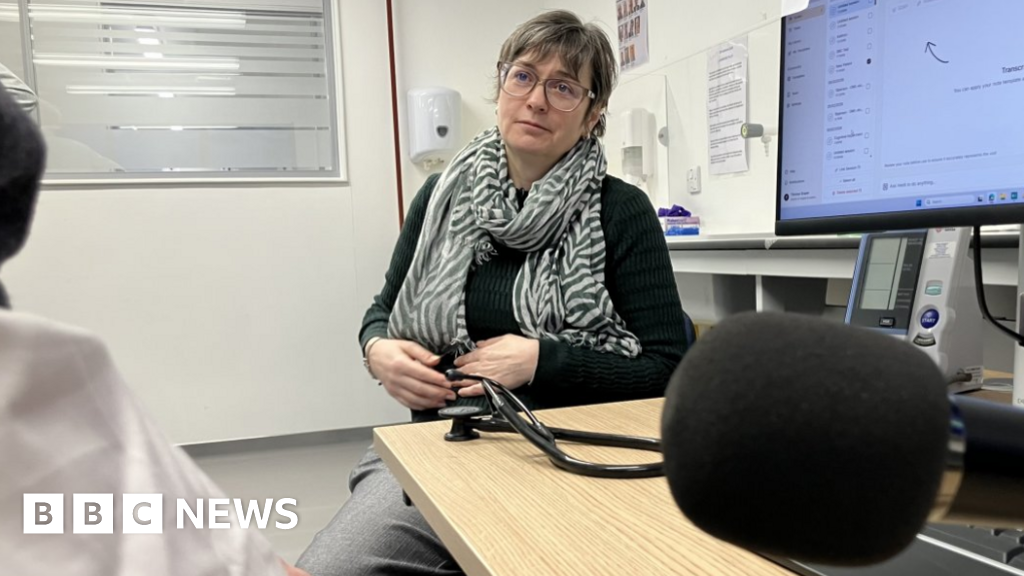
Innovative AI Technology Aims to Transform NHS Consultations
Researchers at the University of the West of England (UWE) in Bristol are pioneering a new artificial intelligence (AI) system designed to revolutionize how doctors record patient consultations. This specialist speech-to-text AI, known as ambient voice technology (AVT), automatically transcribes medical appointments, creating detailed notes and correspondence for clinicians to review and approve. The main goal of this project is to free up doctors’ time so they can focus more on face-to-face interactions with patients, rather than administrative tasks.
Enhancing Doctor-Patient Interactions
Dr. John McCormick, Chief Clinical Information Officer at NHS England South West and a practicing GP, highlighted the benefits of this technology: “It allows for more eye contact with patients, rather than staff spending time staring at a computer screen.” Dr. McCormick emphasized that by capturing the most important elements of a consultation, AVT enables doctors to concentrate and engage more fully with each patient. He also noted a reduction in after-hours work, saying, “It really reduces the level of stress I experience from the huge amount of administration we have.”
Time-Saving Benefits for Clinicians
Currently, the average GP consultation lasts around 10 minutes. Early evaluations of the AVT system suggest that the technology could save up to three minutes per patient session. This time saving could enable doctors to delve deeper into patients’ concerns and potentially see more patients each day. Trials are underway at UWE’s mock GP surgery, where scientists are testing the technology with volunteer patients. The Health Tech Hub at UWE is leading the evaluation, including examining how well the AI handles different regional accents.
Ensuring Accuracy and Reliability
As a safeguard, the use of AVT requires doctors to review and approve the final transcripts, making any necessary corrections. Professor Richard Luxton, Professor of Bioscience and Technology at UWE, acknowledged that while the AI may initially struggle with particularly broad accents, it can be trained to recognize and accurately transcribe a wide variety of voices. “We are refining the system to ensure it understands the diversity of speech patterns encountered in clinics,” Prof. Luxton explained.
Pioneering Partnerships and Real-World Testing
The Royal Devon University Healthcare NHS Foundation Trust has partnered with UWE to test AVT in real-world settings. Since launching a pilot program in September, the trust has used the technology in over 2,700 consultations, making it the first in the UK to integrate AI-driven transcription into patient records. The trust aims to roll out the system across all of its outpatient clinics by year’s end, with hopes to extend its use to emergency care in the future. Once fully implemented, the trust expects to create around 15,000 additional appointments annually, enhancing access to care.
Positive Impact on Patients and Staff
Patients and clinicians alike have responded positively to the new technology. Paul Mitchell, the first Royal Devon and Exeter (RD&E) patient to have their appointment recorded by AVT, said, “The clinician gave me eye-to-eye contact throughout, which made me feel very comfortable, especially when receiving difficult news.” Consultant gynaecologist Ben Peyton-Jones praised the system’s accuracy in documenting complex consultations, stating, “This will save me time and allow me to focus more attention on my patients.”
Another patient, Vickie Underhill, initially had reservations about being recorded by AI. “At first, I wondered how it would work, but then I found the doctor focused on me instead of the computer, which was really lovely. It felt like a real conversation with no distractions,” she shared.
Continuous Improvement and Future Prospects
The UWE project team is actively working with clinicians to gather feedback and enhance the system’s performance. This includes refining the template for clinical letters to ensure all information is clear and comprehensive. The trust is collaborating with the National Institute for Health and Care Research (NIHR), the HealthTech Research Centre (HRC) in Sustainable Innovation, and the University of Exeter to rigorously evaluate the impact of AVT on healthcare delivery.
Professor Adrian Harris, Chief Medical Officer for Digital and Research at NHS Royal Devon, remarked, “Our trust is leading the way in how we use this technology. This is about using innovation to improve care for patients.”
Looking Ahead
As work continues, the hope is that speech-to-text AI will become an integral part of NHS consultations, allowing clinicians more time for patient care and reducing the burden of administrative work. The project demonstrates how collaborative innovation can directly contribute to better healthcare experiences and outcomes for both patients and professionals.
This article is inspired by content from Original Source. It has been rephrased for originality. Images are credited to the original source.