

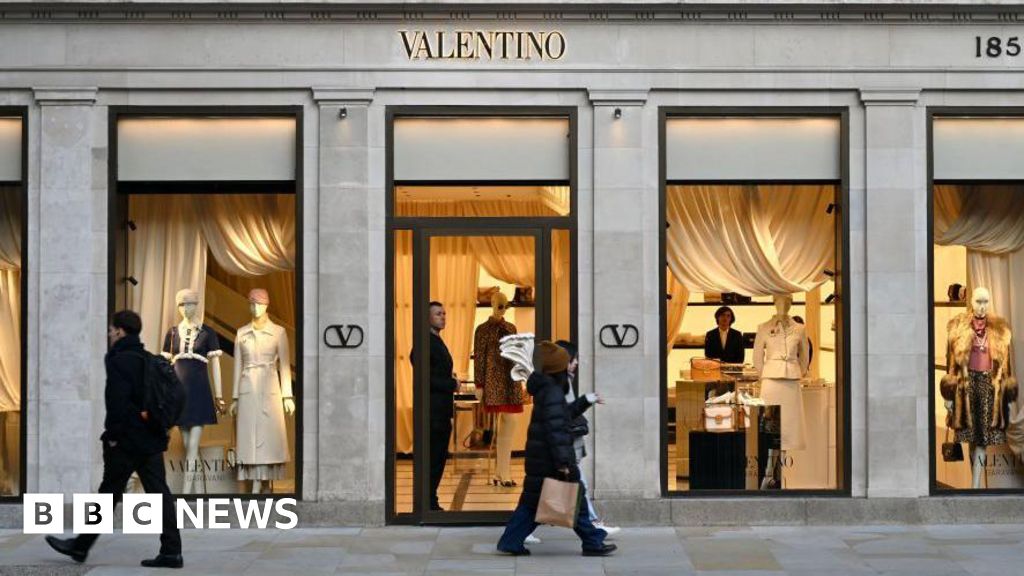
Valentino’s AI Ads Spark Outrage
Italian luxury fashion house Valentino is under fire after unveiling a new promotional campaign that features artificial intelligence (AI)-generated visuals to showcase its latest handbag, the DeVain. The campaign, described by the brand as a “digital creative project,” was launched in collaboration with digital artists and posted to Valentino’s Instagram account.
Despite being labeled as AI-generated, the visuals in the campaign have drawn widespread criticism. Viewers described the content as “disturbing,” “weird,” and “embarrassing.” Many fans and industry observers took to social media to voice their displeasure, criticizing the fashion house for relying on AI rather than human creativity.
“Lazy” and “Cheap” – Social Media Reacts
The Instagram video, which features surreal visuals of models emerging from an ornate, golden version of the DeVain handbag, left many viewers unimpressed. In one particularly jarring scene, the Valentino logo morphs into human arms, which then blend into a swirl of bodies. The artistic direction, although avant-garde, was viewed by many as incoherent and lacking emotional depth.
“Disappointing from a couture fashion house,” commented one Instagram user. “Advertising campaigns are an opportunity to put talented creatives center stage. AI in this instance is lazy at best.” Others accused the brand of “rage-baiting” and creating “AI slop,” urging the marketing team to “read the room.”
The Fashion Industry and AI
Valentino’s use of AI comes amid a broader trend in the fashion industry, where generative AI tools are being explored to streamline design, manufacturing, and marketing processes. These technologies can generate images and videos in seconds, offering brands a faster and often cheaper alternative to traditional methods.
However, the increasing reliance on AI has sparked concerns about the potential displacement of human workers and a perceived decline in artistic quality. Critics worry that AI-generated content lacks the emotional and creative depth that human designers, photographers, and models bring to the table.
Industry Experts Weigh In
Anne-Liese Prem, head of cultural insights and trends at the creative digital agency Loop, said Valentino made a step in the right direction by being transparent about the use of AI. However, she emphasized that the backlash reveals deeper cultural concerns.
“The main issue is not the technology itself – it is the perception of what the technology replaces,” Prem told the BBC. “When AI enters the visual identity of a brand, people worry that the brand is choosing efficiency over artistry. Even if the execution is creative, audiences often read it as cost-saving disguised as innovation.”
Prem added that while AI opens the door to new creative possibilities, it also poses risks. “Without a strong emotional idea behind it, generative AI can make luxury feel less human at a moment when people want human presence more than ever.”
Broader Industry Trends
Valentino is not alone in experimenting with AI. Retail giant H&M faced similar criticism after using AI to create “digital twins” of models for advertising and social media content. Critics argued that this approach undermines the roles of real models, photographers, and makeup artists.
Earlier this year, a Guess advertisement generated by AI and featured in Vogue also drew backlash for its portrayal of female beauty standards. Critics claimed that such representations could distort public perceptions and set unrealistic expectations.
These developments raise ongoing questions about the ethical implications of AI in fashion and advertising. While some hail the technology as a tool for innovation and efficiency, others see it as a threat to the integrity and authenticity of creative work.
The Human Touch in Luxury Branding
Luxury brands have long been associated with craftsmanship, artistry, and emotional storytelling. The integration of AI into these narratives can risk alienating consumers who value authenticity and human connection. As more brands dip their toes into AI-generated content, the challenge lies in maintaining the delicate balance between technological innovation and human creativity.
As the debate continues, one thing is clear: audiences are paying attention, and they expect more than just flashy visuals. They want stories, emotion, and a human touch – elements that no algorithm can truly replicate.
This article is inspired by content from Original Source. It has been rephrased for originality. Images are credited to the original source.