

Exploring the Future of AI in Medicine
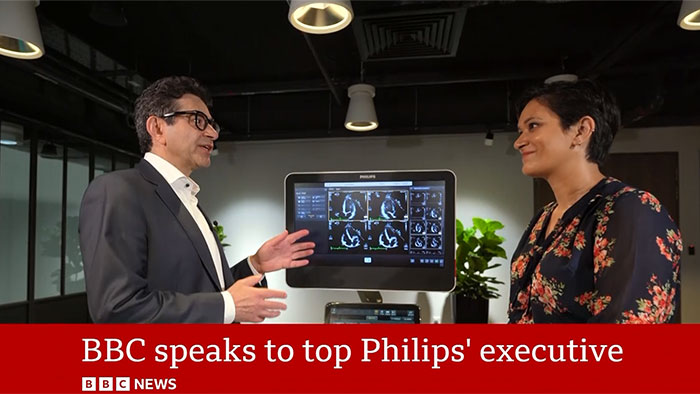
In a recent interview with BBC Asia, Shez Partovi, Chief Innovation & Strategy Officer at Philips, delved into the transformative role artificial intelligence (AI) is playing in the healthcare sector. As technology continues to evolve, questions are arising about the extent to which AI could replace doctors or redefine their roles entirely.
AI as a Collaborative Tool, Not a Replacement
Partovi emphasized that AI should be viewed as a complementary tool rather than a replacement for medical professionals. He explained that AI’s most significant contributions lie in enhancing efficiency, improving diagnostic accuracy, and supporting physicians in clinical decision-making. According to Partovi, AI is designed to assist, not substitute, the human touch in healthcare.
“The role of AI is to augment doctors,” he stated. “It helps them make better decisions, faster. But it doesn’t replace the empathy, experience, and nuanced judgment that human doctors bring to the table.”
Improvements in Diagnostic Accuracy
One of the most promising aspects of AI in healthcare is its ability to process vast quantities of data at unprecedented speeds. AI algorithms can analyze medical imaging, lab results, and patient histories to detect patterns that might go unnoticed by the human eye. Partovi pointed out that this capability can lead to earlier and more accurate diagnoses, which ultimately improves patient outcomes.
Philips is investing heavily in AI solutions that support radiology and pathology. These tools can highlight areas of concern in medical scans and flag anomalies, allowing specialists to focus their attention where it matters most.
Enhancing Access to Care
Another key point raised by Partovi was AI’s potential to expand access to healthcare, particularly in underserved regions. By leveraging AI-powered diagnostic tools and virtual consultations, patients in remote areas can receive timely care without the need to travel to urban hospitals.
“AI democratizes healthcare,” Partovi noted. “It brings expert-level analysis to places where specialists are scarce. That’s a game-changer for global health equity.”
Challenges and Ethical Considerations
Despite the optimism, Partovi acknowledged that integrating AI into healthcare comes with challenges. Data privacy, algorithmic bias, and the need for robust regulatory frameworks are all critical concerns. He stressed that ethical implementation must be a top priority to ensure that AI serves all patients fairly and effectively.
“We must ensure transparency in how AI systems make decisions,” he stated. “It’s essential to build trust among both healthcare providers and patients.”
The Evolving Role of Healthcare Professionals
Rather than fearing obsolescence, medical professionals are encouraged to adapt and embrace AI as a partner in care. Partovi believes that as AI handles more of the routine tasks and data analysis, doctors will have more time to focus on building relationships with patients and delivering personalized care.
“The future of medicine is human-centered, supported by intelligent systems,” he explained. “Doctors won’t be replaced. Their roles will evolve to become even more impactful.”
Philips’ Commitment to Innovation
Under Partovi’s leadership, Philips continues to push the boundaries of what AI can achieve in healthcare. The company is committed to developing solutions that are not only technologically advanced but also ethically sound and user-friendly. Their AI platform integrates seamlessly with existing hospital systems, providing actionable insights in real-time.
Philips is also investing in training programs to help healthcare providers understand and effectively use AI tools. Education and collaboration are key to ensuring a smooth transition into a more digitized healthcare environment.
Looking Ahead
As AI continues to mature, its role in healthcare will undoubtedly expand. However, the consensus from industry leaders like Partovi is clear: AI will empower, not eliminate, healthcare professionals. By combining the strengths of human intuition with machine intelligence, the future of healthcare looks not only more efficient but also more compassionate.
With companies like Philips leading the charge, the integration of AI into healthcare is poised to bring about a new era of innovation—one where technology enhances the capabilities of medical teams and improves outcomes for patients worldwide.
This article is inspired by content from Original Source. It has been rephrased for originality. Images are credited to the original source.