

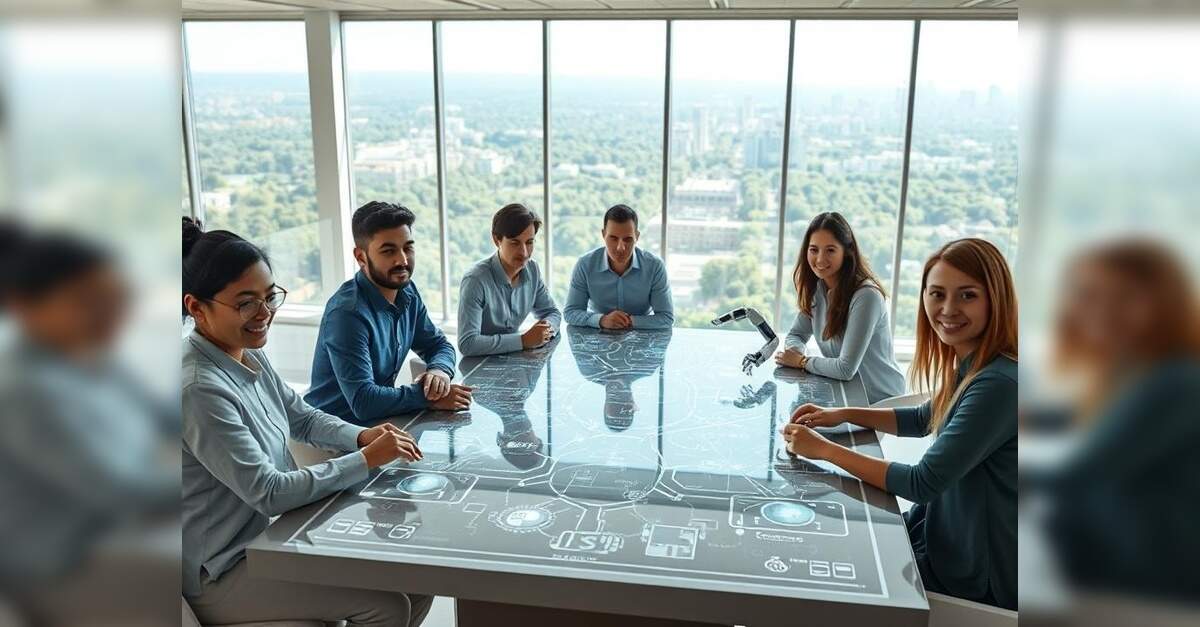
The Evolving AI Conversation
Rather than replacing humans, artificial intelligence (AI) is reshaping the very nature of work. While discussions around AI often veer between fears of widespread job loss and excitement over unprecedented productivity, the reality lies somewhere in between. The workplace is undergoing a fundamental transformation, where AI is not a substitute for human labor but a catalyst for redefining human contribution.
AI’s integration into the workforce is less about automation and more about reinvention. As we move deeper into this digital evolution, it becomes evident that AI is transforming not just what we do, but how and why we work. Organizations that thrive in this era will be those that reimagine roles around uniquely human capabilities such as judgment, empathy, and creativity, treating AI as a collaborative partner rather than a replacement.
Human Strengths in an AI-Powered Age
The real competitive advantage lies in the synergy between humans and machines. AI excels in structured, rule-based tasks, while humans bring indispensable contextual awareness and emotional intelligence. A study from MIT Sloan found that human-AI teams can outperform human-only teams but only under certain conditions. For tasks requiring creativity or ethical discernment, human involvement remains essential.
However, merely layering AI onto outdated systems can lead to inefficiencies. True productivity gains come from rethinking workflows from the ground up. This involves aligning human efforts with areas where they add the most value—navigating ambiguity, making ethical decisions, and translating data into strategic insights. According to a meta-analysis published in Nature Human Behaviour, AI and human collaboration showed modest improvements in open-ended tasks like content creation, reinforcing the need for thoughtful integration rather than blind adoption.
Purposeful Adoption Over Passive Integration
As AI becomes more pervasive, leaders must move beyond basic implementation to strategic adoption. Every job role is evolving—some becoming more analytical, others more relational or creative. For instance, Indian banks are using AI for fraud detection and personalized financial advice, allowing human advisors to focus on building trust. In healthcare, AI supports doctors by accelerating diagnoses, while physicians handle patient care and ethical decisions.
In manufacturing, AI-driven predictive maintenance enhances operational efficiency, while workers are being trained to oversee intelligent machines. These examples underscore the importance of combining machine precision with human insight. Leadership in the AI era is about orchestrating this synergy, fostering cultures that prioritize experimentation, curiosity, and continuous learning.
AI and the Role of Policy
As AI transforms industries, public policy must evolve to ensure ethical deployment. Issues like data privacy, algorithm transparency, and bias mitigation demand urgent attention. Regulatory frameworks are essential to balance innovation with accountability.
India is already taking meaningful steps in this direction. The Digital Personal Data Protection Rules enhance data security and user rights, laying the groundwork for responsible AI adoption. Meanwhile, initiatives like the IndiaAI Mission aim to position the nation as a global leader in ethical AI development. Well-crafted policies can act both as safeguards and enablers, boosting international trust in India’s tech ecosystem.
Redefining the Nature of Work
Ultimately, the future of work is not a dystopian tale of human obsolescence. Instead, it is a story of reinvention—of how human ingenuity and machine intelligence can coalesce to drive meaningful progress. Work is not disappearing; it is evolving. The challenge lies in guiding this transformation responsibly and inclusively.
Organizations that succeed in this new era will be those that reframe AI as a collaborator. Leaders must embrace this paradigm, fostering environments where both humans and machines can thrive. The central question is no longer whether AI will replace humans, but whether we can redesign work so that both coexist and flourish.
This article is inspired by content from Original Source. It has been rephrased for originality. Images are credited to the original source.