

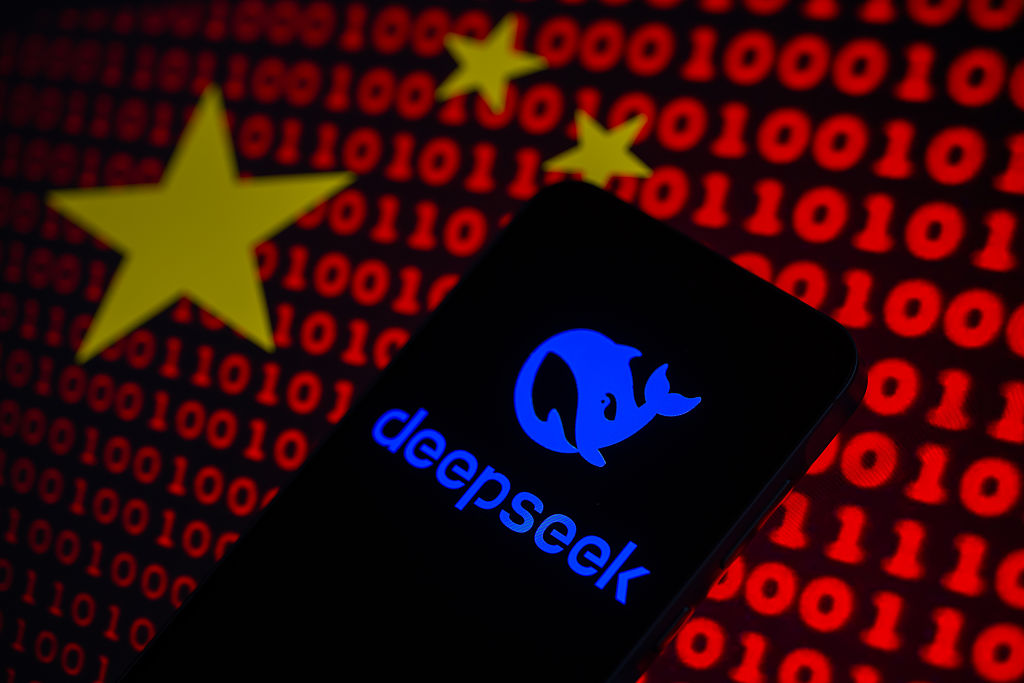
Anthropic Alleges Massive Distillation Attack by Chinese AI Labs
Anthropic, a leading American artificial intelligence company, has issued serious allegations against several Chinese AI research organizations. According to Anthropic, three Chinese labs—DeepSeek, Moonshot AI, and MiniMax—have orchestrated an extensive campaign to extract and replicate the capabilities of Anthropic’s Claude AI model. The accusations come as U.S. policymakers debate the future of AI chip exports to China, a move that could shape the global AI landscape for years to come.
Over 24,000 Fake Accounts and 16 Million Exchanges
In a recently published report, Anthropic detailed how these labs allegedly created more than 24,000 fake user accounts to interact with Claude. Through these accounts, the labs conducted over 16 million exchanges with the AI system, employing a technique called distillation. This process involves systematically querying a target AI model with thousands of prompts and using the answers to train their own AI systems, effectively copying advanced features and methods.
Anthropic claims these attacks specifically targeted Claude’s most differentiated capabilities: agentic reasoning, advanced coding, tool use, and logical alignment. These features are considered among the most sophisticated and valuable in cutting-edge AI models.
Distillation: A Double-Edged Sword in AI Development
Distillation is a widely used method in artificial intelligence. AI labs frequently distill their own large models into smaller, more efficient versions for commercial use. However, when competitors use distillation to harvest knowledge from rival AI systems, it raises ethical and legal questions. OpenAI, another American AI powerhouse, has also accused DeepSeek of using similar tactics to imitate its own models.
Profiling the Alleged Actors: DeepSeek, Moonshot AI, and MiniMax
DeepSeek made headlines last year by releasing the R1 reasoning model, which nearly matched the performance of leading American AI labs at a fraction of their cost. The company is reportedly preparing to launch DeepSeek V4, a new model that could surpass both Claude and OpenAI’s ChatGPT in coding tasks. According to Anthropic, DeepSeek was responsible for over 150,000 interactions targeting foundational logic and censorship-safe alternatives to policy-sensitive queries.
Moonshot AI directed more than 3.4 million exchanges at Claude, focusing on agentic reasoning, tool use, computer vision, and developing agents for computer use and data analysis. The company recently launched an open-source model, Kimi K2.5, along with a specialized coding agent.
MiniMax engaged in at least 13 million exchanges aimed at extracting Claude’s coding and tool orchestration abilities. Anthropic observed that MiniMax redirected nearly half its traffic to siphon off capabilities from the newest version of Claude at the time of its release.
Anthropic’s Response and Industry-wide Implications
Anthropic has responded by increasing its investment in defensive technologies designed to make distillation attacks more difficult and easier to detect. However, the company acknowledges that technical solutions alone may not be sufficient. Anthropic is now calling for a coordinated response from AI industry peers, cloud service providers, and government policymakers to address this growing threat.
“Distillation attacks reinforce the rationale for export controls: restricted chip access limits both direct model training and the scale of illicit distillation,” Anthropic noted in its recent blog post. The company emphasized that the magnitude of data extraction performed by DeepSeek, MiniMax, and Moonshot would not have been possible without access to advanced AI chips—technology predominantly produced by U.S. firms.
Debate Over U.S. AI Chip Exports Intensifies
The revelations come at a critical juncture. The U.S. government, after much debate, recently eased restrictions on the export of high-end AI chips, such as Nvidia’s H200, to China. Critics argue that this policy shift could accelerate China’s AI development at a pivotal moment in the race for global dominance. Dmitri Alperovitch, chairman of the Silverado Policy Accelerator and co-founder of CrowdStrike, commented, “It’s clear that part of the rapid progress of Chinese AI models has been theft via distillation of U.S. frontier models. Now we know this for a fact.”
National Security Concerns and Global Ramifications
Anthropic warns that unauthorized distillation not only threatens American leadership in AI but could also pose significant national security risks. According to Anthropic, U.S. companies incorporate safeguards into their models to prevent misuse—such as the development of bioweapons or malicious cyber activities. Models produced through illicit distillation may lack these protections, increasing the risk that advanced AI capabilities fall into the wrong hands.
The company also raised concerns about the deployment of frontier AI models by authoritarian regimes for offensive cyber operations, disinformation campaigns, and mass surveillance. These risks are amplified if such models are released as open source, potentially stripping away critical safety features.
Industry and Policy Response Awaited
TechCrunch has reached out to DeepSeek, MiniMax, and Moonshot AI for comment, but as of now, no official responses have been reported. Meanwhile, Anthropic continues to urge for industry-wide vigilance and stronger regulatory measures to protect AI innovation and security in an increasingly competitive global environment.
This article is inspired by content from Original Source. It has been rephrased for originality. Images are credited to the original source.