

AI’s Expanding Role in Aviation
Artificial Intelligence (AI) is rapidly reshaping the aviation industry, offering significant advantages in safety, efficiency, and operational analysis. However, this transformation demands a cautious and informed approach. At the 2025 American Aviation Leadership Summit held in Washington, D.C. and hosted by Honeywell Aerospace, top government officials and industry leaders gathered to explore the strengths and limitations of AI in aviation and beyond.
Secretary of Transportation Sean Duffy opened the summit by discussing recent advancements in aviation safety, propelled by the $12.5 billion One Big Beautiful Bill aimed at modernizing the National Airspace System (NAS). Upgrades such as replacing copper lines with fiber optics are already in motion, enabling faster and more reliable data transmission.
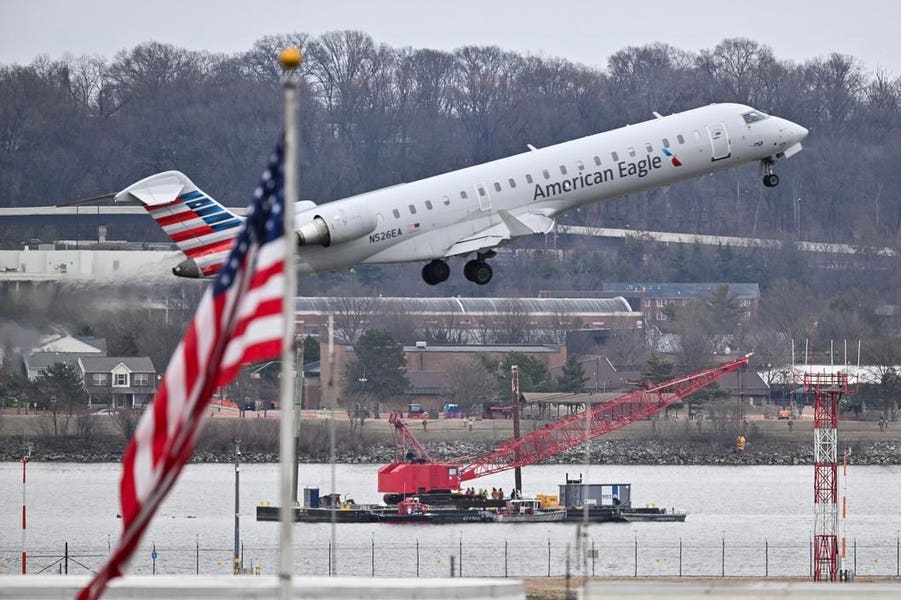
Duffy emphasized AI’s potential to identify safety risks that human reviewers often miss. Referring to the tragic January 2025 collision at Ronald Reagan Washington National Airport involving a regional jet and a helicopter, he noted that the warning signs were there—85 near misses in just three years. AI now plays a crucial role in scanning the NAS to detect similar high-risk zones and prevent future disasters.
Detecting Patterns and Preventing Crises
Duffy pointed out the limitations of human oversight, particularly during data analysis. “The human eye is missing these things,” he stated. AI excels at identifying trends and anomalies in massive datasets, making it an essential tool for preemptive action in aviation safety. During the government shutdown that led to a reduction in flights, it became evident that AI could detect trends invisible to human analysts, offering timely alerts for necessary interventions.
Understanding the Nature of AI
Congressman Jay Obernolte, co-chair of the bipartisan AI Task Force and a licensed pilot with an advanced degree in AI, concluded the summit with a deeper dive into the technology. He described AI as “things that a machine does that seem humanlike,” emphasizing how this shifts our interactions with machines from technical to human-level communications.
However, Obernolte issued a strong warning: “Never, ever, ever assume that AI is correct.” AI systems, especially generative models, are trained on vast, fallible human-created data and should always be verified. He highlighted several types of AI:
- Deterministic AI – Produces consistent outputs from specific inputs, used in critical systems like aircraft controls.
- Probabilistic AI – Uses machine learning to make predictions based on incomplete data, improving over time.
- Generative AI – Mimics human creativity by generating new content, but can produce inaccurate or misleading results.
Despite these differences, all are commonly labeled as “AI.” Obernolte explained that even simple tasks like navigating a maze can be approached with neural networks or heuristics, yet each method offers different levels of accuracy and reliability.
Generative AI and the Risk of Misinformation
Generative AI in particular poses a challenge when its outputs are assumed to be factual. Obernolte cited troubling instances where AI-generated legal documents included fabricated court histories. These hallucinations, while plausible on the surface, can lead to significant consequences when left unchecked.
One example involved the Make America Healthy Again (MAHA) Commission’s report, which cited over 500 health studies. Independent investigations revealed that many sources were nonexistent or inaccurately represented—clear signs of AI-generated misinformation.
Such errors are not limited to obscure publications. Even reputable media outlets have published AI-generated articles misreporting events or quoting non-existent speakers. In aviation, where precision and trust are paramount, these lapses can prove dangerous.
The Rise of ‘AI Slop’
With the growing ease of generating content via AI, there is a surge in poorly vetted information, particularly on social media and niche news outlets. Obernolte cautioned against accepting AI-generated content at face value. “The AI does what it does, and so it’s up to us to always, always, always verify what comes out the other end,” he urged.
He stressed that the real threat isn’t AI itself but the human tendency to over-rely on it. “Artificial intelligence engenders human stupidity if it encourages users not to engage their brains,” he warned. In aviation, this complacency can be fatal.
Conclusion: Balancing Innovation with Responsibility
AI holds immense promise for transforming aviation and other sectors, but it is not a substitute for human judgment. The summit underscored the importance of critical thinking, rigorous oversight, and ethical responsibility in deploying AI systems.
As AI continues to evolve, the aviation industry must ensure that its integration enhances safety without diminishing human accountability. As Obernolte aptly put it, “The mistake that we make is when we allow AI to do our thinking for us.”
This article is inspired by content from Original Source. It has been rephrased for originality. Images are credited to the original source.