

Silicon Valley’s AI Echo Chamber Faces Criticism
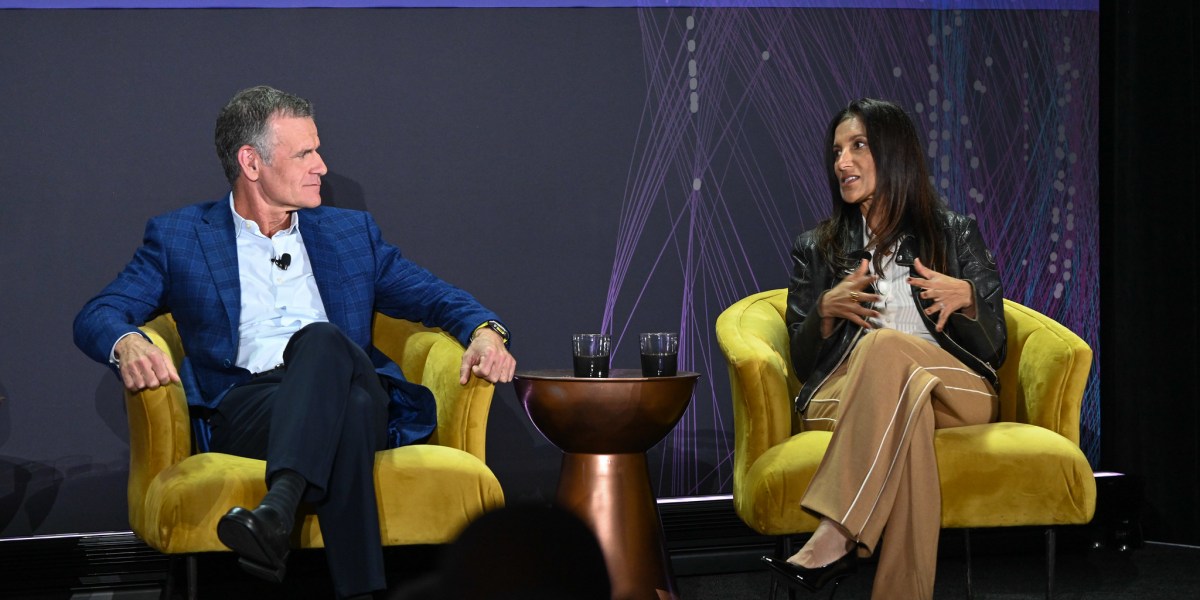
At the recent Fortune Brainstorm AI conference in San Francisco, two prominent tech executives offered a sobering reality check on the artificial intelligence frenzy sweeping Silicon Valley. Dennis Woodside, CEO of Freshworks, and Sukhinder Singh Cassidy, CEO of Xero, argued that while developers chase innovation, real-world businesses are more interested in practical solutions—especially those that translate to measurable business outcomes.
Woodside shared that companies far removed from the tech bubble, like Vermeer, a family-owned Iowa-based manufacturer of wood chippers and agricultural machinery, are unimpressed by the AI buzzwords. “They don’t necessarily care about the latest thing that we’re pushing in Silicon Valley,” he explained. “They need results, they need to grow their business, they need to serve their customers.”
With 5,000 employees and complex operations, Vermeer exemplifies the kind of enterprise that values functional technology over flashy features. According to Woodside, Vermeer—like most of the 75,000 customers Freshworks serves—has not embraced AI products wholesale. “They still want a human in the loop,” he noted, emphasizing that the most successful tools are those that enhance employee productivity, save costs, or drive revenue.
Small Businesses Demand Clarity, Not Jargon
Sukhinder Singh Cassidy echoed Woodside’s sentiments, recounting how Xero’s small business customers are increasingly frustrated by vague AI promises. “Can you please just … stop dropping the word AI and tell us what it is and how to use it?” she reported hearing from clients.
Singh Cassidy emphasized that for the average small business, priorities remain grounded in financial realities. “Cash flow is king,” she said. “After that, it’s about saving time to focus on generating more cash flow. Intelligence on growth comes third.”
She cautioned that the idea of an AI chatbot having unrestricted access to company data is more alarming than exciting for many clients. “They want control,” she stated. “They want an audit trail—‘what exactly did you just do and how do I know it’s accurate?’”
The Disconnect Between Developers and Users
Both CEOs pointed to a broader issue within the tech industry: a widening gap between what developers find impressive and what users actually need. Singh Cassidy described a moment during a demo of Xero’s AI assistant, JAX, where engineers were thrilled by the chatbot’s reasoning ability—such as analyzing whether leasing or buying a van was the better financial decision. Yet the audience was far more excited about a simpler feature: retrieving tax research from the web.
“We all think [advanced reasoning] is super cool … but it’s not what they’re looking for,” she admitted. Woodside concurred, pointing out that even automating basic customer service tasks, known as “L1 support,” has not seen widespread adoption among Freshworks’ clients. “The stuff that we think is so sexy in the Valley hasn’t really caught on yet,” he said.
Instead, Woodside highlighted how practical AI applications—like helping a human service agent quickly sift through thousands of technical manuals to find a specific part for a wood chipper—deliver real value.
Déjà Vu from the Dot-Com Era
Drawing parallels between today’s AI boom and the dot-com bubble of the early 2000s, both CEOs warned of history repeating itself. Woodside recalled how billions were invested in fiber-optic infrastructure under the mistaken belief that owning the “pipes” meant owning the economy. Ultimately, value accrued to the application layer—the companies that used the infrastructure to serve customers effectively.
“The infrastructure becomes a layer that we all access,” said Woodside, “but the value is going to be on the applications.”
Singh Cassidy added that the current market is flooded with unsustainable business models. “You can raise money on an AI feature today,” she observed, likening it to the ephemeral startups of the dot-com bubble. She warned that once the investment wave subsides, only companies with strong customer relationships and practical applications will survive.
Back to Basics: Software That Works
Ultimately, the takeaway from the panel was clear: for businesses outside Silicon Valley, flashy AI features mean little without tangible results. The message from companies like Vermeer is simple—ditch the buzzwords and deliver reliable, effective software solutions.
“They want software that works,” said Woodside. And in an era where every tech company is racing to slap “AI” on its latest product, that grounded perspective could be the key to long-term success.
This article is inspired by content from Original Source. It has been rephrased for originality. Images are credited to the original source.