

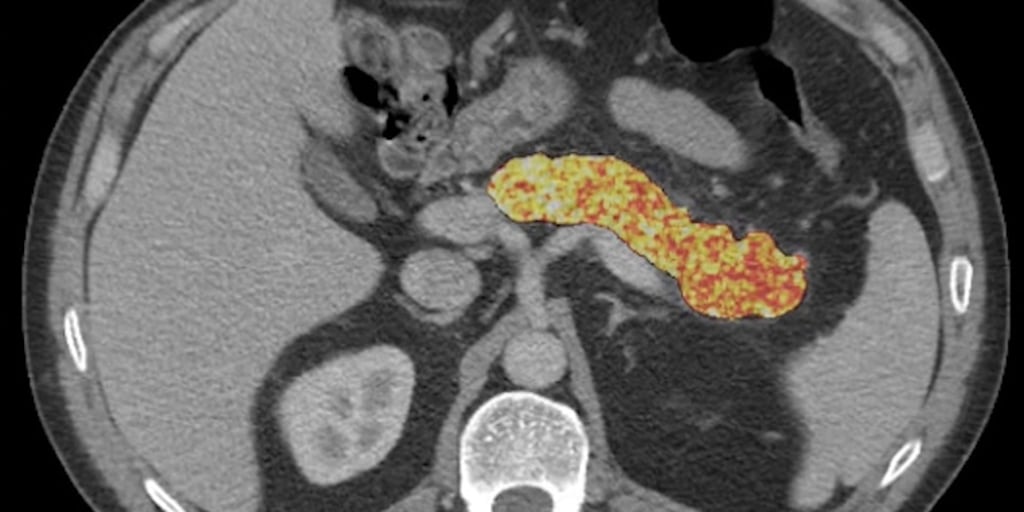
AI Breakthrough in Early Pancreatic Cancer Detection
Pancreatic cancer early detection has long been one of the greatest challenges in oncology. By the time most patients are diagnosed, treatment options are few and survival rates remain disheartening. But a recent breakthrough at the Mayo Clinic is changing the landscape: researchers have developed an artificial intelligence (AI) model capable of identifying pancreatic cancer signs years before tumors become visible on a CT scan.
The Power of AI in Medical Imaging
The Mayo Clinic’s AI model was trained using thousands of CT scans from patients who were later diagnosed with pancreatic cancer. By analyzing subtle changes in tissue, the AI was able to detect abnormalities up to three years before conventional diagnosis. This is a major leap forward in pancreatic cancer early detection, as traditional methods often fail to spot early markers hidden deep within the abdomen.
According to research published in the journal Gut, the AI model outperformed experienced radiologists, identifying early-stage indicators three times more effectively. Dr. Ajit Goenka, a radiologist at the Mayo Clinic and one of the study’s authors, explained, “We knew the signal for this disease was there, but we just needed the right tool to detect it. AI has provided that tool.”
Why Early Detection Matters
Pancreatic cancer is notorious for its late diagnosis and low survival rates. With a five-year survival rate hovering around 13%, it is projected to become the second leading cause of cancer-related deaths by 2030. About 80% of cases are diagnosed only after the disease has reached an advanced stage, when treatment options are limited.
Unlike other cancers, such as breast or colon cancer, there is no standard screening protocol for pancreatic cancer. The pancreas is located deep within the abdomen, making it impossible to feel tumors during a physical examination. Symptoms like abdominal pain or sudden weight loss usually do not appear until the cancer has already spread. This makes pancreatic cancer early detection with AI a potential game changer.
How the AI Model Works
The Mayo Clinic team trained the AI by inputting CT scans from patients with other medical conditions who were later found to have pancreatic cancer. Radiologists then compared their own interpretations with the AI’s results. The AI consistently found subtle, early changes that even experienced doctors missed, especially abnormal cell formations in the pancreas that help cancer evade the immune system.
Dr. Daniel Jeong, a diagnostic radiologist at Moffitt Cancer Center who was not involved in the research, noted that these early changes are typically invisible to the human eye. “We’re usually looking for a measurable mass, but it’s the subtle changes that matter most in early detection,” he said.
Implications and Future Use
Experts believe that this AI model could be especially beneficial for individuals with known risk factors—such as a family history of pancreatic cancer or diabetes—who don’t yet show symptoms. In these cases, pancreatic cancer early detection could lead to additional testing and earlier intervention, potentially saving lives.
However, Dr. Goenka cautions, “If a patient already has symptoms and the cancer is advanced, AI isn’t necessary for diagnosis. The value is in catching the disease before symptoms emerge.”
Other Advances in Pancreatic Cancer Research
The Mayo Clinic AI tool is not the only recent innovation in the field. Last month, an mRNA vaccine trial prolonged survival for some pancreatic cancer patients, and a new drug, daraxonrasib, was shown to double life expectancy in a clinical trial. The FDA has allowed expanded access to this drug for patients with advanced cancer, though it is not yet fully approved. Meanwhile, researchers continue to develop advanced blood tests to catch the disease even earlier.
Challenges and Next Steps
While the promise of AI is clear, it will still be several years before the Mayo Clinic’s model is widely available. The ongoing clinical trial must monitor participants for three to five years to confirm its effectiveness. Dr. Tamas Gonda of NYU Langone’s Perlmutter Cancer Center noted, “We’re making real progress, but more work is needed before we can turn this disease around.”
Other doctors, such as Dr. Pam Hodul of Moffitt Cancer Center, see the technology as a potential “game changer” for expanding surgery, chemotherapy, or radiation options for patients diagnosed at earlier stages.
The Future of AI in Diagnostics
AI technology is also being applied to diagnose a range of other conditions. Recent studies published in Science show that AI can match or even outperform physicians in emergency room diagnostics. As clinical trials continue, the hope is that AI will offer a brighter future for those at risk of pancreatic cancer, moving the field closer to reliable and routine pancreatic cancer early detection.
This article is inspired by content from Original Source. It has been rephrased for originality. Images are credited to the original source.