

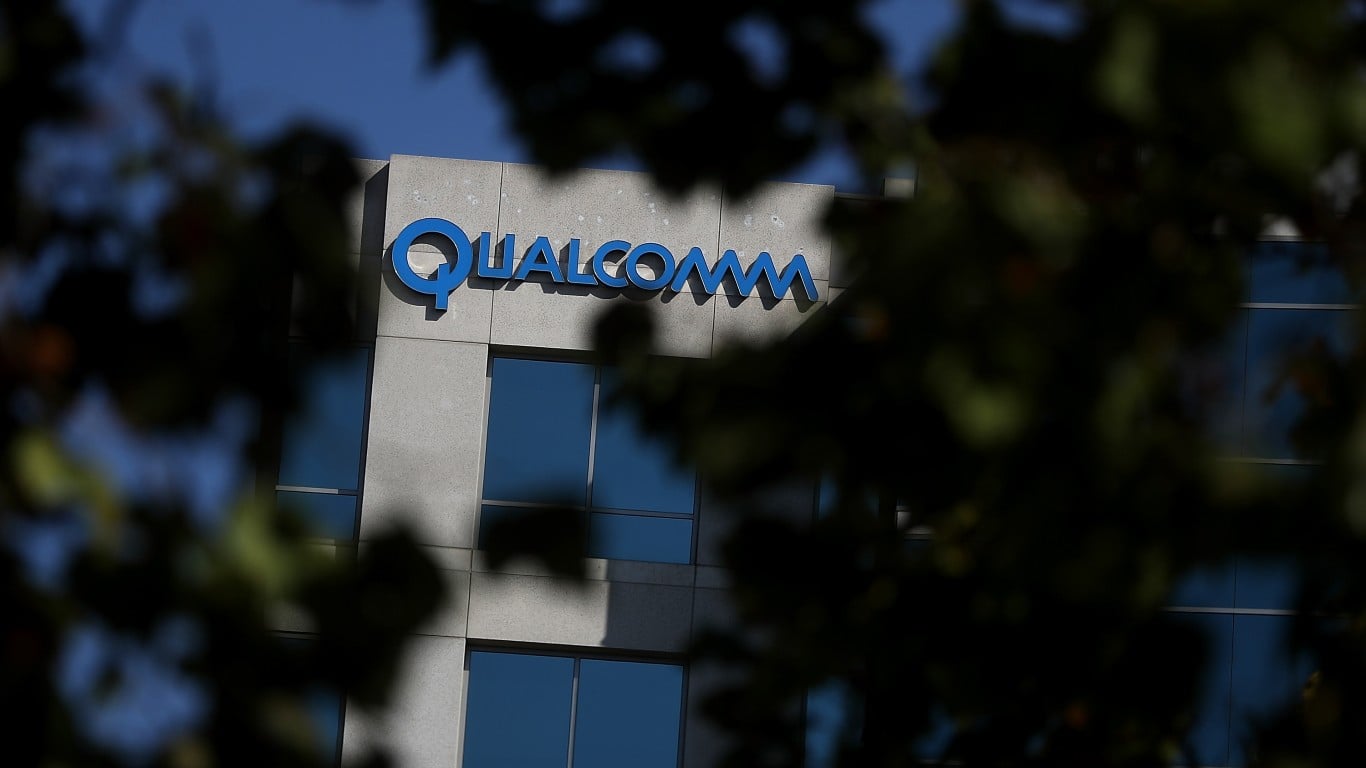
Should You Buy Qualcomm Stock After Its Meteoric Rise?
Qualcomm’s impressive performance in 2026 has caught the attention of tech investors looking for the next big opportunity in the semiconductor sector. However, as Qualcomm stock analysis reveals, there are significant factors to consider before buying into the hype. With shares recently trading at $242.57—well above consensus analyst targets—investors may want to exercise patience and wait for a more favorable entry point.
Qualcomm’s Recent Surge and What’s Driving It
In the past 30 days, Qualcomm (NASDAQ:QCOM) shares surged 68%, climbing from $149.85 to $251.02. The main catalyst was CEO Cristiano Amon’s announcement that Qualcomm’s custom silicon will ship for a major hyperscaler client in late 2026. This data center narrative has fueled much of the recent momentum, positioning Qualcomm as a key player in the AI and cloud infrastructure race. Despite this, a thorough Qualcomm stock analysis shows that current fundamentals may not justify the stock’s rapid ascent.
Qualcomm remains the dominant supplier of premium smartphone application processors and modems. Its Snapdragon franchise contributes the largest portion of total revenue, while the licensing division (QTL) delivers high-margin royalty income from global handset deployments. Beyond handsets, Qualcomm’s presence is growing in automotive systems, IoT devices, and now, hyperscaler data centers.
Growth Beyond Smartphones: Opportunities and Risks
Qualcomm’s growth story is expanding. Automotive revenue set a record at $1.326 billion, up 38% year over year, with guidance suggesting nearly 50% growth in the next quarter. The IoT segment also grew by 9%, and QTL licensing maintained a robust 72% EBT margin. Notably, the hyperscaler deal is described as a “multi-generation engagement” with a major customer, which, combined with the company’s $20 billion buyback authorization and the Alphawave acquisition for connectivity IP, offers a strong case for long-term investors.
Still, any comprehensive Qualcomm stock analysis must consider the risks. Handsets, still Qualcomm’s largest segment at $6.024 billion, saw a 13% year-over-year decline. Management’s guidance for Q3 points to further weakness, estimating handset revenue around $4.9 billion as Chinese OEMs reduce production and manage excess inventory. Total Q3 revenue is expected to drop sequentially to between $9.2 and $10 billion. Operating income also fell 26% last quarter. Additionally, insider trading activity has skewed toward net selling, with 75 recent transactions favoring insiders cashing out.
Valuation: Is Qualcomm Overheated?
At its current price, Qualcomm trades at a trailing P/E of 26 and a forward P/E of 21, metrics that are high for a cyclical chip stock, particularly heading into what are expected to be the weakest quarters of the cycle. The consensus analyst target stands at $177.10, implying a potential downside of roughly 27%. Among 39 analysts, only 2 rate it a Strong Buy, while the majority recommend holding. This cautious outlook is echoed in many recent Qualcomm stock analysis reports.
Performance-wise, Qualcomm is up 43.27% year to date and 67.19% over the last year, vastly outpacing the S&P 500 in the same period. Yet, much of this gain is built on future expectations—particularly the late 2026 hyperscaler silicon shipments—rather than current earnings growth. The Q3 guidance forecasts sequential revenue declines and weaker EPS ($2.10 to $2.30 versus $2.65 previously), raising concerns about buying at current elevated levels.
Why Patience May Be the Best Strategy
The current recommendation for Qualcomm is to hold, not buy. Valuation is the main concern. Waiting for a pullback toward $185 could allow investors to enter when handset revenue bottoms out, the timeline for hyperscaler shipments is clearer, and the risk/reward profile is more attractive. Investors should monitor several key events: the Q3 earnings report, any new disclosures on hyperscaler economics at the June 24 Investor Day, and signals of stabilization in Chinese channel inventory.
The cost of patience is missing some potential upside if the stock continues to rally. However, the cost of acting now is paying a premium for a business entering its weakest quarters. If memory pricing recovers faster than expected or if the hyperscaler deal expands to more customers in 2027, the bull case may strengthen. Until then, a cautious approach is warranted according to the latest Qualcomm stock analysis.
Conclusion: Assess Before You Invest
Qualcomm’s future in data centers and AI-driven applications looks promising, but the stock’s current valuation reflects optimism that may not be supported by near-term fundamentals. A careful Qualcomm stock analysis suggests waiting for a more attractive entry point, especially as the company navigates short-term revenue and earnings pressures. Long-term investors may ultimately benefit by exercising patience and closely monitoring upcoming company milestones.
This article is inspired by content from Original Source. It has been rephrased for originality. Images are credited to the original source.