

Introduction: AI Robotics Training Shaping the Future
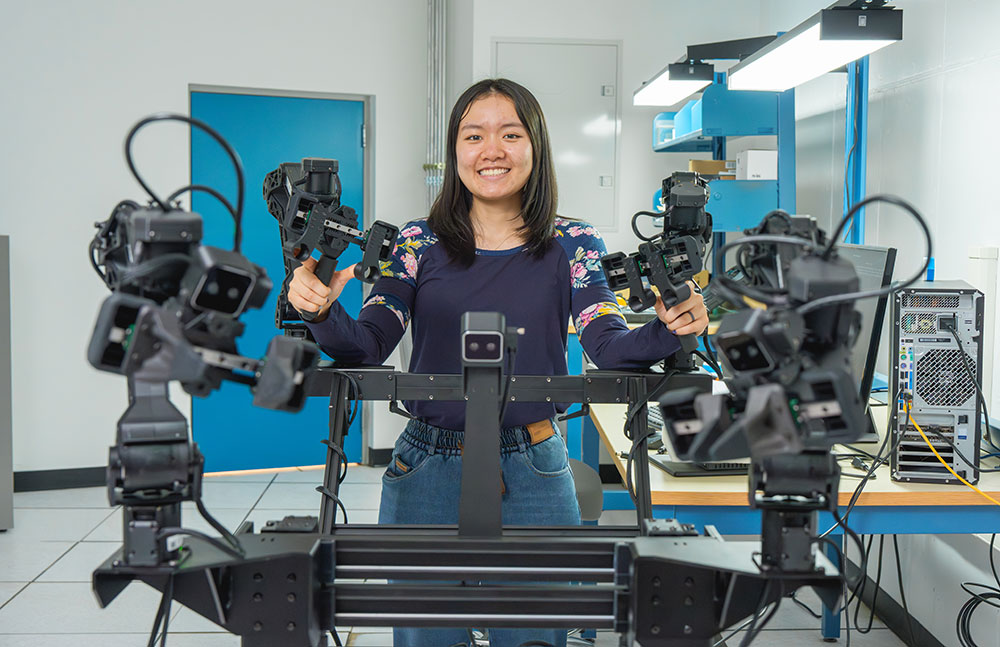
Artificial intelligence (AI) robotics training is rapidly changing the way robots learn and interact with the world. At Brookhaven National Laboratory, an exciting initiative highlights how students and researchers are harnessing the power of AI to drive advancements in robotics. Jasmin Lin, a graduate student at Brandeis University with a background in biology and bioinformatics, has become a key player in this technological evolution. Her journey from studying life sciences to developing innovative AI-driven solutions for robotics demonstrates the interdisciplinary potential of modern research.
From Biology to AI Robotics Innovation
Jasmin Lin didn’t originally plan to delve into the fields of artificial intelligence or robotics. With her undergraduate degree in biology from Stony Brook University and current master’s studies in bioinformatics at Brandeis University, Lin’s academic path was rooted in life sciences. However, the dynamic research environment at Brookhaven Lab sparked her curiosity for AI robotics training and inspired her to apply computational methods to the world of robotics.
During her internship, Lin worked closely with a team of scientists specializing in robotics and machine learning. This collaboration allowed her to explore the intersection between biological data analysis and advanced robotics. By leveraging her programming and analytical skills, Lin contributed to projects that focused on making robots more adaptable and efficient using AI-driven approaches.
How AI Accelerates Robotics Training
The core of AI robotics training lies in using machine learning algorithms to teach robots how to perform complex tasks. At Brookhaven Lab, Lin and her colleagues implemented AI models that enable robots to learn from both data and real-world experiences. This approach shortens training times and improves the robots’ ability to adapt to new situations.
For instance, Lin utilized reinforcement learning techniques—an AI method where robots receive feedback based on their actions. By continuously adjusting their behaviors in response to outcomes, robots can quickly optimize their performance. This iterative learning process is a major step forward compared to traditional, rule-based programming, which often requires manual updates and lacks adaptability.
Applications and Impact in Research
The advancements in AI robotics training have far-reaching implications for scientific research and industry. At Brookhaven Lab, robots equipped with AI can handle tasks such as managing laboratory equipment, performing repetitive experiments, and even analyzing large datasets. These systems free up researchers’ time, allowing them to focus on more complex problems and creative solutions.
Lin’s work also demonstrates the value of interdisciplinary expertise in AI robotics training. By combining her understanding of biological systems with machine learning techniques, she bridges gaps between fields and opens new avenues for innovation. For example, robots trained using AI can assist in automating bioinformatics analyses, speeding up discoveries in genetics, drug development, and personalized medicine.
The Importance of Hands-On Experience
One of the key lessons from Lin’s journey is the importance of hands-on research experiences in mastering AI robotics training. Working directly with robots and AI models gave Lin insights that can’t be gained from textbooks alone. She learned how to troubleshoot complex systems, interpret machine learning results, and collaborate effectively with multidisciplinary teams.
This practical exposure is essential not only for students but also for professionals looking to transition into the rapidly evolving field of AI robotics training. As industries from healthcare to manufacturing adopt smart robots, demand for skilled practitioners who understand both robotics and AI will continue to grow.
Looking Ahead: The Future of AI Robotics Training
The work being done at Brookhaven Lab, including Lin’s contributions, signals a promising future for AI robotics training. As artificial intelligence technology advances, robots will become increasingly autonomous and capable of tackling tasks that were once thought to be beyond their reach. The synergy between AI and robotics is expected to revolutionize industries, accelerate scientific discovery, and improve everyday life.
Jasmin Lin’s story serves as an inspiration for students and researchers from all backgrounds. Her experience shows that with curiosity, interdisciplinary collaboration, and a willingness to learn, anyone can contribute to breakthroughs in AI robotics training. The journey from biology to robotics is just the beginning—AI-powered robots are poised to transform the way we live and work.
This article is inspired by content from Original Source. It has been rephrased for originality. Images are credited to the original source.