

AI-Powered Learning Model Grows Beyond Texas
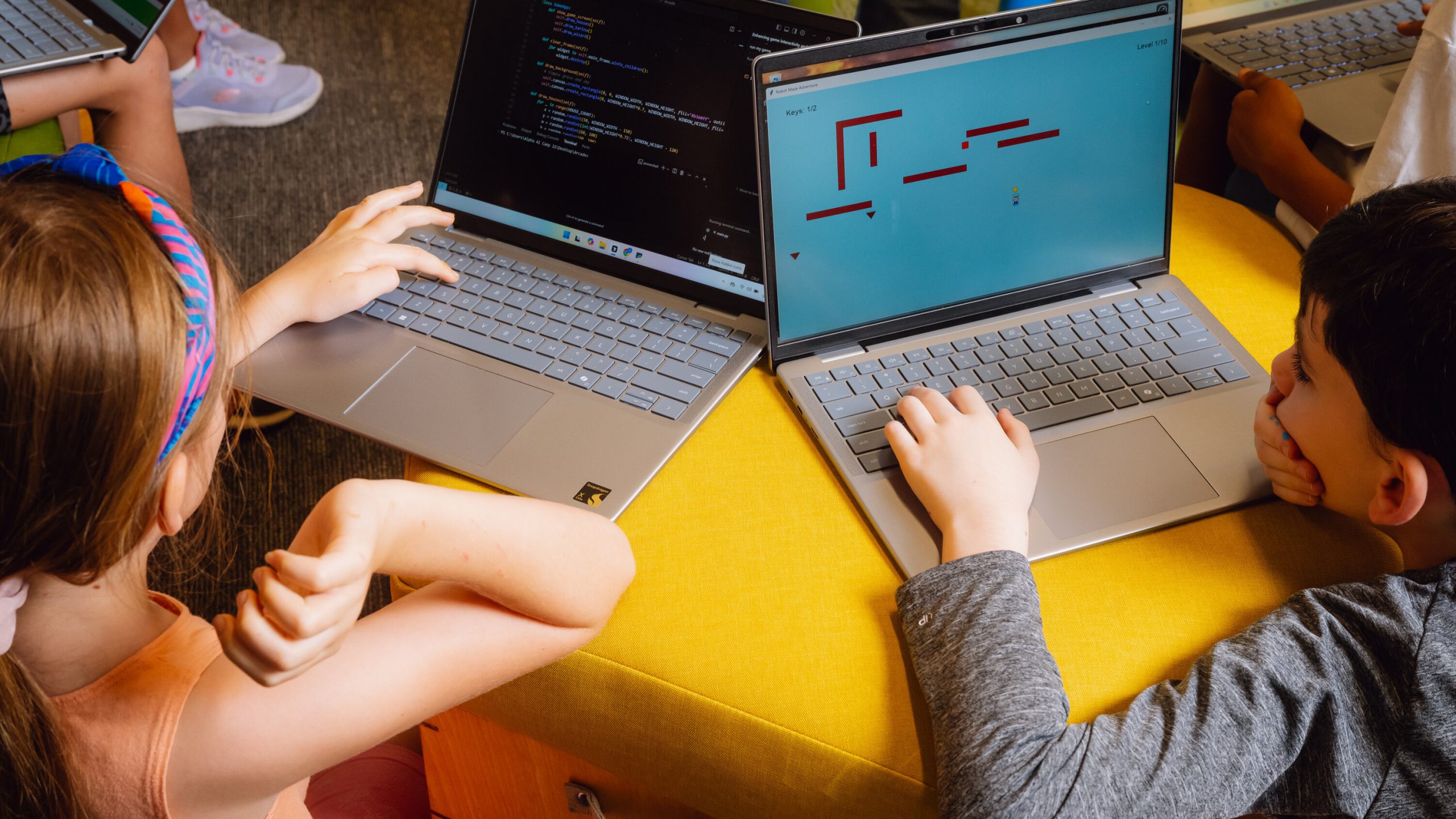
Alpha School, a private institution founded in Austin, Texas, is rapidly expanding into cities across the United States. Known for its unconventional use of artificial intelligence (AI) in education, Alpha is redefining traditional learning with its “2 Hour Learning” model. Students spend just two hours a day on core subjects like math and reading through AI-driven software, while the rest of the day is devoted to hands-on projects and skill-building activities guided by adult mentors.
MacKenzie Price, Alpha’s co-founder and a prominent influencer, has described classrooms as “the next global battlefield.” She believes that integrating AI into education is no longer a concept for the future—it’s happening now. “I’ve seen the future,” she wrote on social media, “and it isn’t 10 years away. It’s here, right now.”
Customized Learning and Expanding Footprint
Alpha’s approach centers around personalized learning, where AI software tailors lessons to each student’s individual pace and ability. This eliminates the need for traditional teachers and allows adult “guides” to focus on student motivation and engagement. The model currently serves about 200 students from kindergarten to eighth grade and another 50 high schoolers across two campuses in Austin. Tuition runs at $40,000 annually, with guides earning six-figure salaries.
The school’s expansion includes new branches in Miami, Brownsville, New York City, and Orlando, among others. Several of the new campuses will operate within existing private school facilities, starting with around 25 students each. Alpha officials say this scaling approach allows them to retain quality while growing their footprint.
Supporters and Critics Debate AI’s Role in Education
Supporters argue that AI offers a more efficient and adaptable learning environment. Byron Attridge, a 12-year-old student at Alpha, shared, “You don’t get held back by your peers or what the teacher is teaching.” He is currently working on eighth-grade math, ninth-grade reading, and 10th-grade language arts.
However, critics are skeptical. Randi Weingarten, president of the American Federation of Teachers, warned, “When you have a school that is strictly A.I., it is violating that core precept of the human endeavor and of education.” Detractors fear the approach sacrifices socialization and critical thinking for screen time and algorithmic learning.
More Than Just Screens: Emphasis on Collaboration
Despite criticism, Price insists Alpha is not a “screen school.” Students spend most of their time in collaborative workshops focused on real-world skills such as entrepreneurship, public speaking, and financial literacy. “Motivation is 90 percent of what creates a great learning experience,” Price explained.
Alpha students have undertaken projects like launching a food truck and creating cyanotypes at summer camps. These activities are designed to instill practical knowledge and teamwork. In one instance, fifth and sixth graders learned budgeting, business planning, and cooking through their food truck initiative—guided by AI chatbots and adult mentors.
Public Integration and Resistance
Alpha is also making inroads into public education. The state of Arizona is partnering with Alpha to launch a virtual AI charter school this fall, marking Alpha’s first public education venture. Meanwhile, Alpha hopes to establish a national charter network under the brand Unbound Academy. Yet, several state education boards, including those in Pennsylvania, Texas, and Utah, have rejected the proposal, citing a lack of evidence and concerns about alignment with academic standards.
Other districts are cautiously exploring AI. Miami-Dade County Public Schools have trained over 1,000 teachers in AI tools and rolled out Google chatbots for more than 105,000 high schoolers. The American Federation of Teachers even plans to launch an AI training hub for educators.
Diverse Student Experiences and Outcomes
The student body at Alpha often includes children of tech industry professionals. Bret Siers, CEO of an AI video firm, relocated from Los Angeles to enroll his twin boys, Lukas and Jaxon, at Alpha. His wife, Robyn, noted that Lukas, who has dyslexia, has gained confidence through Alpha’s emphasis on non-academic strengths like chess.
Last year, Alpha graduated its first senior class. Eleven of the twelve students were accepted into four-year universities including Stanford, Vanderbilt, and the University of Texas at Austin. One student chose a career as a professional water skier.
Project-Based Learning and Masterpieces
One of Alpha’s standout features is its “masterpiece” program—intensive, student-led projects aligned with personal passions. Students have developed a chatbot offering dating advice, an emotional support teddy bear, and even a 120-acre mountain bike park—the largest in Texas. These projects are designed to surpass AI knowledge and foster what Alpha calls “spiky points of view”—unique perspectives that AI can’t replicate.
“To be a useful person in the age of A.I., you have to have unique insights that A.I. doesn’t really agree with,” said Alex Mathew, a 16-year-old senior. “That’s the real differentiator. We are trying to beat A.I.”
This article is inspired by content from Original Source. It has been rephrased for originality. Images are credited to the original source.