
AI in Education: A Tool or a Crutch?
Artificial intelligence in education is rapidly changing how students write, think, and learn. Across Santa Barbara, from Dos Pueblos High School to the University of California, Santa Barbara (UCSB), educators are navigating the double-edged sword of this powerful technology. As AI platforms like ChatGPT and Google Gemini become more accessible, teachers and professors are teaching students to use these tools thoughtfully—leveraging them for growth instead of relying on them as a shortcut.
UCSB’s Forward-Thinking Approach to AI
This shift in attitude towards artificial intelligence in education is marked by UCSB’s announcement to launch a brand-new undergraduate major in artificial intelligence in the 2026–27 academic year. According to engineering dean Umesh Mishra, “Artificial intelligence has rapidly risen to become perhaps the most important technological advancement of this decade.” This new major, approved by the Academic Senate, reflects the university’s commitment to preparing students for a future where AI literacy is essential.
Faculty members emphasize that AI can be a force for good, but only if used with care. The curriculum is designed to teach students both the immense potential of AI and the responsibilities that come with it.
The Challenge of Detecting AI-Generated Work
One major concern for educators is the ability to distinguish between student-created content and that produced by AI. Many professors use AI-powered detection tools like Turnitin to spot potential instances of AI-generated writing. However, as Dos Pueblos High School video production and yearbook teacher John Dent points out, “There is no such thing as an AI detector.” UCSB multimedia and writing professor Daniel Frank agrees, stating, “You cannot detect AI writing… We speak in patterns. That’s what AI produces—patterns.”
False positives and negatives are common, especially for students who naturally write in formulaic ways, such as English-language learners. The consensus among educators is that banning AI is not the answer; instead, open discussion and critical engagement are key to helping students understand and use AI responsibly.
Using AI as a Learning Tool
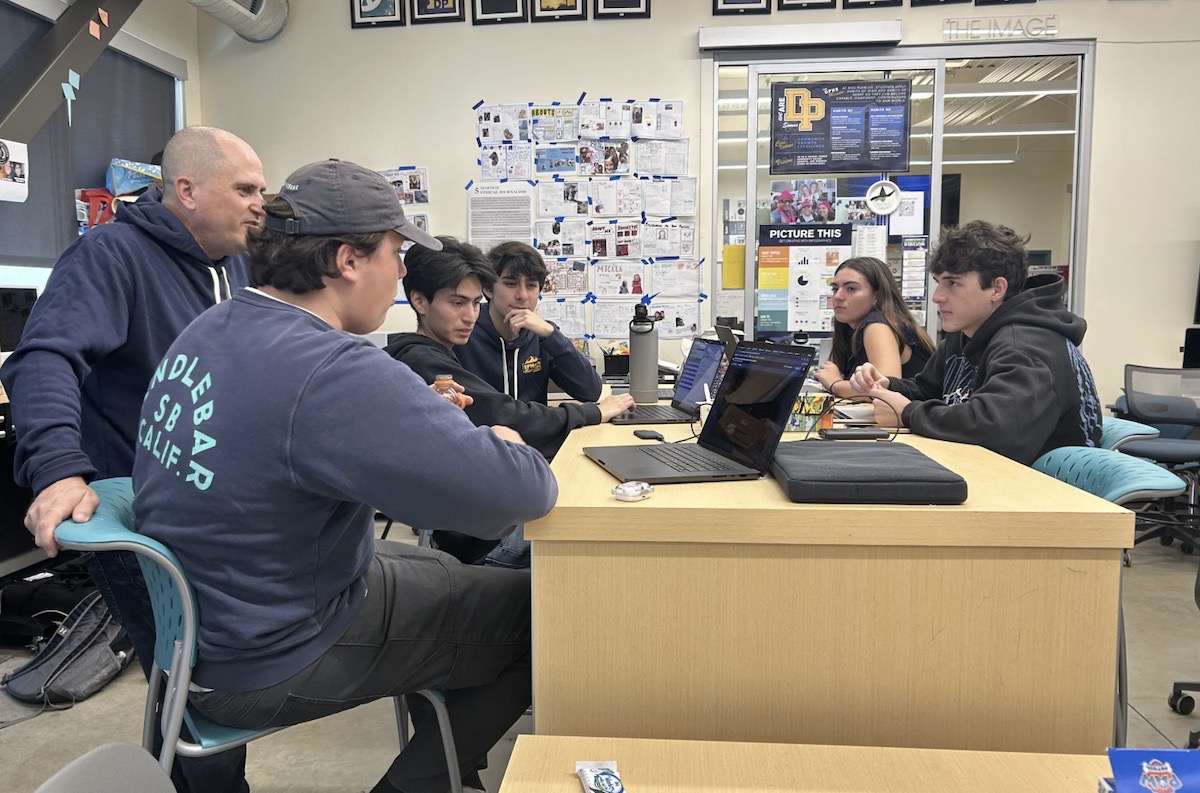
At Dos Pueblos High School, the integration of artificial intelligence in education varies by subject. In media and engineering classes, AI is used to refine scripts, organize ideas, and serve as a creative soundboard. “If they need a starting point, sometimes they’ll go to AI,” Dent explains. “Then we have them build from it.” Here, AI is framed as a tool for enhancement, not replacement.
In more traditional subjects like English and history, however, the risks are different. Assignments meant to develop critical thinking and writing skills can be easily completed by AI, undermining the learning process. Professor Frank advises, “You can use it well and carefully. You can also use it really poorly in ways that are bad for you and bad for the world.”
AI’s Role in Shaping the Future Workforce
While some worry that AI will replace human jobs, educators in Santa Barbara see it differently. Billboards in cities like San Francisco warn, “Stop Hiring Humans. The Era of AI Is Here.” But Frank believes that while AI may surpass humans in speed and efficiency, it cannot replace expertise, judgment, or the nuances of human interaction. “AI will not replace an expert,” he asserts. “It doesn’t have judgment.”
Reporting and classroom experience show that AI cannot substitute for human care or creativity. It cannot serve as a therapist, a friend, or a surgeon. Most importantly, it cannot replicate the thoughtful, original writing produced by skilled students and journalists.
Teaching Responsible AI Use
The consensus among Santa Barbara educators is clear: the proper use of artificial intelligence in education can be taught. Instead of pushing AI use into the shadows, teachers encourage open dialogue and critical thinking. Students are learning to see AI as one of many tools at their disposal—a starting point to build from, not a crutch to lean on.
As UCSB prepares to welcome its first cohort of AI majors and local high schools integrate AI into their curricula, Santa Barbara is setting an example for how educational institutions can adapt to, and thrive in, the age of artificial intelligence.
This article is inspired by content from Original Source. It has been rephrased for originality. Images are credited to the original source.