

Introduction: AI Customer Experience Revolution
The emergence of AI customer experience solutions is transforming the way organizations connect with their users. The Bundesliga, Germany’s top professional soccer league, has taken a pioneering step by introducing Captain, an agentic AI companion within its official app. This move not only elevates fan engagement but also offers a glimpse into the future of digital interactions across industries.
Bundesliga’s Captain: The AI-Powered Companion
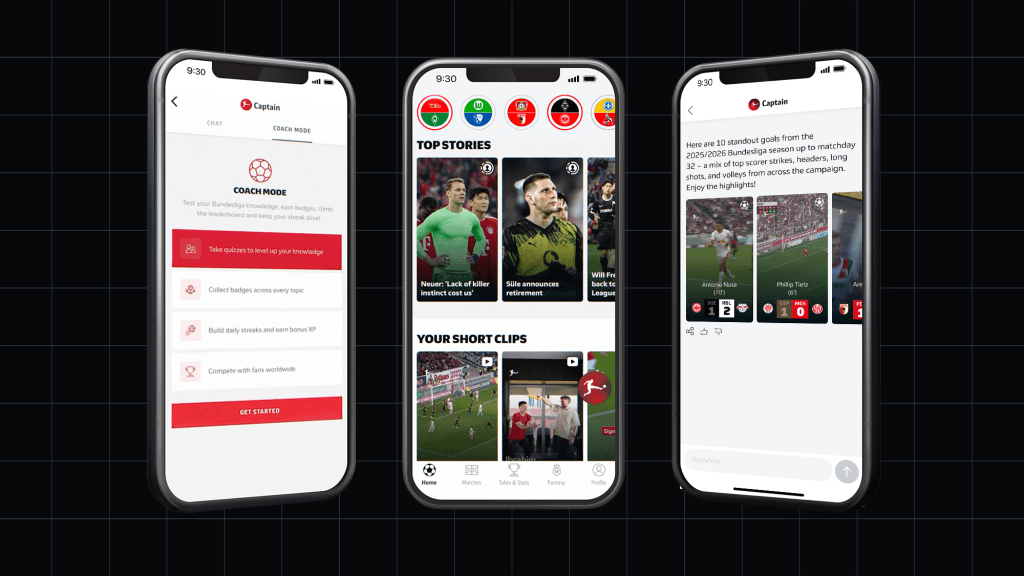
Captain is more than a chatbot. Integrated directly into the Bundesliga app and powered by AWS, it provides fans with a conversational interface that feels like interacting with a knowledgeable friend. Users can ask questions such as, “How has Jamal Musiala performed for Bayern this season compared to his national team?” and receive in-depth responses backed by official league data, complete with statistics, historical context, and video highlights.
Key features of Captain include:
- Instant access to live statistics, historic match data, tactical analysis, trivia, and personalized video highlights through chat.
- Proactive insights during major moments—like goals or milestones—where AI surfaces relevant records, streaks, or parallels to historic games.
- A unique “coach mode” that gamifies learning about soccer, adapting explanations and lessons to each fan’s knowledge level.
The Technology Behind Captain
Captain leverages a multi-agent architecture, using Amazon Bedrock and Amazon Nova to dynamically route requests to the most suitable AI models and workflows. Simple questions are handled by lightweight models, while complex queries use advanced models, including text-to-SQL pipelines that translate natural language into direct database queries. This design creates a seamless, AI customer experience built upon robust data infrastructure.
The data strategy is equally impressive. Bundesliga has evolved from tracking one point per player per second to 3D skeletal tracking at 21 points per player, 50 frames per second—now collecting nearly 200 million data points per match. This immense data is ingested in real-time using Amazon MSK, stored in a modern lakehouse on S3 with Apache Iceberg, and analyzed via Amazon Athena. Vector stores cache common question patterns, reducing costs and improving speed for repeated queries.
Personalization and Proactive Storytelling
What sets Captain apart in the realm of AI customer experience is its proactive nature. The system isn’t just reactive; it continuously monitors live events and autonomously generates compelling narratives and suggestions. When a key moment occurs, Captain can push stories about records, player streaks, or historic parallels directly to fans’ devices, enriching the experience without users needing to know what to ask.
This same data-driven foundation is used by Bundesliga broadcasters and editors, showing how both editorial and fan experiences benefit from a unified AI backbone. For IT leaders, this demonstrates the critical role of a strong data strategy in delivering generative AI experiences that are both personalized and scalable.
Lessons for Businesses: Shaping the Future of CX
Bundesliga’s Captain highlights several crucial shifts in AI customer experience that other organizations can emulate:
- Companion Apps: Moving from static menus to conversational companions consolidates multiple user needs—scores, stats, research, learning—into a single interface. This approach can be adapted for digital banking, healthcare, or retail, with AI serving as a digital relationship manager or shopping concierge.
- Proactive Support: Instead of waiting for user queries, AI agents can anticipate needs, suggest actions, and deliver timely insights—similar patterns could redefine insurance, B2B sales, and customer support.
- Adaptive Experiences: Features like Coach Mode allow the same platform to teach beginners or offer detailed analysis to experts, tailoring the journey for every user without duplicating content or features.
- Dynamic Micro-Journeys: AI stitches together personalized micro-journeys in real time, ensuring each interaction is relevant and contextual.
Implementation Considerations for IT Leaders
For those looking to replicate Bundesliga’s AI customer experience success, consider these best practices:
- Data First: Establish a robust data foundation with comprehensive tracking, consistent schemas, and real-time streaming. Inventory data sources, identify coverage gaps, and ensure data quality before deploying AI companions.
- Design with Agents: Separate architecture into specialized agents for routing, data retrieval, verification, and personalization. This modularity allows systems to evolve and scale efficiently.
- Dynamic Model Routing: Use lighter models for routine questions and dedicate advanced models to complex queries, optimizing costs and performance.
- Conversational UX: Integrate chat with rich media (video, stats, widgets) and maintain context across devices and channels for a seamless user journey.
- Prioritize Trust and Safety: Ground AI outputs in verified data, enforce access controls, and use human oversight for high-risk interactions to protect brand reputation.
Conclusion: The Road Ahead for AI Customer Experience
The Bundesliga’s Captain offers a compelling vision for the future of AI customer experience. By investing in strong data infrastructure, modular AI architecture, and proactive, adaptive user journeys, organizations can turn their own data into deep customer loyalty. IT leaders who embrace these principles will be best positioned to provide meaningful, scalable, and trusted digital experiences in the years to come.
This article is inspired by content from Original Source. It has been rephrased for originality. Images are credited to the original source.