

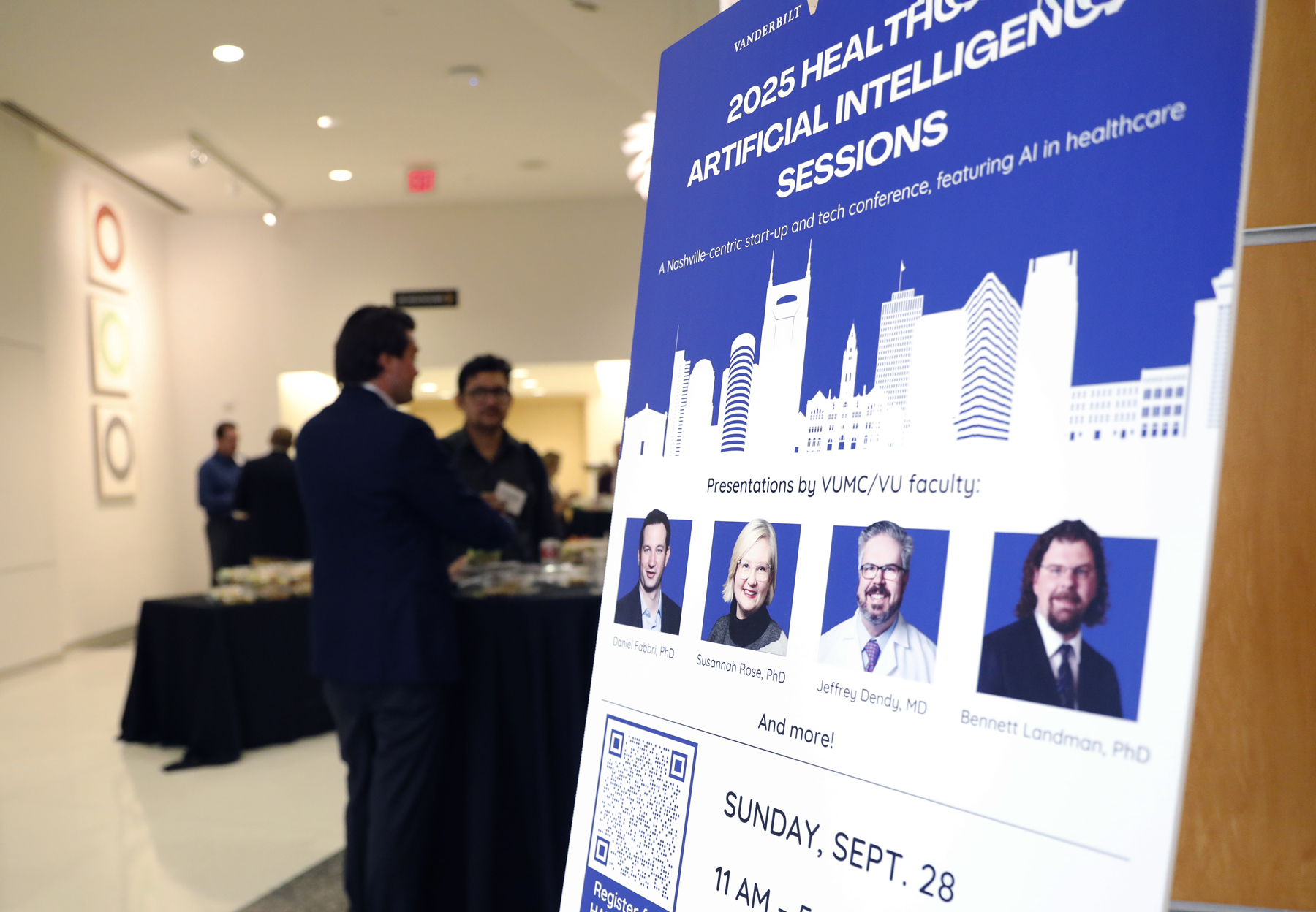
Annual Symposium Highlights AI’s Role in Health Innovation
Artificial intelligence (AI) is rapidly transforming the landscape of health care, and this evolution took center stage at the third annual Healthcare Artificial Intelligence Sessions held on September 28 at Vanderbilt University Medical Center’s Langford Auditorium. Sponsored by the Brock Family Center for Applied Innovation, the symposium brought together a diverse group of experts to address AI’s current and future impact on the health care industry.
The event featured a range of speakers from Vanderbilt University Medical Center (VUMC) and institutions across the country, offering insights into the ethical, technological, and entrepreneurial dimensions of AI in health care. The sessions were strategically timed to coincide with the Nashville Health Care Council’s 2025 Healthcare Sessions, held from September 29 to 30, attracting health care professionals, business leaders, and students from across the United States.
Ethical and Security Challenges in AI Implementation
One of the key themes of the symposium was the importance of safeguarding data and addressing the ethical implications of AI in clinical settings. Experts emphasized the risks associated with AI-generated content, particularly concerning chatbots that might provide misleading or harmful information. These discussions underscored the necessity of developing robust frameworks for AI governance and data protection in health systems.
“AI tools must be held to rigorous ethical standards,” said one panelist. “As we incorporate these technologies into sensitive areas like patient care, we must ensure they are both safe and effective.”
Entrepreneurship and Innovation in Health AI
Another major focus of the event was the entrepreneurial potential AI brings to the health sector. Founders and executives from AI-driven startups shared how their innovations are reshaping diagnostics, patient engagement, and administrative processes. Attendees heard firsthand how AI is being used to reduce inefficiencies and improve clinical outcomes across various medical specialties.
Startups showcased included those developing AI tools for early disease detection, personalized treatment recommendations, and automation of routine clinical tasks. These ventures illustrated how AI is not just augmenting but also redefining traditional health care workflows.
Collaboration Across Disciplines
Speakers emphasized the critical need for interdisciplinary collaboration in advancing AI health applications. Physicians, data scientists, engineers, and ethicists must work together to ensure that AI solutions are not only technically sound but also socially responsible.
“We’re seeing a convergence of fields,” said another expert. “To truly harness AI’s potential, we need to break down silos and foster communication between clinical and technical experts.”
Such collaboration is already underway at institutions like VUMC, where integrated teams are conducting research and pilot programs to explore AI’s potential. These efforts are laying the groundwork for future innovations that could improve patient care and operational efficiency.
New VUMC Center Driving AI Advancement
Coinciding with the symposium, VUMC announced the launch of ADVANCE (AI Discovery and Vigilance to Accelerate Innovation and Clinical Excellence), a new center dedicated to developing and overseeing health AI initiatives. Housed within the Department of Biomedical Informatics, ADVANCE aims to become a national leader in safe, impactful AI deployment in medical settings.
The center will focus on research, education, and practical application of AI tools, ensuring they align with clinical needs and ethical standards. ADVANCE represents a bold step toward institutionalizing AI in health care and creating a model for other organizations to follow.
National Dialogue on AI in Health Care
The conversations at the symposium reflect a broader national dialogue about the role of AI in medicine. In February 2025, a group of 12 experts, including academics and leaders from major tech companies like Microsoft, Google, and Epic, issued a set of recommendations for national AI priorities in health care. These guidelines aim to ensure that the development and deployment of AI align with public health goals and ethical norms.
With AI’s influence expanding rapidly, such discussions are essential for guiding policy and practice. Events like the Healthcare Artificial Intelligence Sessions provide a valuable forum for stakeholders to explore challenges, share solutions, and build the networks needed to drive responsible innovation.
Looking Ahead
As AI continues to evolve, its role in health care will only grow more significant. Conferences like this year’s Healthcare AI Sessions serve as critical platforms for shaping the future of medicine. By bringing together voices from academia, industry, and clinical practice, these events help ensure that the integration of AI into health care is thoughtful, ethical, and impactful.
In the words of one attendee, “We’re not just talking about the future of technology—we’re shaping the future of health.”
This article is inspired by content from Original Source. It has been rephrased for originality. Images are credited to the original source.