

The Rise of AI in the Workplace
Travis Hart, a 34-year-old from Monticello, Minnesota, noticed a growing trend while applying for jobs: a surprising number of listings required experience with ChatGPT. After losing his job at a small e-commerce company, Hart became increasingly concerned about how artificial intelligence (AI) might impact his job prospects. “It’s scary seeing AI listed as a required skill,” he said. “It feels like a trick, but people are treating it like a real qualification.”
Generative AI tools such as ChatGPT are making rapid inroads in various industries, from health care and finance to communications. Businesses are investing heavily in AI integration and training. Walmart, for example, plans to invest nearly $1 billion in AI training in 2026 and has partnered with OpenAI. Meanwhile, Bank of America is allocating $4 billion—about a third of its tech budget—towards AI development this year.
Workforce Anxiety Grows
This surge in AI investment is sparking anxiety among workers, particularly as the broader labor market slows. The technology’s expansion recalls the automation and offshoring trends of previous decades, which led to widespread job losses—primarily among blue-collar workers. But this time, white-collar roles are also at risk.
Ford Motors CEO Jim Farley added fuel to the fire by predicting at the Aspen Ideas Festival that AI could replace half of all white-collar workers in the U.S. A recent Resume.org survey supports this concern, finding that 40% of U.S. companies plan to replace employees with AI by 2026.
AI Spending Amid Economic Uncertainty
Even as companies hesitate to hire due to economic instability, many are doubling down on AI. According to Makoto Tsuchiya, a senior economist at Oxford Economics, AI is one of the few investment areas sustaining the economy amid tariff pressures. Neel Kashkari, President of the Federal Reserve Bank of Minneapolis, noted in a recent essay that the economy is shifting from labor-intensive to more automated sectors.
“We’ve seen a remarkable investment boom in technology—especially in building AI data centers,” Kashkari wrote. “While constructing a data center requires many workers, operating one needs far fewer.”
Though widespread layoffs haven’t occurred yet, more job seekers are experiencing prolonged unemployment. As the hiring rate drops and the national unemployment rate edges upward, the risk of a recession looms. Economists warn that AI could fundamentally alter the path of economic recovery. Stefania Albanesi, an economics professor at the University of Miami, explained that employers typically adopt new technology to replace laid-off workers during economic rebounds. “If tech evolves significantly during a downturn, it could accelerate the deployment of AI at scale,” she said.
AI’s Expanding Capabilities
One challenge is the uncertainty surrounding AI’s ultimate impact. As adoption grows, so do the capabilities of these tools. Generative AI is now used for tasks ranging from writing emails and resumes to building slide decks. According to a new Deloitte survey, more than a third of respondents reported using AI for work, up from just 6% in 2023. Many are integrating these tools independently, without formal guidance from their employers.
Despite concerns, a majority of surveyed workers believe that generative AI can serve as a helpful assistant in their roles. However, nearly 70% also agree that tech companies are innovating too quickly and failing to adequately address risks.
“The pace of change is unlike anything we’ve seen before,” said Lou DiLorenzo, head of U.S. tech, AI and data strategy at Deloitte. “The potential for generative AI to solve a variety of problems is growing rapidly and shows no signs of slowing down.”
Training the Workforce for AI
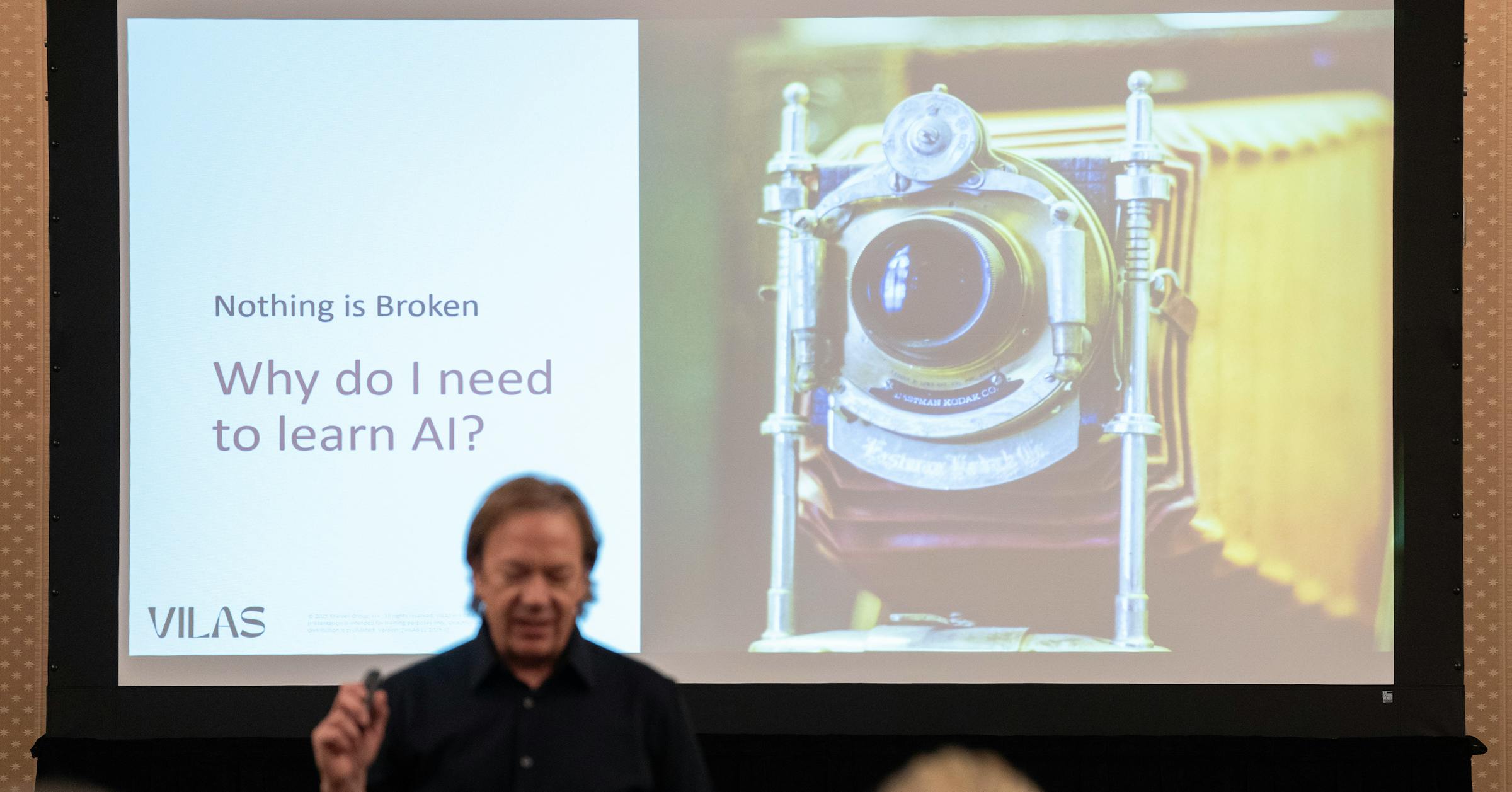
Minneapolis-based Vilas AI began offering AI workplace training in 2023, when the technology was still in its infancy. Co-owner James Holmberg remarked on its rapid development. “It was really awkward at first, but by 2025, it took a huge leap forward,” he said. However, Holmberg doesn’t foresee widespread job loss. “Jobs don’t disappear—they become leaner and more intense,” he said.
Daniel Martelly, a 33-year-old software engineer in Minneapolis, experienced a range of emotions when AI tools first emerged. Initially skeptical and fearful, he now sees AI as a useful tool. “I’ve gone through the emotional cycle and can now view it objectively,” Martelly said. Still, he worries about AI replacing his role if his boss can use it directly. More importantly, he’s concerned that younger colleagues may rely too heavily on AI without understanding the underlying principles.
“It’s crucial to grasp what’s happening under the hood,” he emphasized. “You need to understand why something works so you can fix it when it breaks.”
This article is inspired by content from Original Source. It has been rephrased for originality. Images are credited to the original source.