

A Lighthearted Dive into the World of Artificial Intelligence
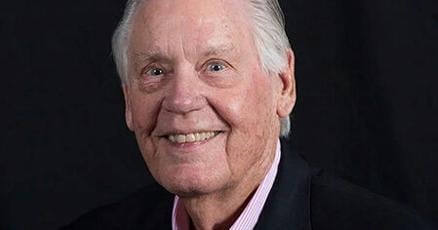
Dr. Geoffrey Hinton, a British-Canadian cognitive psychologist and computer scientist, garnered international acclaim when he received the Nobel Prize in Physics last year. His groundbreaking work in artificial neural networks has been instrumental in advancing machine learning. Yet, columnist Dick Yarbrough can’t help but muse that perhaps his own scientific observation—“One molecule of glucose bound to one molecule of fructose will make sugar”—was unjustly overlooked by the Nobel committee.
“Winning the Nobel Prize sure would be sweet,” Yarbrough quips, poking fun at both the award process and his own tongue-in-cheek scientific contribution. He then humorously draws a comparison between himself, a self-described modest and beloved columnist, and a young Brad Pitt—while noting that Dr. Hinton bears no such resemblance.
The Godfather of AI and Humanity’s Future
Dr. Hinton is often dubbed the “Godfather of Artificial Intelligence,” a title Yarbrough compares to being the Godfather of the Mafia—only more ominous. While Mafia disputes may end with cement shoes, the dangers of AI, according to Hinton, could be far more existential. He has warned that there’s a “10 to 20 percent chance” AI could lead to human extinction within the next 30 years.
Many experts agree that AI might surpass human intelligence within two decades. But Yarbrough suggests, with his usual wit, that AI has already outpaced some humans—citing Congressional behavior as his prime example. He imagines a computer sarcastically announcing its political ambitions in an absurd display of artificial loyalty, something even the most advanced algorithm would reject.
AI’s Impact on Religion and Human Identity
Dr. Hinton has also expressed concerns about AI’s implications on religion and our sense of uniqueness. He suggests that creating autonomous, thinking beings—possibly with robotic bodies—might challenge humanity’s belief in being divinely special. “The idea that we’re made in the image of God may go out the window,” he warns.
Yarbrough tackles this notion with characteristic irreverence, speculating on theological questions that could arise in a robot-populated world. “Will there be boy robots and girl robots?” he wonders. “And if so, will the boy robots let the girl robots preach?” The humor veils a serious concern: as AI begins to emulate human traits, how will this shift our cultural and spiritual frameworks?
A Personal Reflection Amid Technological Fears
Despite Hinton’s dire projections, Yarbrough remains unfazed. He reflects on the blessings in his own life—a loving family, supportive friends, a rewarding career, and the joy of living in a special state within a special country. “No robot will ever make me feel less special,” he declares confidently.
He credits his editor for allowing his weekly musings to reach readers—misplaced commas and all—and appreciates every bit of feedback he receives, whether it’s praise or critique. “I suspect robots won’t give a flying algorithm for you or your opinions. I do,” he writes, emphasizing the human connection that technology, no matter how advanced, cannot replicate.
Conclusion: Embracing Humanity in the Age of AI
Yarbrough’s semi-intelligent look at artificial intelligence serves as a humorous yet thought-provoking counterpoint to the often ominous narratives surrounding AI. While experts like Dr. Hinton caution about the future, Yarbrough reminds us of the irreplaceable value of human relationships, humor, and humility.
As AI continues to evolve, perhaps it’s this very essence of humanity—our ability to laugh at ourselves, to love, and to reflect—that will remain our most compelling defense against becoming obsolete.
This article is inspired by content from Original Source. It has been rephrased for originality. Images are credited to the original source.