

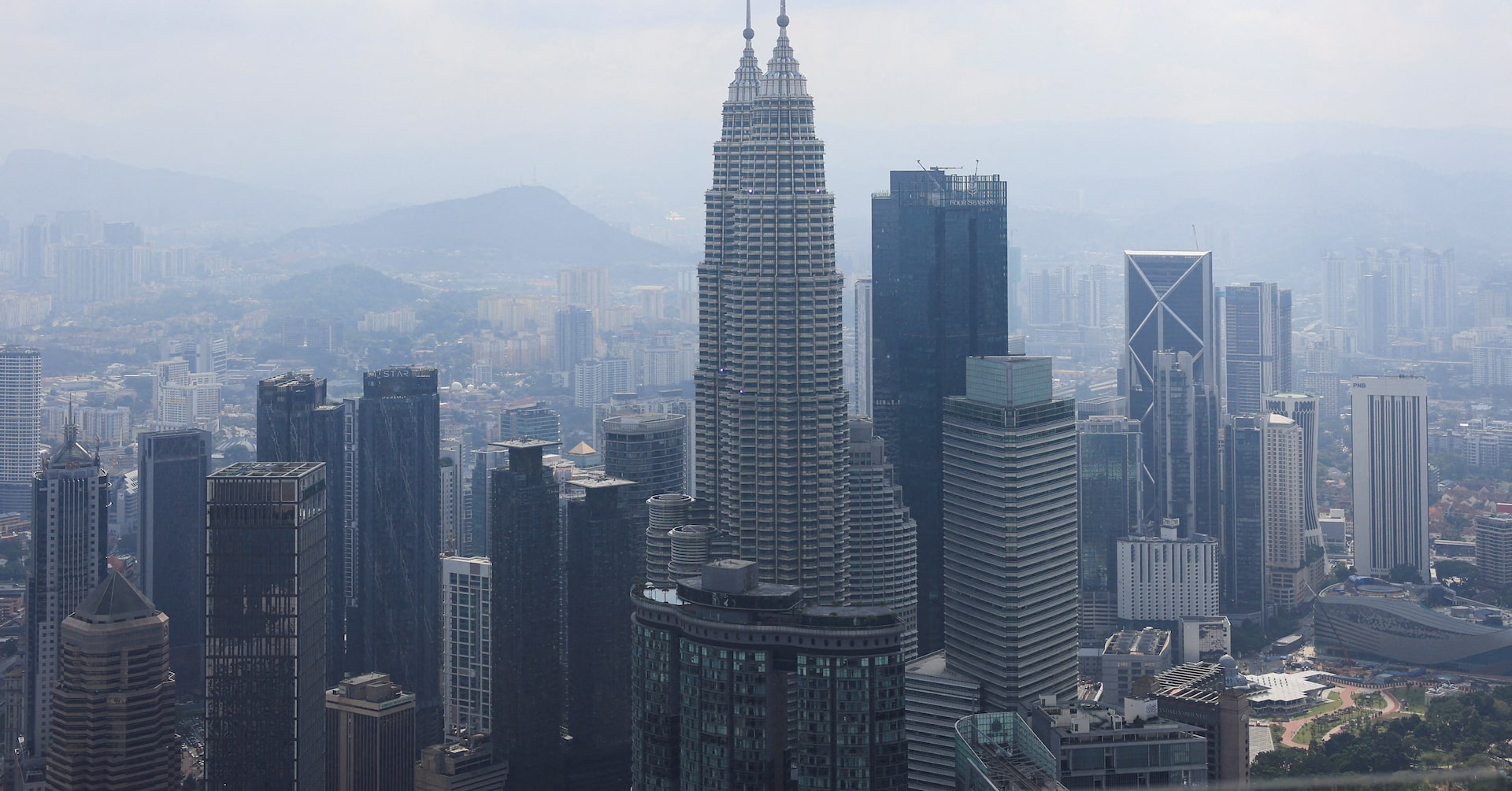
Malaysia Tightens Data Centre Oversight Amid Global Tensions
Malaysia, long recognized as a rising hub for data centre development, is now imposing stricter controls on the expansion of these facilities. This policy shift may significantly impact China’s ambitions to access advanced U.S.-made chips, crucial for training sophisticated artificial intelligence (AI) models.
Over the past several years, Malaysia has attracted substantial investments from global tech giants such as Microsoft, Amazon, and Google, as well as major Chinese firms including Tencent, Huawei, and Alibaba. These investments were fueled by the country’s competitive electricity costs, affordable land, and increasing domestic demand for AI infrastructure.
Johor Emerges as a Key Data Centre Destination
Consulting firm DC Byte reports that Malaysia accounts for more than two-thirds of the data centre capacity under construction across Southeast Asia’s five leading markets. Much of this growth is centered in Johor, a Malaysian state adjacent to Singapore. Johor’s appeal lies in its proximity to Singapore, allowing for low-latency data exchange with the city-state while offering more affordable development options.
However, as the pace of development has surged, Malaysia is facing significant challenges in ensuring sustainable resource management. Power grid limitations and water resource concerns have prompted the government to reevaluate its strategy. Additionally, Malaysia is under pressure from Washington to limit Chinese access to AI chips that fall under U.S. export controls.
New Export Rules Target High-Performance Chips
In July, Malaysia implemented new regulations requiring permits for the export, transit, or trans-shipment of high-performance U.S.-made chips, such as those developed by Nvidia. These chips are vital for the training and deployment of advanced AI models. While Chinese-developed alternatives exist, they remain inferior in performance, hampering China’s ability to compete with American AI technologies.
Although the new rules technically allow Chinese data centres to import U.S. chips for domestic use within Malaysia, experts believe scrutiny will intensify as Malaysia seeks to finalize trade agreements with the United States. The U.S. Commerce Department has expressed concerns that Chinese data centres abroad might use these chips to indirectly support military-related AI development in China.
China’s ‘AI Belt and Road’ Strategy Faces Setbacks
China’s global data centre expansion began in earnest following its 2021 three-year action plan, which encouraged companies to establish overseas operations, particularly in Belt and Road Initiative partner countries like Malaysia. During Chinese President Xi Jinping’s visit to Malaysia in April, both countries pledged to deepen cooperation in areas such as AI, 5G infrastructure, and data connectivity.
Among the major players, GDS Holdings—a top-tier Chinese data centre operator—launched a hyperscale data campus in Johor two years ago. However, amid growing U.S. restrictions and scrutiny, the company spun off its overseas business in January 2025, creating an independent entity called DayOne. This move was likely aimed at distancing the foreign operations from direct Chinese control.
Regulatory Vetting Process Curtails Expansion
Johor’s local government has responded to the resource strain with a more rigorous approval process. A vetting committee introduced in 2024 has rejected around 30% of data centre applications that failed to meet sustainability standards for water and energy usage. The approval rate has since improved as developers adapt to the new requirements, according to Lee Ting Han, Johor’s Vice Chair for Data Centre Development Coordination.
By December 2024, Johor had 12 operational data centres with a combined capacity of nearly 370 megawatts (MW). In addition, 28 new projects are in the pipeline, expected to add almost 900 MW. The state’s Chief Minister highlighted that Johor accounted for 78.6% of Malaysia’s total operational IT capacity as of mid-2025, with total investments in the sector reaching 164.45 billion ringgit (approximately $39.08 billion).
Geopolitical Pressures Could Reshape the Market
Vivian Wong, a senior analyst at DC Byte, noted that Southeast Asia has been an attractive destination for Chinese data centre expansion thanks to geographical proximity and relatively low political friction. However, the increasing scrutiny and trade tensions may diminish the region’s appeal for Chinese firms in the coming years.
Singapore, for instance, had imposed a three-year moratorium on new data centres due to resource constraints, only recently allowing limited new development in 2022. This pushed more investments into Malaysia, but with similar constraints emerging there, the industry may face a period of recalibration.
Conclusion
Malaysia’s move to rein in data centre growth marks a significant shift in Southeast Asia’s digital infrastructure landscape. While necessary for sustainability and international diplomacy, this policy change could disrupt China’s AI development trajectory and alter the strategic calculus for global tech investments in the region.
This article is inspired by content from Original Source. It has been rephrased for originality. Images are credited to the original source.