

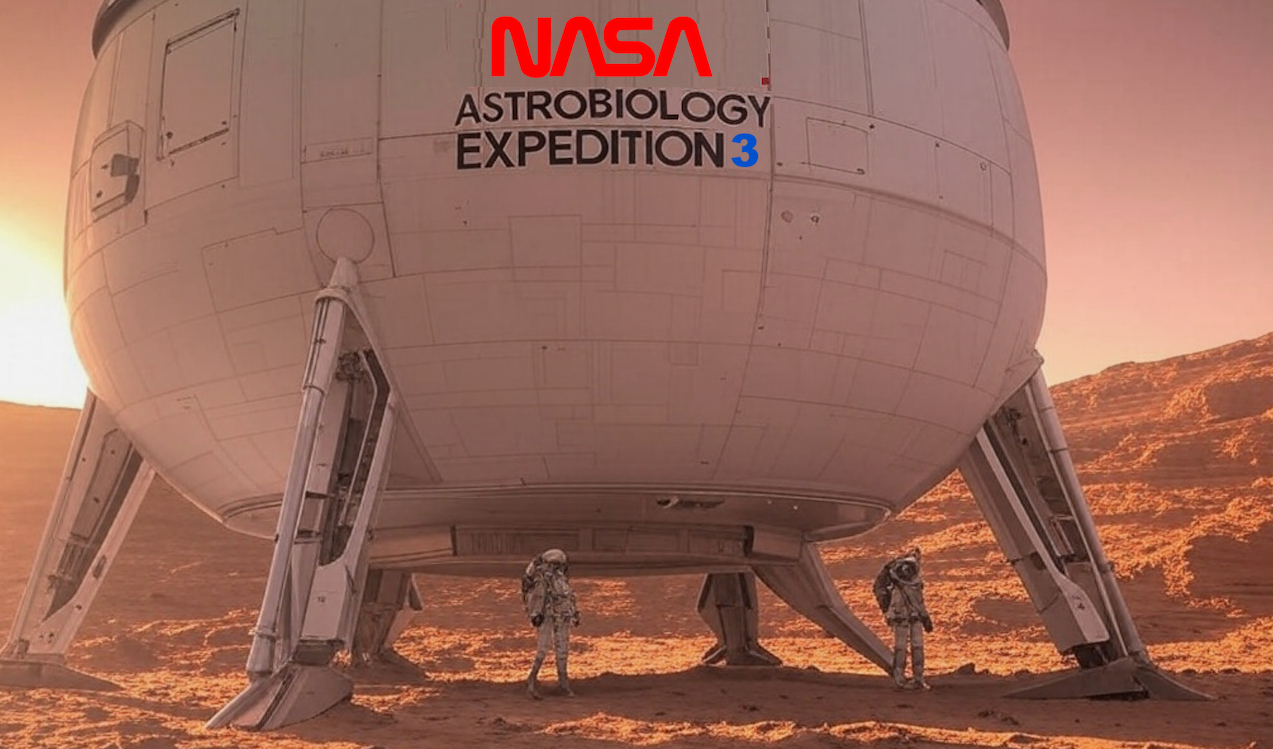
NASA to Showcase AI Initiative for Lunar and Martian Missions
NASA’s Planetary Science Division is set to host an informative webinar on Monday, February 23, 2026, at 12:00 PM Eastern Time. The session will provide an in-depth overview of the Foundational Artificial Intelligence for the Moon and Mars (FAIMM) program, a groundbreaking initiative aimed at integrating artificial intelligence into future extraterrestrial missions.
Empowering Science Through Foundation Models
The FAIMM program is designed to enable individual researchers to contribute to the development of science and exploration applications using large, generalized artificial intelligence models known as Foundation Models (FMs). These models will support a wide range of future missions to the Moon and Mars, enhancing data analysis, decision-making, and mission planning capabilities.
Participants will learn how to become part of collaborative teams that are working to tailor AI systems for complex space environments. From analyzing surface compositions to managing autonomous systems, these foundation models are expected to revolutionize space exploration.
Webinar Details and Participation
The FAIMM webinar will be open to the public and is especially encouraged for scientists, technologists, and AI researchers interested in space applications. Questions can be submitted in advance or during the session through the following platform: nasa.cnf.io. Attendees may upvote questions to prioritize discussion topics.
To join the webinar, use the following credentials:
- Join link: WebEx Meeting
- Webinar number: 2821 875 6298
- Password: mjFKtyZp555 (or 65358997 when dialing by phone or video system)
- Phone Access: +1-415-527-5035 (U.S. Toll) or +1-312-500-3163 (Chicago)
- Access code: 282 187 56298
Any inquiries related to the FAIMM announcement can be directed to the designated point of contact via the provided email address.
Post-Webinar Resources
Following the session, presentation slides and responses to submitted questions will be made accessible to attendees and the general public. These materials aim to offer ongoing support for researchers exploring AI applications in space science.
This initiative underscores NASA’s commitment to leveraging cutting-edge technologies to enhance mission outcomes and foster greater participation from the scientific community.
Broader Impacts and Related Developments
The FAIMM webinar is part of a larger movement within NASA and the global scientific community to utilize artificial intelligence for space exploration. Recent advancements include:
- AI-driven analysis of dust grain surfaces to understand astrochemical processes
- Exoplanet detection using ExoDNN and data from the Gaia mission
- NASA’s ExoMiner++ model, which has uncovered hundreds of exoplanets using data from the TESS satellite
- Autonomous navigation achievements by the Mars Perseverance rover through AI planning
These projects highlight the expanding role of machine learning and AI in tackling complex challenges beyond Earth. By involving the scientific community early in the development of these systems, programs like FAIMM ensure that resulting tools are versatile, robust, and scientifically valuable.
Encouraging Community Engagement
NASA encourages researchers from a variety of disciplines—whether seasoned planetary scientists or AI specialists new to space applications—to explore the FAIMM program. The collaborative nature of this initiative is expected to bring diverse perspectives into the development of AI systems tailored to the unique challenges of lunar and Martian environments.
Participants will have the opportunity to help shape the future of space exploration by contributing to AI systems that may one day operate autonomously on the Moon or Mars, analyze samples on-site, or even assist astronauts in real-time decision-making.
Conclusion
The upcoming FAIMM webinar represents a pivotal step in merging advanced artificial intelligence with space exploration. By fostering inclusive participation and providing open access to tools and data, NASA continues to pave the way for innovative, high-impact scientific discovery throughout the solar system.
This article is inspired by content from Original Source. It has been rephrased for originality. Images are credited to the original source.