

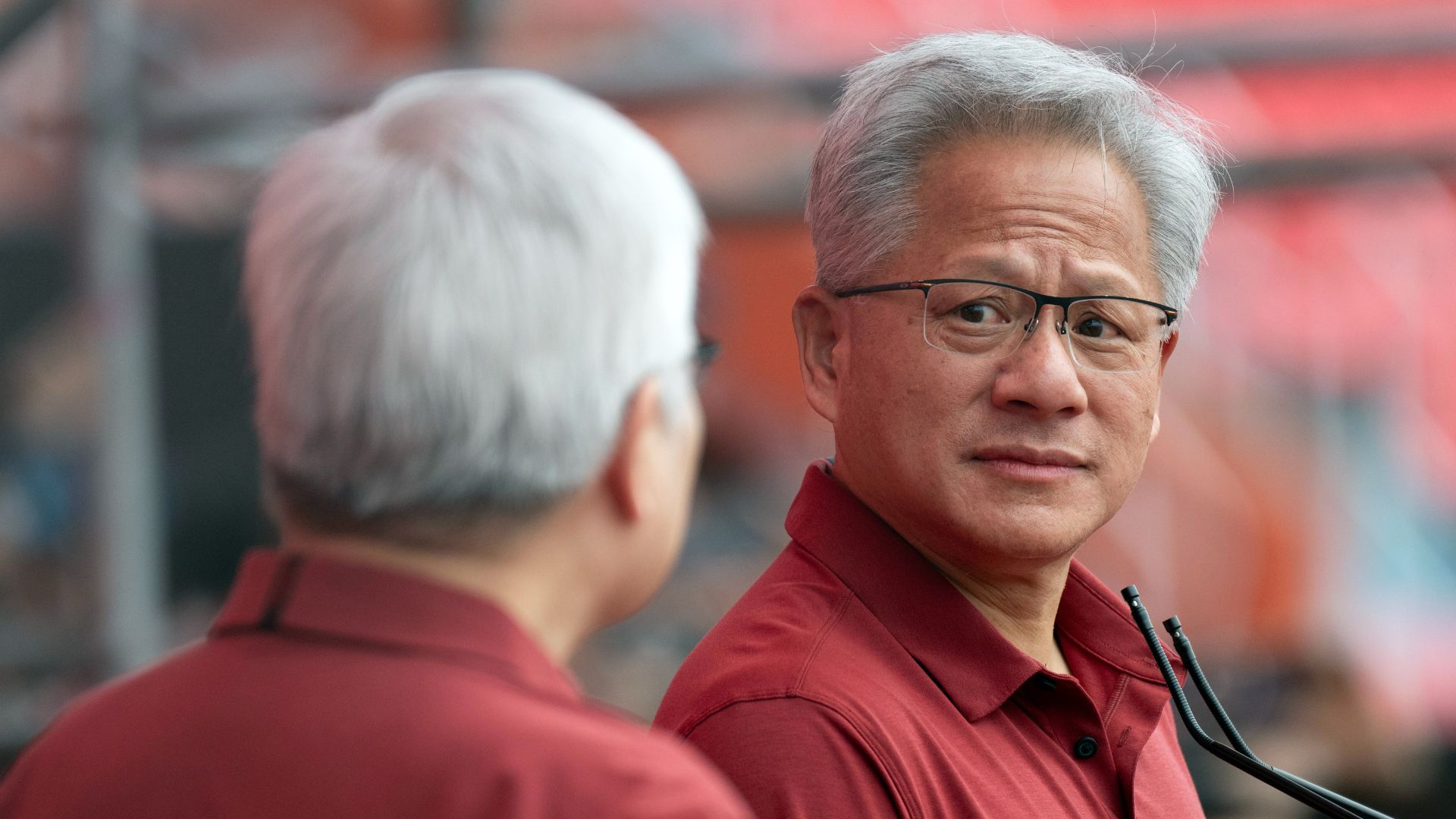
Jensen Huang Advocates for Greater AI Adoption
During a recent all-hands meeting, Nvidia CEO Jensen Huang reportedly issued a strong directive to his team: embrace artificial intelligence (AI) or risk falling behind. According to a leaked recording obtained by Business Insider, Huang expressed frustration with some managers allegedly advising their teams to limit AI usage.
“My understanding is Nvidia has some managers who are telling their people to use less AI. Are you insane?” Huang was quoted as saying. “I want every task that is possible to be automated with artificial intelligence to be automated. I promise you; you will have work to do.”
Huang’s statement came in the wake of Nvidia’s record-breaking financial quarter, a performance he felt was underappreciated by the stock market. Despite the strong earnings, Nvidia’s stock experienced a dip, prompting Huang to express his disappointment over what he described as the market’s failure to recognize the company’s “incredible” achievements.
Industry-Wide Push for AI Integration
Huang’s push for AI usage aligns with broader trends across the tech industry. Major players like Meta and Microsoft have already integrated AI into their operations, even incorporating AI usage into employee evaluations. Google has directed its engineers to use AI for coding tasks, and Amazon staff have urged the company to adopt AI tools such as Cursor to streamline workflows.
These moves reflect a growing consensus among tech leaders that AI is not just a tool of the future but a current necessity. Companies are racing to harness AI to increase efficiency, drive innovation, and maintain competitive edges in increasingly saturated markets.
Employee Concerns Over Job Security
Despite the clear momentum toward AI adoption, concerns about job security remain prevalent among workers. Many fear being rendered obsolete by the very tools they’re being encouraged to use. These fears are not unfounded, as several industry experts have warned of AI-driven job displacement.
Ford CEO Jim Farley has suggested that AI could potentially eliminate up to half of all white-collar jobs in the U.S., while Dario Amodei, CEO of AI company Anthropic, estimated that the technology could lead to 20% unemployment within the next five years. A study conducted by the Massachusetts Institute of Technology and Oak Ridge National Laboratory also forecasted that 11.7% of jobs are at risk of being replaced by AI solutions.
Huang Reassures Nvidia Employees
In the face of such alarming predictions, Huang has attempted to calm nerves within Nvidia. During the same meeting, he emphasized that AI is a tool for empowerment, not replacement. He pointed out that Nvidia has continued to expand its workforce, adding over 6,000 new employees in the last fiscal year alone. In fact, Huang noted that the company still requires an additional 10,000 staff members to support its ongoing growth.
“We are not replacing people with AI,” Huang reportedly said. “We are using AI to make our people better, more productive, and more innovative.”
This message is particularly significant amid the wave of layoffs sweeping across the tech sector. While other companies trim their labor forces, Nvidia appears committed to growth—fueled in part by its AI-driven transformation.
Nvidia’s AI Momentum
Huang’s firm stance on AI adoption is understandable given Nvidia’s central role in the AI revolution. Once known primarily as a gaming GPU manufacturer, Nvidia has transformed into a global AI powerhouse. This pivot has helped the company achieve a staggering $5 trillion market capitalization, making it one of the most valuable firms in the world.
By encouraging employees to fully utilize AI tools, Huang aims to solidify Nvidia’s leadership position in the industry. He views AI not as a threat, but as a catalyst for innovation and efficiency—a means of enhancing employee capabilities rather than replacing them.
Balancing Innovation and Human Capital
While the push for AI is undeniable, it also raises important questions about the future of work. Employees are right to be cautious, as the integration of AI into everyday tasks can lead to job restructuring, even if not outright elimination. Companies like Nvidia must navigate this transition carefully, balancing technological advancement with the well-being and job satisfaction of their workforce.
In Huang’s view, the path forward is one of coexistence: humans and AI working side by side, each enhancing the other’s strengths. “AI is a tool,” he emphasized. “It helps us do more, faster, and better. But it doesn’t replace the creativity, the judgment, or the innovation that only people can provide.”
This article is inspired by content from Original Source. It has been rephrased for originality. Images are credited to the original source.