

AI’s Rapid Advancement Raises Global Stakes
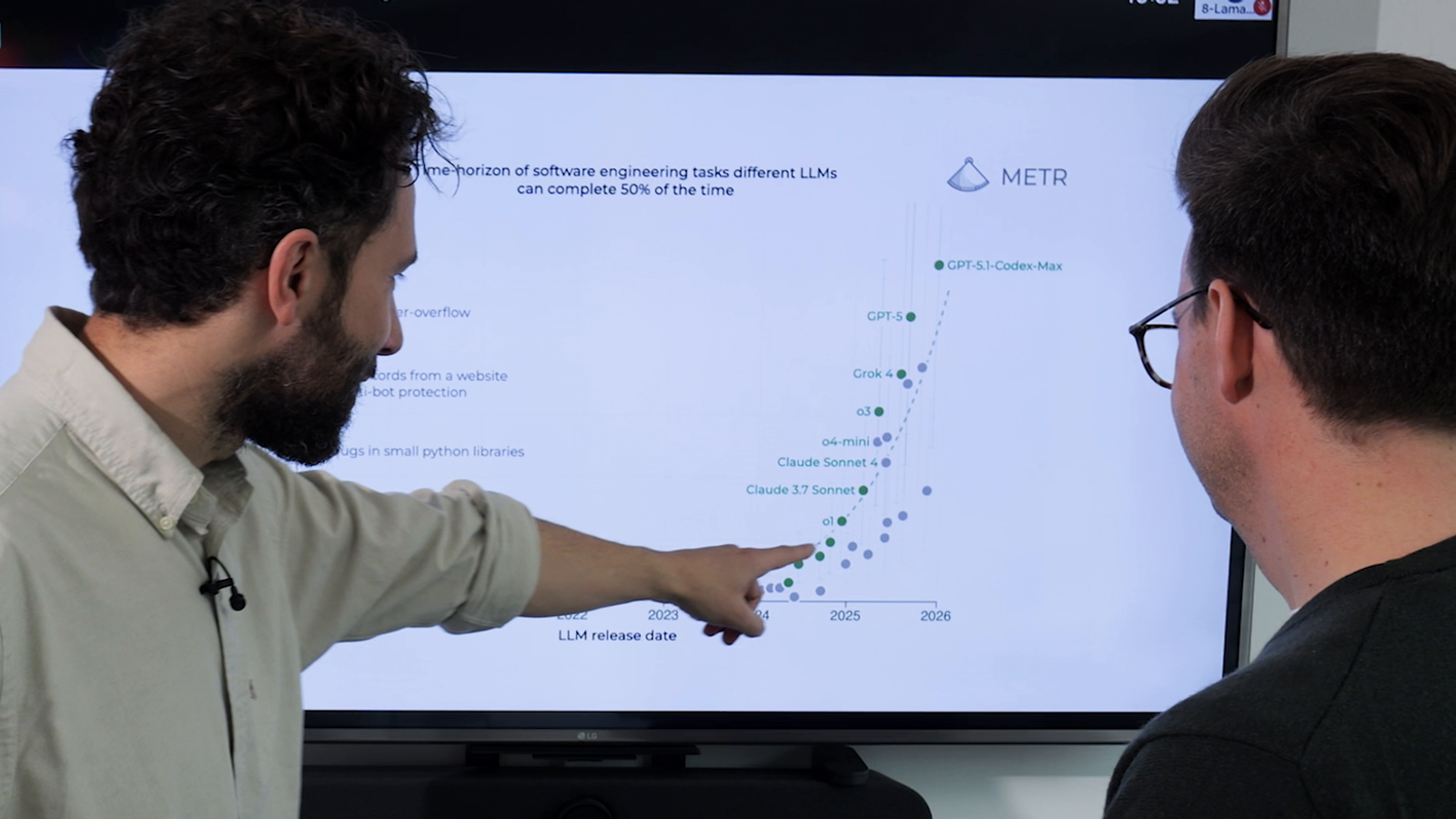
Artificial Intelligence is advancing at a staggering pace, transforming from a technological curiosity into a disruptive force that could reshape every facet of modern life. According to research from AI firm Metr, the capacity of AI systems is doubling approximately every seven months—a trajectory that could continue for at least five more years.
This exponential growth is reminiscent of the early stages of the COVID-19 pandemic, when the virus spread faster than most governments anticipated. Dr. Marc Warner, CEO of British tech company Faculty and a former physicist, draws a chilling parallel between the two phenomena, warning that society may be similarly unprepared for the scale of transformation that AI could unleash.
From Novelty to Necessity
AI systems are now capable of producing music, text, code, and imagery that are nearly indistinguishable from human output. While these tools can still make mistakes—fabricating facts or misinterpreting prompts—they are improving rapidly. Benchmarks traditionally used to assess AI performance show record-breaking results, as seen in Google’s recent release of Gemini 3. However, experts caution that benchmarks are limited in scope and can’t fully capture AI’s potential or risks.
“You need to zoom out and look at the overall trend,” said Dr. Warner. “What you see is a very strong exponential.” This kind of growth starts off slowly, then accelerates rapidly—something Warner describes as “nothing, nothing, nothing, everything.”
Learning from the Pandemic
Dr. Warner’s concerns are deeply rooted in personal experience. In March 2020, as the COVID-19 virus spread through the UK, Faculty was analyzing NHS patient data. Warner noticed the virus was doubling faster than the government realized. He alerted his brother Ben, a data scientist in Downing Street, and together they informed Dominic Cummings, then the Prime Minister’s Chief of Staff. Ten days later, the UK entered lockdown.
“We saw in COVID, if you don’t prepare for exponentials properly, they can really hurt you,” Warner explained. “Now the same thing is happening with AI—and I’m worried we don’t have a plan.”
A Permanent Technological Shift
While COVID-19 was a temporary crisis, Warner believes AI represents a more permanent shift in how society operates. “If AI continues to improve at this rate, and if it really is good at as many things as it seems, then this will be way bigger than COVID,” he said. “COVID was a temporary shift—this is going to change everything.”
Eventually, technical and resource limitations will slow AI’s growth. Training today’s large models requires immense amounts of energy. “At some point, we’ll hit a ceiling,” Warner noted. “The energy needed to train these models could exceed what’s available on the planet.”
What the Data Shows
The data from Metr compares human and AI performance on software development tasks, showing that AI capabilities are doubling every seven months. If this trend holds, society could see dramatic changes in the next five years—both positive and negative. “There will be disruptions, as with any new technology,” Warner said. “That’s why it’s so important to consider what this trajectory means and how we can manage it.”
Despite the risks, Warner is optimistic that society can adapt—if it plans ahead. “We will be able to manage it, but only if we actually have a real plan.”
Is the Government Prepared?
Warner gives the UK government some credit for its current approach. “In the short term, I think the government’s doing a decent job,” he said, citing initiatives like the sovereign AI fund and the UK’s AI Security Institute, which focuses on technical risk assessment.
However, long-term uncertainty remains. Metr’s data only covers software development and assumes a 50% success rate for AI tasks, making it difficult to generalize its findings. Economic variables add another layer of complexity, including the potential for an AI-driven speculative bubble.
Acceleration Without Precedent
Comparing the speed of AI development to early aviation history, Warner remarked, “It feels like we’ve gone from the first [aeroplane] flight to something like Concorde in just seven years. And that is a very big deal.”
With AI continuing to evolve rapidly, the world may be on the brink of a transformation as significant as the industrial revolution—and possibly even more profound. The stakes are high, and the time to prepare is now.
This article is inspired by content from Original Source. It has been rephrased for originality. Images are credited to the original source.