

New School Year Brings Big Changes
When students at Rappahannock County Public Schools (RCPS) return to classrooms next month, they’ll be greeted with two major policy changes: a strict no-cellphone rule during school hours, and the introduction of Artificial Intelligence (AI) tools as part of the learning process. These changes were adopted by the school board during a recent meeting, signaling a shift in how the district approaches technology in education.
Cellphones will no longer be allowed during the school day, a policy that school leaders say is necessary to reduce distractions and improve student engagement. Meanwhile, AI is being welcomed as a tool to enhance teaching and learning experiences across all grade levels.
Cellphone Ban Aims to Boost Focus
RCPS administrators emphasized that the cellphone policy is not about punishment but about creating a more focused and productive learning environment. Executive Director of Administrative Services Dr. Shannon Bolt explained that phones can be a significant source of distraction, both academically and socially.
“We want students to be present in the classroom,” said Dr. Bolt. “Removing phones during school hours ensures they are more engaged with their teachers and peers.”
According to instructional leaders, the policy will apply to all students and staff. Enforcement protocols and storage methods are still being finalized, with input from parents and teachers being considered to ensure a smooth transition.
AI in the Classroom: A New Frontier
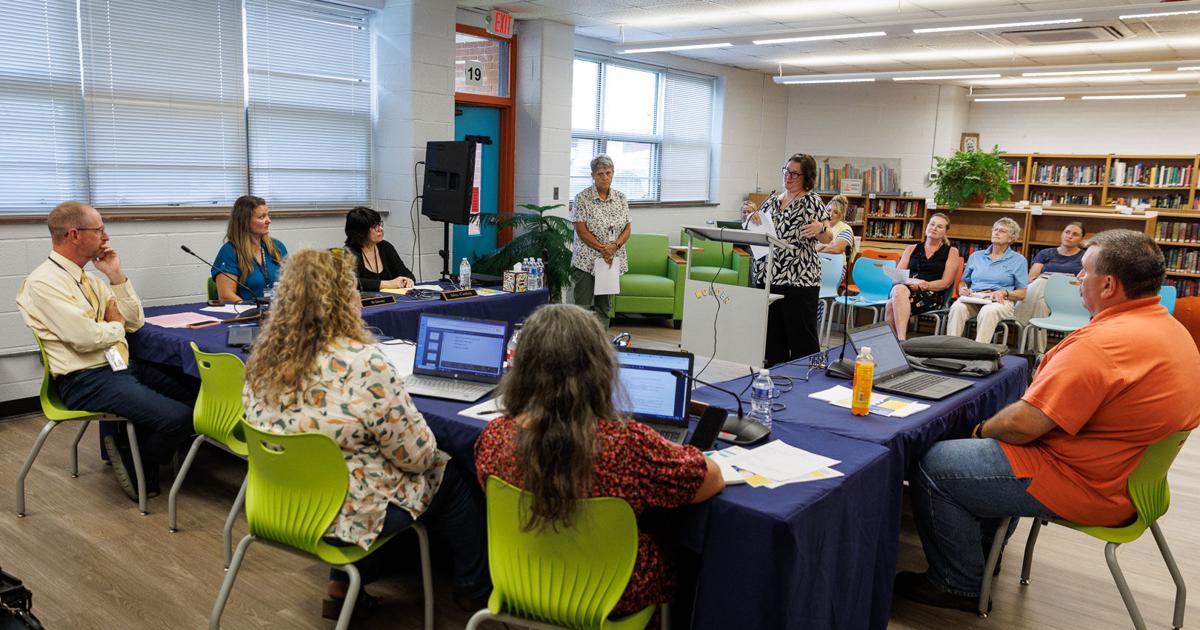
While cellphones are being phased out, AI tools are being introduced to support student learning. Instructional Technology Resource Teacher Dani Driggers presented the district’s vision for AI integration during the board meeting. She highlighted how platforms like ChatGPT and other generative AI tools can assist students in brainstorming, editing, and understanding complex subjects.
“We’re not replacing teachers,” Driggers assured. “AI is a supplemental resource that can personalize learning and help students think critically.”
The district plans to train teachers on how to use AI ethically and effectively. Guidance will be provided on selecting appropriate tools, avoiding plagiarism, and promoting responsible use. Students will also receive instruction on digital citizenship and the appropriate use of AI in their coursework.
Balancing Innovation and Responsibility
Introducing AI into education raises questions about student data privacy and ethical use. School board members acknowledged this and are working with legal and technology experts to develop clear policies and safeguards. Parental consent and opt-out options will also be part of the implementation strategy to ensure transparency and trust.
“We’re aware of the concerns,” said a board representative. “That’s why training and oversight are key parts of our rollout plan. We want to harness the benefits of AI while protecting our students.”
The district is also examining how AI can be used to support teachers in lesson planning, grading, and providing feedback, alleviating workloads and giving educators more time to focus on student interaction.
Community Reactions and Next Steps
Initial reactions from parents and students have been mixed. Some applaud the cellphone ban as a much-needed step in preserving classroom integrity, while others worry about communication limitations during the school day. However, there is general excitement about integrating AI, especially among high school students who see it as a valuable skill for future careers.
To address concerns, the district plans to host informational sessions and Q&A forums for families. These events will provide an overview of the new policies, demonstrate AI tools, and gather feedback from the community.
“This is a learning process for all of us,” said Dr. Bolt. “We’re committed to making decisions that are in the best interest of our students’ growth and safety.”
A Model for Modern Education
RCPS’s dual approach—reducing distractions while embracing innovation—may serve as a model for other districts navigating the challenges and opportunities of modern education. As schools nationwide grapple with the impacts of technology on learning and behavior, Rappahannock County is taking a bold step forward.
The district’s leadership is optimistic that these changes will not only improve academic performance but also teach students how to use technology responsibly and constructively in their lives beyond the classroom.
This article is inspired by content from Original Source. It has been rephrased for originality. Images are credited to the original source.