

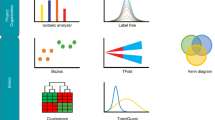
In the world of laboratory analysis, gel electrophoresis stands as a time-tested technique for the separation and semi-quantitative analysis of biomolecules. Despite its widespread use, the image analysis aspect of this method has seen little innovation over the years. However, a new development promises to transform this landscape.
AI Integration in Gel Electrophoresis
A recent study has introduced an AI-based system capable of identifying gel bands within seconds, surpassing existing software in both user-friendliness and versatility. This system leverages a dataset of over 500 manually labeled gel images to train U-Nets, a type of neural network, to classify pixels as either ‘band’ or ‘background’.
Enhancing Accuracy and Efficiency
The AI system’s ability to accurately segment bands has been tested against traditional methods, showing quantitative results that match the original authors’ findings. Unlike conventional techniques that require multiple steps, the AI approach simplifies the process by directly segmenting bands without prior lane extraction, making it more intuitive and less prone to error.
Open-Source Innovation
The models developed through this study have been made publicly available via GelGenie, an open-source application. This platform allows users to extract bands from gel images directly on their devices without needing expert knowledge, democratizing access to advanced image analysis tools.
Traditional vs. AI-Based Methods
Traditionally, gel quantitation involved a multi-step process that often proved tedious and error-prone. This new segmentation approach, however, promises to streamline the process significantly. By using AI, the exact shape of a target gel band is automatically identified, enhancing both speed and consistency.
Comprehensive Testing and Validation
The AI system was rigorously tested using a variety of challenging gel scenarios, including images with high background levels, contaminants, and diffuse bands. The results demonstrated that pixel segmentation is viable for band quantitation, producing measurements similar to those obtained through traditional methods.
Training and Evaluating Our AI System
The AI model was trained on a diverse dataset, ensuring its robustness across different experimental conditions. The training involved fine-tuning a lightweight U-Net model, which exhibited stable performance and no overfitting, achieving an average Dice score of 0.82 on the test set.
Real-World Applications
To illustrate its practical applicability, the AI model was tested on gel images from peer-reviewed studies, proving its effectiveness across different experimental setups. Moreover, the system’s adaptability was showcased by fine-tuning the model with additional images, enhancing its performance on previously challenging cases.
User-Friendly Interface with GelGenie
GelGenie, the graphical interface developed for this AI system, facilitates easy integration into existing workflows. The application allows for one-click segmentation and offers features such as band volume measurement and background correction. Its open-source nature enables further customization and extension by users.
Conclusion
The introduction of AI into gel electrophoresis image analysis marks a significant advancement in laboratory methodologies. By simplifying and enhancing the accuracy of gel band identification, this development paves the way for more efficient and reliable biochemical analyses.
Stay updated on the latest in technology and AI by following aitechtrend.com.
Note: This article is inspired by content from https://www.nature.com/articles/s41467-025-59189-0. It has been rephrased for originality. Images are credited to the original source.