

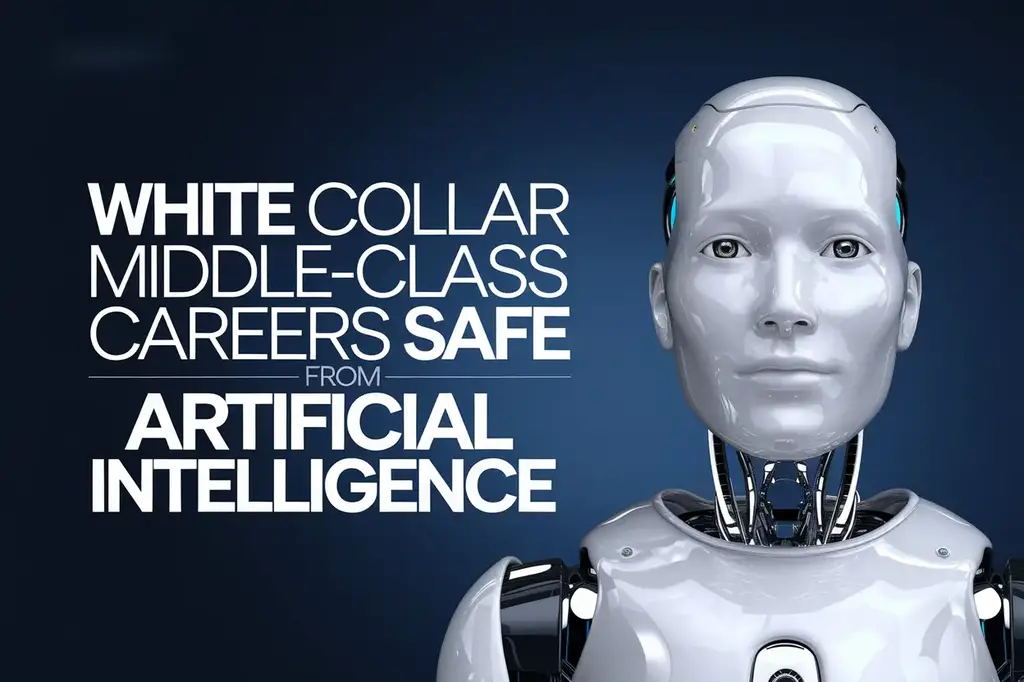
The artificial intelligence revolution is transforming the professional landscape at an unprecedented pace. Initially focused on automating routine manufacturing tasks, AI has rapidly expanded into white-collar domains once considered uniquely human. By 2030, many middle-class careers that have traditionally provided stability and social mobility will be significantly altered or potentially eliminated by increasingly sophisticated AI systems. However, not all professions face the same level of disruption.
Some careers require qualities that remain difficult for machines to replicate—deep emotional intelligence, complex ethical judgment, creative vision, and physical presence that creates a meaningful human connection. Based on current technological trajectories and the fundamental limitations of AI, seven professional categories are likely to remain predominantly human even as automation reshapes the broader economy.
1. Therapists and Counselors: The Power of Human Connection
Mental health professionals rely on a fundamental element that AI cannot truly replicate: authentic human connection. While AI-powered therapy apps and chatbots have emerged as supplementary tools, research consistently shows that therapeutic outcomes correlate strongly with the quality of the therapeutic connection between practitioner and client.
Effective counseling involves subtle interpretation of non-verbal cues, cultural contexts, and emotional nuances that AI systems struggle to grasp holistically. Therapists must navigate complex emotional landscapes, demonstrate genuine empathy, and build trust through consistent, authentic interaction. Even the most advanced AI lacks the lived experience and emotional resonance that allows human therapists to truly understand trauma, grief, anxiety, and the full spectrum of human psychological experience.
2. Creative Directors and Artists: Where Vision Meets Cultural Context
While AI can now generate impressive images, text, and music based on patterns from existing works, truly innovative creative direction requires qualities machines can’t yet emulate: original vision, cultural intuition, and the ability to anticipate emerging trends rather than merely analyzing existing ones.
Creative directors in advertising, film, fashion, and design must understand subtle cultural contexts, emotional resonance, and aesthetic judgment that transcends data patterns. The most successful creative work often breaks established rules in ways that are difficult to predict algorithmically. Human creators draw on lived experience, cultural immersion, and an intuitive understanding of audience psychology to develop work that genuinely connects and resonates.
3. Clergy and Spiritual Leaders: Guidance Beyond Algorithms
Spiritual and religious leadership centers on questions of meaning, purpose, ethics, and transcendence that extend beyond the computational domain. Clergy and spiritual guides provide counsel during life’s most profound transitions—birth, death, marriage, moral crisis—where authentic human presence carries irreplaceable significance.
Spiritual leaders’ roles encompass community building, moral guidance, ritual facilitation, and navigating complex theological and ethical questions. These functions require not just knowledge of religious texts and traditions but the embodiment of spiritual principles through personal experience and practice. The authenticity of a leader’s spiritual journey and commitment creates a foundation of trust that algorithms can’t replicate.
4. Senior Healthcare Professionals: High-Stakes Decision Making
While AI increasingly supports medical diagnostics and routine procedures, complex healthcare decisions require human judgment that balances technical expertise with ethical considerations and interpersonal skills. Surgeons performing intricate operations must make split-second adaptations based on unexpected findings, weighing risks and benefits in unique patient contexts.
Healthcare scenarios frequently present ambiguous situations where different values compete—quality of life versus longevity, risk tolerance versus potential benefit, and resource allocation in limited circumstances. These complex decisions require ethical frameworks and patient-centered approaches beyond optimized algorithms.
5. Judges and Senior Legal Professionals: Ethical Judgment in Complex Cases
Legal interpretation requires contextual understanding that transcends the straightforward application of rules. Judges must balance competing principles, assess credibility, weigh societal impact, and consider ethical dimensions beyond technical legal analysis. This nuanced judgment is crucial in cases involving novel situations, conflicting rights, or evolving social norms.
Legal professionals must interpret not just what the law explicitly states but also its underlying purpose and how it should apply to unique circumstances. This requires understanding legislative intent, historical context, and evolving social values.
6. Entrepreneurs and Innovation Strategists: Navigating Uncertainty
Entrepreneurship involves navigating profound uncertainty, taking calculated risks, and identifying opportunities others have overlooked. Successful entrepreneurs combine market insight with an intuitive understanding of human needs, often anticipating solutions to problems before they’re widely recognized.
The entrepreneurial process requires tolerance for ambiguity, persistence through setbacks, and the ability to adapt strategies based on incomplete information—qualities that extend beyond data analysis into psychological domains that AI cannot fully replicate.
7. Social Workers and Community Organizers: Building Trust in Communities
Social workers and community advocates navigate complex human systems that require cultural competence, emotional intelligence, and the ability to build trust with vulnerable populations. These professionals must understand the interconnected factors affecting individuals and communities, including economic pressures, family dynamics, cultural contexts, and institutional barriers.
Effective intervention often requires physical presence in communities, establishing relationships based on consistent support and authentic understanding. Social workers must navigate emotionally charged situations with sensitivity while maintaining professional boundaries, a balance that requires nuanced human judgment.
Note: This article is inspired by content from https://www.newtraderu.com/2025/05/05/ai-will-replace-humans-in-almost-all-white-collar-middle-class-careers-except-these-7-jobs-by-2030/. It has been rephrased for originality. Images are credited to the original source.