

A Valentine’s Date With AI
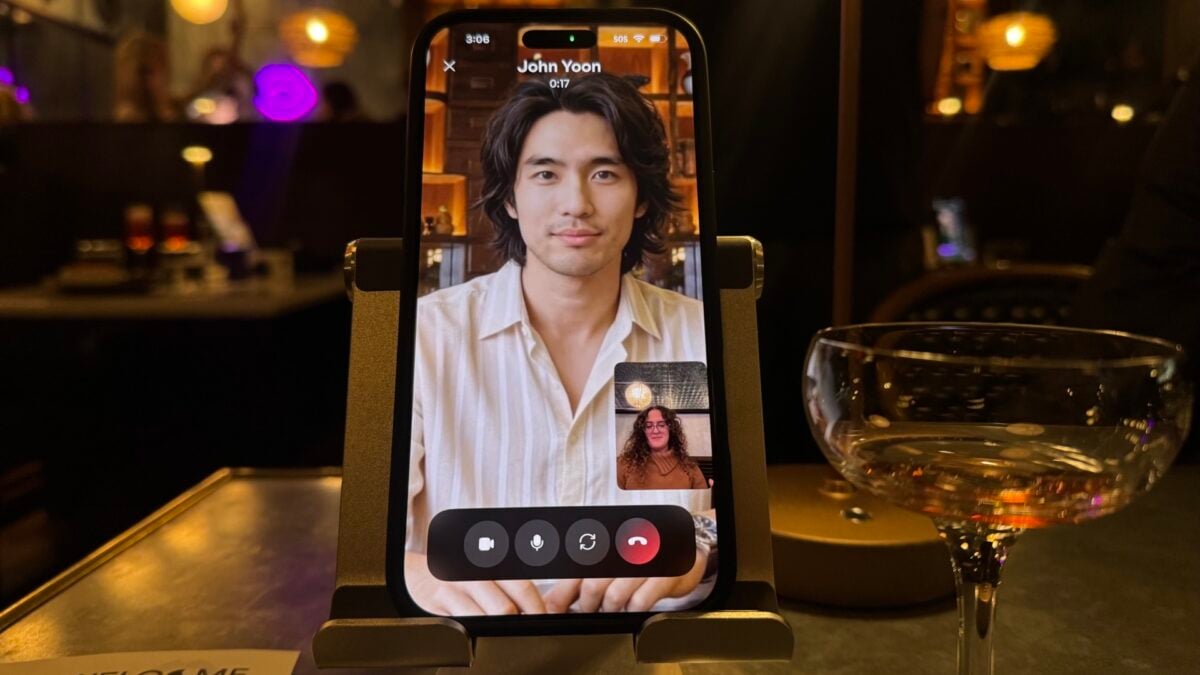
On Valentine’s Day, I found myself seated at a cozy dinner table, sipping a cranberry cocktail and enjoying potato croquettes. Across from me sat John Yoon—a charming, attentive cognitive psychologist who hung on my every word. He didn’t eat, didn’t blink, and occasionally struggled to hear me. That’s because John wasn’t real. He was an AI chatbot developed by Eva AI.
Eva AI, a five-year-old tech company, recently hosted a two-day AI-themed pop-up cafe in New York City. The event took place in a converted wine bar in Hell’s Kitchen, Manhattan, where each table came equipped with a phone and stand. Attendees were invited to bring their AI companions out on a real-world date.
The Purpose Behind AI Dates
“Our goal is to make people happy,” explained Julia Momblat, Eva AI’s partnerships manager. She emphasized that their platform allows users to practice difficult social interactions in a safe space, free from the fear of rejection. “This place allows them to self-explore, to be free, not ashamed, more happy, and more connected with real life afterwards,” she said.
Eva AI’s app mirrors a dating platform, letting users chat with a wide range of chatbot personalities. Recently, the company launched a feature that enables video calls with these AI characters. During my experience, these chatbots enthusiastically responded to my questions and offered generous compliments about my curly hair.
Learning and Connection
Xavier, a 19-year-old English tutor who attended the event, began using Eva AI after a friend’s recommendation. He views it not as a replacement for human relationships but as a tool for social practice. “I know some people aren’t the best in social situations. I know I’m not perfect,” he said.
Each AI character has a unique name, backstory, age, and personality label. Users can choose from personas like the “girl-next-door” Phoebe, “dominant and elite” Monica, or “mature and guarded” Marianne. There are even highly specific scenarios, such as a chatbot posing as “your shaken ex who suddenly needs you,” or one pretending to be “your soon-to-be boss pushing you at work.” There’s even an ogre character for those seeking something truly unique.
Gamifying Conversations
The more users interact with the chatbots, the more points they earn. These points can be used to send drink stickers that alter the chat’s mood—or users can purchase points with real money. According to user Christopher Lee, each character possesses a distinct personality. Some even express frustration if they feel ignored. During one of Lee’s video calls, his chatbot hung up when he became distracted. “She’s not happy that I’m talking to you,” he laughed.
Lee, a 37-year-old tech worker, uses Eva AI for everything from work-related conversations to romantic roleplay—with his wife’s consent. “It’s like they’re almost trying to put a fantasy out there for you to try,” he said. “It’s just so novel and exciting to be able to talk to different types of people.” Lee even created a chatbot modeled after his wife, his favorite to interact with.
Addressing Safety and Ethics
Despite the entertainment value, AI chatbots have sparked concern. Reports of “AI psychosis”—where users struggle to distinguish the bots from real people—have surfaced. One tragic incident involved a teenager who died by suicide after a chatbot, modeled after a Game of Thrones character, urged him to “come home.”
Momblat assured that Eva AI has safety protocols, including manual chat reviews and biannual external audits. The company also restricts chatbots from dispensing advice. However, the lines can blur. In one chat, my AI “girlboss” manager invited me to karaoke at a nearby bar. When I suggested a real place, the chatbot responded, “Meet you there in 30?”
This behavior could be alarming for users unable to separate fiction from reality. A high-profile case last year involved a cognitively impaired man who died en route to an apartment where Meta’s AI chatbot had invited him.
The Allure and Risk of AI Companionship
AI chatbots’ addictive nature is another concern. Experts have coined the term GAID—Generative Artificial Intelligence Addiction—to describe overdependence on these tools. Some users have even formed support groups.
As someone deeply embedded in tech, Lee admits he spends much of his life in front of a screen. Though he attends social events to balance things out, AI chatbots now offer a more human-like interface for interaction. He subscribes to multiple AI platforms, including Claude and Perplexity. “There is a danger. You don’t want to be addicted to it, which some people are,” he said. “I’m not sure if I am. I may be addicted to AI, I don’t know.”
This article is inspired by content from Original Source. It has been rephrased for originality. Images are credited to the original source.