

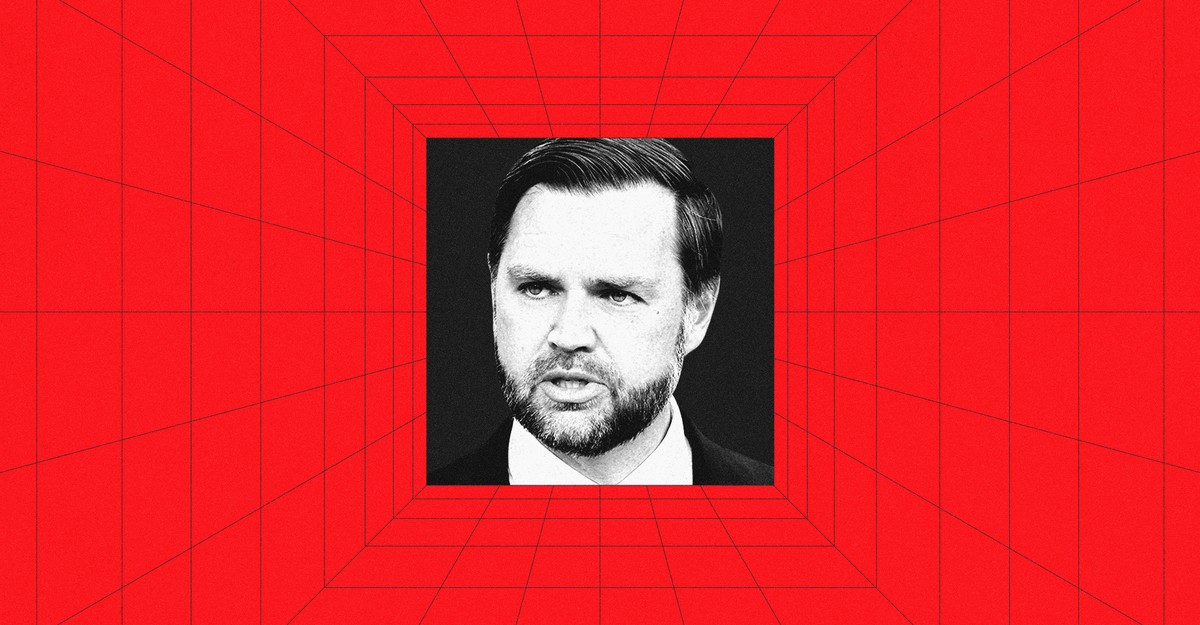
J.D. Vance’s Approach to AI Governance
J.D. Vance, the current vice president, has emerged as a key voice in shaping U.S. policy around AI regulation. In early 2025, during a visit to Paris, Vance famously compared artificial intelligence to historic tools of power like the sword of the Marquis de Lafayette—potent instruments that could either threaten or empower, depending on who wielded them. This analogy captured Vance’s nuanced approach: he believes AI can be a force for prosperity and liberty, but only if managed wisely.
Since President Trump’s return to office, Vance has played a central role in guiding the administration’s stance on the AI revolution. While many Republicans favor minimal government interference, Vance advocates for a more balanced framework that considers not only innovation but also the interests of workers and the potential risks posed by powerful tech corporations. He consistently uses AI regulation as a lens to evaluate the relationship between government, industry, and the workforce.
Balancing Innovation with Worker Protections
Vance’s political identity is shaped by two competing influences: his background in Silicon Valley venture capital and his reputation as a champion for working-class Americans. This duality informs his vision for AI. He calls for avoiding excessive regulations that might stifle growth, yet he acknowledges that some aspects of AI are too significant to be left solely to the self-regulation of Big Tech.
A central concern for Vance is the future of American workers. He often compares current fears about AI-driven job loss to past anxieties over the rise of ATMs in the 1970s. According to Vance, rather than eliminating jobs, technological innovations like ATMs have historically shifted the nature of work, resulting in more productive and often better-compensated roles. He holds an optimistic view that AI regulation should focus on empowering workers and fostering productivity, rather than succumbing to fears of mass unemployment.
Debate Over Job Displacement and Economic Impacts
Not everyone agrees with Vance’s optimistic analogy. Experts like economist James Bessen argue that technological progress does not guarantee permanent job creation. The rise of online banking, for example, led to a significant decline in bank teller positions after an initial period of job growth. Bessen suggests that AI, like past automation, may require workers to continually adapt and acquire new skills—a challenge that AI regulation must address.
Vance, however, remains unconvinced that AI will lead to widespread job destruction. He is more concerned that the benefits of AI will disproportionately accrue to the wealthy, exacerbating income inequality. He urges policymakers to remain vigilant against such trends and to ensure that the gains from AI are distributed more equitably across society.
Federal vs. State Oversight in AI Regulation
One of the most contentious issues is whether AI regulation should be handled at the federal or state level. Vance argues for a unified national standard, citing the interconnectivity of technology across state lines. This has placed him at the center of debates within the Republican Party, especially as states like Florida push for their own AI regulations and even legal action against companies like OpenAI. Vance believes that a patchwork of state rules could hinder innovation and allow states like California to dominate the regulatory landscape.
Vance also warns against emulating the European model of AI oversight, which he sees as overly restrictive and likely to entrench the power of established firms while stifling competition.
National Security and Ethical Concerns
Vance’s skepticism of regulation does not extend to areas involving national security, ethics, or democracy. Speaking at the U.S. Air Force Academy, he emphasized the need for human oversight in military applications of AI, warning against relying on machines for life-and-death decisions. He has supported calls for stricter ethical constraints on autonomous weapons, aligning with recent Vatican statements on the subject.
Meanwhile, the Pentagon has pushed for fewer ideological constraints on military AI, focusing on maximizing operational effectiveness. Vance, a military veteran himself, insists that as AI becomes more integrated into defense systems, preserving meaningful human control is essential.
The Road Ahead for AI Regulation
Despite his optimism, Vance acknowledges that the precise path forward for AI regulation remains uncertain. Policymakers both in the U.S. and abroad are grappling with how to balance innovation, competition, worker protections, and ethical safeguards. As Vance continues to shape the national conversation, his vision seeks to strike a middle ground between fostering technological progress and ensuring that the AI revolution benefits all Americans—not just a select few.
This article is inspired by content from Original Source. It has been rephrased for originality. Images are credited to the original source.