

AI in Entomology: Driving Innovation and Efficiency
AI in entomology is rapidly changing the landscape of insect science, from museum curation to pest monitoring and scientific publishing. As artificial intelligence technologies become more advanced and accessible, entomologists are finding innovative ways to enhance research, streamline processes, and solve longstanding challenges. However, as this technology becomes more embedded in entomological work, experts stress the crucial need for ongoing human oversight to ensure scientific rigor and authenticity.
Emergence of AI Applications in Insect Science
The recent Annual Meeting of the Entomological Society of America showcased the surge of AI in entomology. A dedicated symposium, titled “Artificial Intelligence (AI) in Entomology: An Aid to Publishing, Research, and Teaching,” brought together experts actively deploying AI in their work. Their discussions, later summarized in the Annals of the Entomological Society of America, highlighted both excitement about AI’s promise and thoughtful caution about its limitations.
While high-profile AI research often overlooks insect science, entomologists are independently exploring the technology’s potential. Their hands-on case studies provide valuable insights into both its benefits and the unique challenges it presents for their field.
Case Studies: How AI Is Enhancing Entomology
The collaborative article presented five compelling case studies that exemplify the transformative power of AI in entomology:
- Translation of Extension Resources: Ric Bessin, Ph.D., from the University of Kentucky, used AI to translate pesticide applicator training materials into Spanish. While human review remains essential to catch errors, AI significantly increased access and efficiency in delivering educational content to broader audiences.
- Monitoring Stored Product Pests: Alison Gerken, Ph.D., of the USDA Agricultural Research Service, described how AI-driven computer vision is used to detect and identify insect pests in grain storage environments. Although achieving high accuracy is still a challenge, AI offers scalable solutions for pest monitoring that would be difficult or impossible through manual inspection alone.
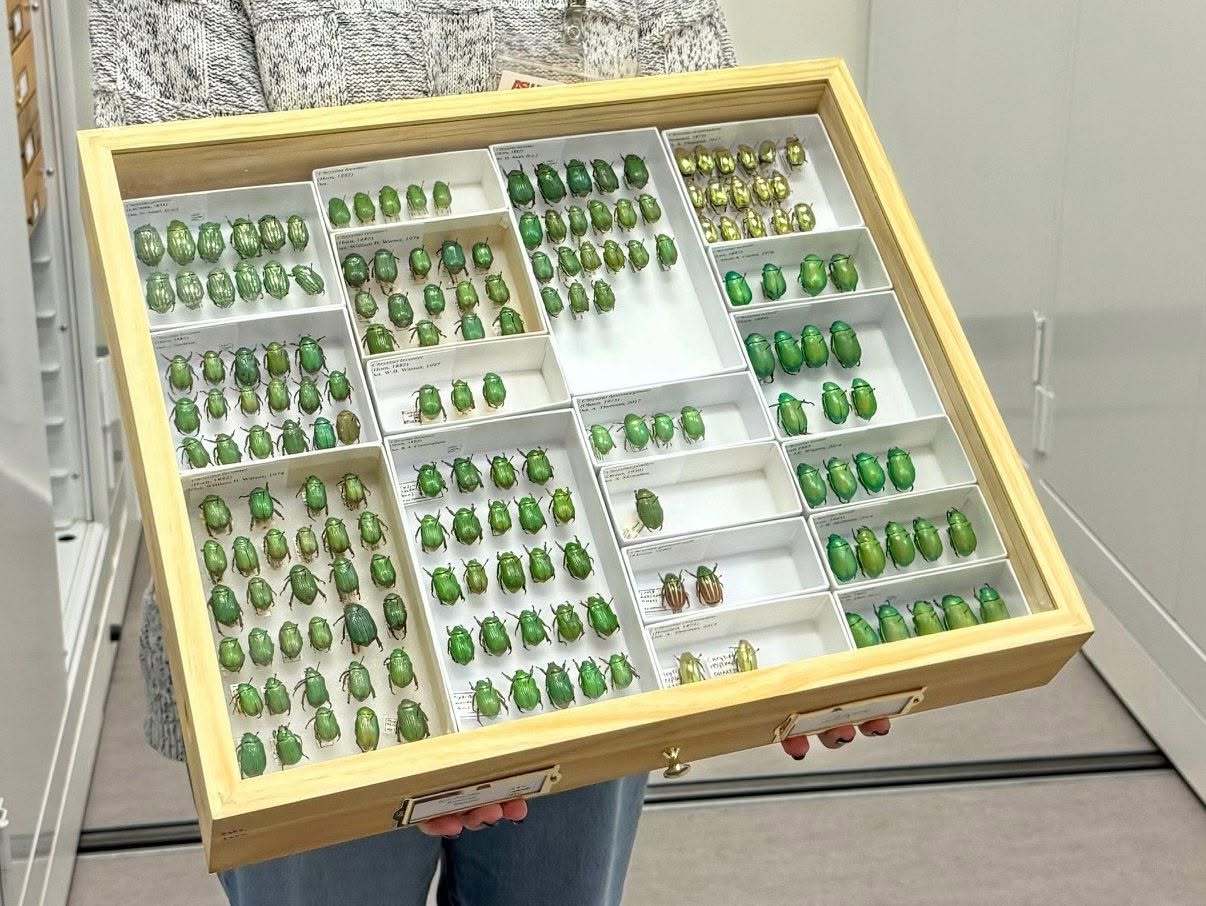
- Cataloging Museum Specimens: Elizabeth Postema, Ph.D., at the Field Museum, employed AI for digitizing and analyzing insect specimens. The technology accelerates cataloging and enables detailed study of traits such as insect coloration. However, it is most effective as a tool that supplements—rather than replaces—expert human curation.
- Studying Dominance Hierarchies in Social Insects: Ted Pavlic, Ph.D., of Arizona State University, leveraged AI to investigate how complex social structures, such as ant hierarchies, emerge from simple behaviors. AI allowed for sophisticated modeling and analysis, but results require validation by humans to ensure biological authenticity.
- Enhancing Scientific Publications: AI is also being applied to the publishing pipeline, from drafting manuscripts to supporting peer review. The ESA Publications Council, for example, has developed guidelines on responsible AI use in research and editing to maintain transparency and integrity.
Balancing Innovation with Oversight
These examples underscore the tremendous promise of AI in entomology: increased efficiency, expanded research capabilities, and democratized access to advanced tools. Routine tasks like translation, specimen cataloging, and data analysis are being accelerated, freeing up scientists’ time for creative and novel research questions.
However, the adoption of AI also comes with risks. Mistakes in AI-generated translations or misclassified specimens can undermine research quality. Overreliance on generative AI outputs without adequate validation can lead to scientific inaccuracies. Symposium participants agreed that while AI is a powerful ally, its outputs must always be tempered by expert human judgment.
The Future of AI in Entomology
AI’s role in entomology is just beginning to unfold. As technology evolves, so too will its applications in insect science. The current consensus among entomologists is one of cautious optimism: AI can accelerate discovery, reduce tedious manual work, and expand the frontiers of entomological research, but only if paired with rigorous oversight and a commitment to scientific integrity.
In summary, AI in entomology is not about replacing scientists—it’s about empowering them to do more, ask bigger questions, and focus on the uniquely human aspects of creativity and insight that machines cannot replicate. As new challenges and opportunities arise, entomologists themselves will continue to guide how AI is responsibly integrated into their field.
This article is inspired by content from Original Source. It has been rephrased for originality. Images are credited to the original source.