

The Rise of AI in Modern Policing
Police departments across the United States are rapidly adopting police AI tools to streamline their work, from drafting reports to analyzing massive amounts of digital evidence. As body cameras, surveillance systems, and digital records generate more data than ever before, artificial intelligence is proving invaluable for law enforcement agencies seeking efficiency and accuracy in their daily operations.
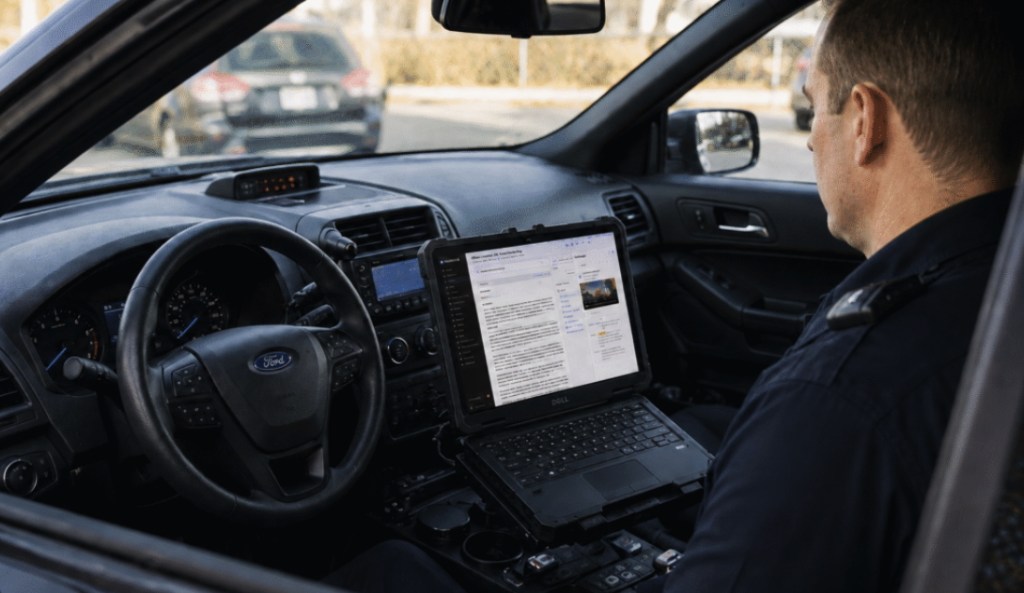
One notable example is the ReportAI interface developed by Mark43, which can transcribe body-camera footage directly into police reports. Such police AI tools are reshaping how officers complete administrative tasks, allowing them to spend more time in their communities and less on paperwork.
Surveillance, Data Analysis, and Civil Liberties
During large public events, such as protests, police may deploy drones, traffic cameras, and license plate readers to monitor crowds and document activities. With police AI tools, hundreds of hours of video can be analyzed within minutes, making it easier to identify individuals or vehicles after the fact. While these advancements help solve cases faster, they also raise significant concerns about privacy and civil liberties.
Civil rights advocates and legal scholars warn that widespread use of AI in policing could amplify surveillance, introduce biases, and complicate the legal process for challenging evidence. Rachel Levinson-Waldman, director of the liberty and national security program at the Brennan Center for Justice, notes, “These tools could supercharge surveillance and enforcement in ways that are deeply concerning.”
The Evolution of Police AI Tools
AI in policing is not entirely new. Tools like facial recognition, automated license plate readers, and predictive policing models have been used for years. What has changed is the speed and sophistication of modern police AI tools. Today’s systems can rapidly sort through extensive digital records—ranging from jail calls and social media posts to bodycam footage—spotting patterns or leads that might otherwise be missed.
Andrew Guthrie Ferguson, a law professor and author, points out that AI’s growing ability to process and interpret data gives police and prosecutors unprecedented power, potentially shifting the balance of oversight and accountability. Critics caution that errors or biases in AI-generated outputs could have lasting impacts, especially if officers place undue trust in these technologies.
Regulating AI in Law Enforcement
Regulation of police AI tools is still catching up with the technology. While some states—such as California and Utah—have enacted laws requiring disclosure when generative AI is used in police reports, a consistent national framework does not yet exist. More than a dozen states have also regulated related technologies like facial recognition and automated surveillance tools.
Major companies in this sector—Axon, Motorola Solutions, TRULEO, Flock Safety, Clearview AI, and Mark43—offer platforms that analyze bodycam footage, sift through case files, and identify suspects using advanced algorithms. Mark43, for example, serves over 300 public safety agencies with tools designed to reduce administrative workload through features like ReportAI and BriefAI. These police AI tools allow agencies to choose which functions to enable and maintain audit logs for transparency.
Concerns Over Misuse and Bias
Despite the benefits, there have been cases of police officers misusing automated surveillance tools for personal reasons, including tracking acquaintances or rivals. Flock Safety, one of the largest providers of license plate readers, has faced scrutiny as some cities reconsider contracts due to concerns about privacy and data sharing. The company claims misuse is rare and highlights audit logs as a safeguard, but the debate continues.
Experts also worry about the rise of “agentic policing,” where AI systems synthesize data from cameras and records to generate investigative leads or even suggest suspects. While final decisions remain with human officers, the influence of these recommendations could make investigations less transparent and more difficult to challenge in court.
Implementing Safeguards and Human Oversight
To address these issues, experts recommend mandatory human verification of all AI-generated content, clear disclosure when AI is used, independent auditing, and extensive training for both law enforcement and legal professionals. The Council on Criminal Justice has released a framework calling for rigorous validation, performance monitoring, and enforceable standards to ensure human oversight remains central to the investigative process.
Some police departments are proceeding cautiously, piloting police AI tools for non-emergency call handling, translation, and report writing to evaluate their effectiveness and risks. In states like Maryland, Arkansas, and Hawaii, agencies are developing centralized platforms to enhance public safety while prioritizing transparency and community engagement.
The Future of Police AI Tools
The adoption of police AI tools is transforming law enforcement, offering new opportunities to improve efficiency and solve cases. However, the speed of innovation outpaces regulatory frameworks, creating urgent questions about privacy, accountability, and the balance between technology and human judgment. As agencies move forward, careful oversight and robust safeguards will be critical to ensuring police AI tools serve the public interest without undermining civil liberties.
This article is inspired by content from Original Source. It has been rephrased for originality. Images are credited to the original source.