

Administrative Assistants Face a Changing Landscape
The landscape for administrative assistants is rapidly shifting as AI for administrative tasks becomes increasingly prominent. With job numbers for secretaries and administrative assistants already in decline, artificial intelligence tools like ChatGPT and Claude are now automating many aspects of their workload. These changes present both challenges and opportunities for professionals in this field, prompting a closer look at how administrative assistants are adapting to the era of AI.
The Decline in Administrative Roles and AI’s Impact
Over the past two decades, the number of administrative assistants has fallen significantly. In 2004, there were about 3.5 million people in this profession, with nearly 97% being women. By 2024, this figure dropped to 2.1 million, despite overall workforce expansion. Experts, including those at the U.S. Bureau of Labor Statistics, attribute much of this decline to productivity-boosting technologies. Now, AI for administrative tasks is accelerating this trend, making certain tasks quicker and easier to automate.
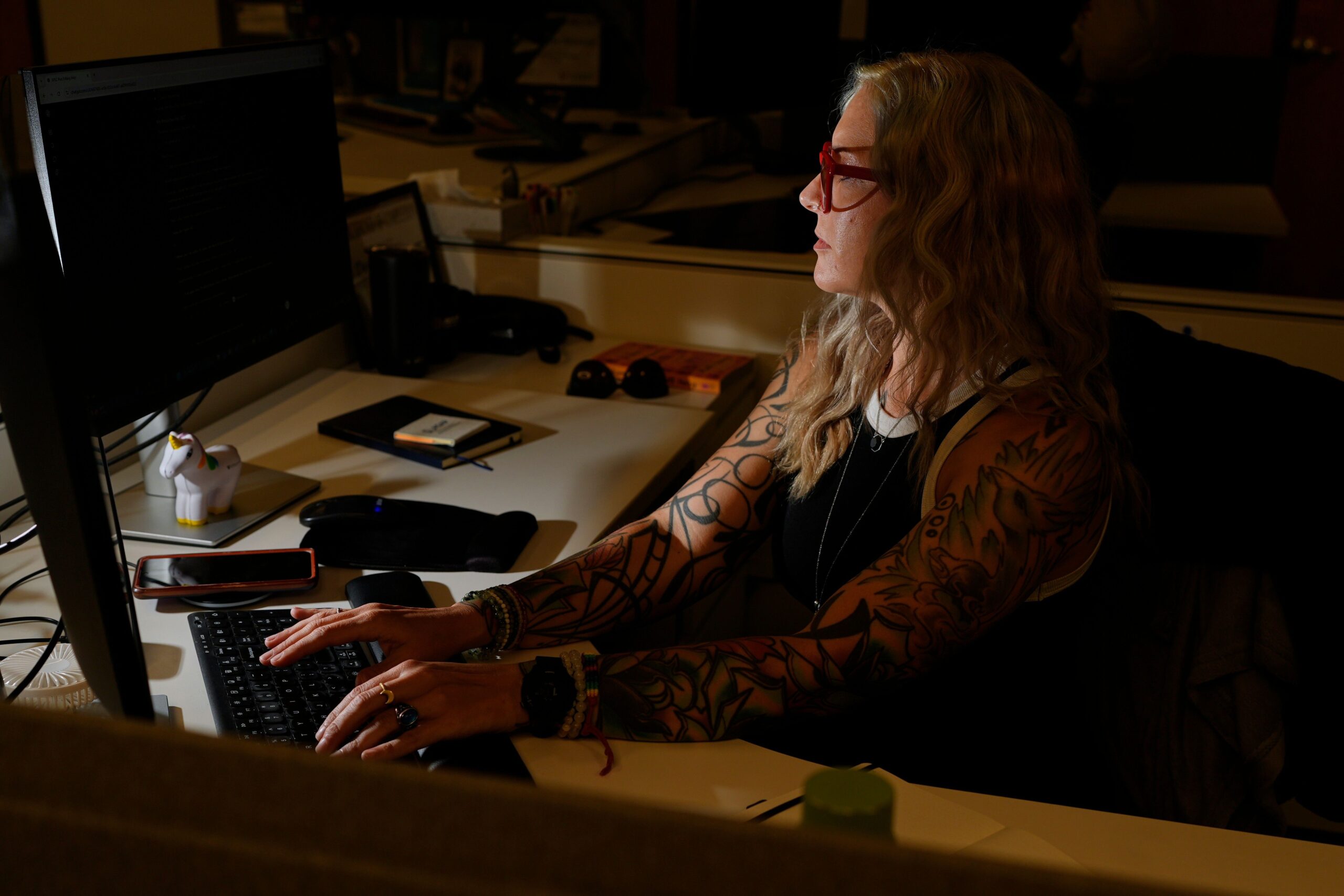
For instance, Deanna Danger, an administrative professional at Vanderbilt University, began using AI in 2022. She now uses tools like Copilot and ChatGPT to take meeting notes, allowing her to engage more actively in discussions rather than typing everything out. “What used to take me hours I’m now done with in under five minutes,” Danger explains. Her experience reflects a broader pattern: AI is not just a threat but a tool that, when used strategically, can empower admins to handle more complex responsibilities.
Embracing AI as a Competitive Advantage
Some administrative assistants are leveraging AI to give themselves a competitive edge. Danger, for example, participates in a biweekly virtual coffee chat hosted by the American Society of Administrative Professionals. Here, members share creative AI use cases, such as designing flyers, scouting venues, generating social media captions, and drafting standard operating procedures. These discussions highlight the many ways AI for administrative tasks can streamline workflows and free up time for higher-value activities.
Fiona Young, founder of Carve, a business specializing in AI training for executive assistants, notes a surge in demand for her services since 2023. She has trained professionals at major companies like Google and Amazon to not only understand AI but to integrate it into their daily routines. According to Young, employers now expect staff to genuinely utilize AI as an integral part of their work, not just as a novelty.
AI as a Tool, Not a Replacement
Despite AI’s growing capabilities, many industry leaders emphasize that it cannot fully replace the human aspects of administrative work. Oana Manolache, CEO of Sequel.io, insists that while AI can automate repetitive tasks, it cannot replicate the emotional intelligence, relationship-building, and nuanced communication skills required for success in these roles. Her executive assistant, Stephanie Martinez, uses AI to handle note-taking and meeting preparation, which allows her to focus on strategic tasks that require creativity and human judgment.
Martinez, who works remotely from El Salvador, demonstrates how AI for administrative tasks can be used to tackle projects such as identifying and reaching out to customers for software reviews—a process that would have been far more time-consuming without AI. By automating routine work, Martinez can devote more energy to building team connectivity and supporting executives in complex ways.
Training and Gender Dynamics in the AI Era
The transition to AI-powered administrative work requires effective training and support. Melissa Peoples, an executive assistant coach, underscores the need for admins to “find their voice” and use AI to increase their impact and job security. She notes that gender dynamics can complicate this transition, as many female admins work alongside male leaders and may face outdated perceptions of their capabilities. However, those who embrace AI and partner with supportive executives are “crushing it,” leveraging technology to elevate their roles and protect themselves from future job displacement.
The Future of Administrative Work with AI
While the outlook for traditional administrative jobs may seem uncertain, those who adapt and learn to use AI for administrative tasks are finding new opportunities for growth and leadership. As technology continues to reshape the profession, the most successful administrative assistants will be those who evolve—using AI not as a replacement, but as a powerful ally in their daily work.
This article is inspired by content from Original Source. It has been rephrased for originality. Images are credited to the original source.