

The Paradox of Gen Z and AI on Campus
AI cheating in college has emerged as a complex and controversial issue in higher education. While college students frequently express frustration—sometimes even booing commencement speakers who celebrate artificial intelligence—their classroom behavior reveals a different story. Many are turning to AI tools to complete assignments or even to cheat on exams, creating a paradox that defines the relationship between Gen Z and artificial intelligence.
Public Backlash and Private Adoption
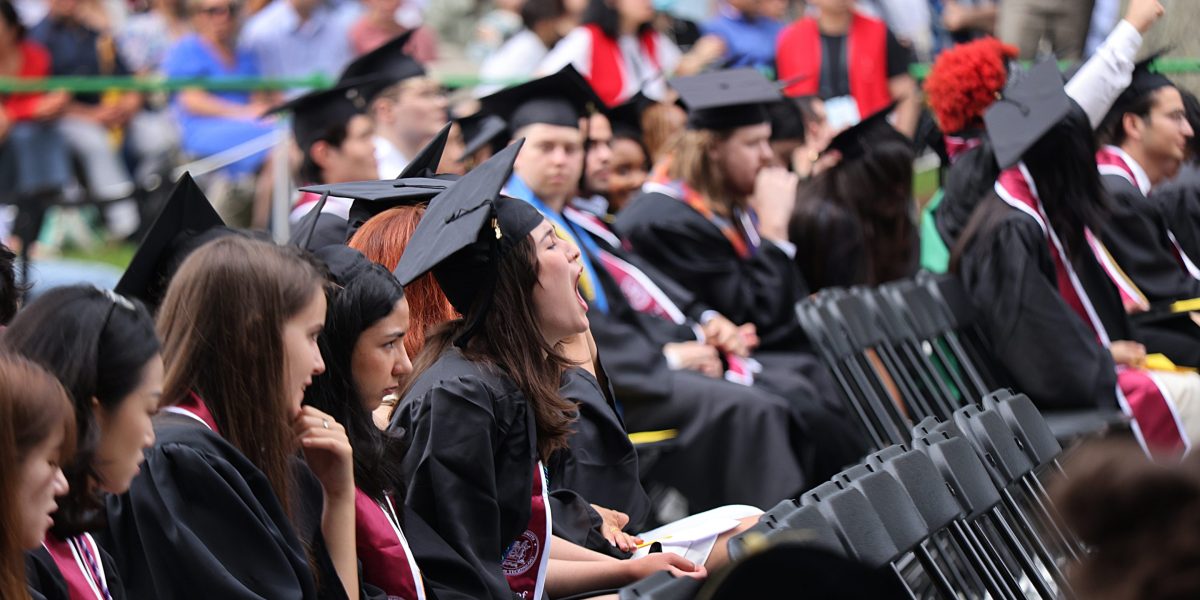
Recent graduation ceremonies have highlighted the tension. When former Google CEO Eric Schmidt spoke at the University of Arizona and discussed the inevitability of an AI-driven future, his comments were met with hisses and boos from students. Similarly, at the University of Central Florida, a speaker’s reference to the “next industrial revolution” brought on by AI prompted jeers from the audience. Despite these public displays of disapproval, a 2026 Lumina Foundation-Gallup study found that 57% of U.S. college students use AI tools weekly for their coursework, and 20% rely on them daily.
This contradiction extends into the classroom, where incidents of AI cheating in college are increasingly reported. For example, Jacob Shelley, a health law professor at Western University, observed that an unusually high percentage of students aced multiple-choice exams while struggling on essay portions—a sign that AI assistance may have played a role. Other institutions, such as Princeton University, have responded by revoking long-standing honor codes and increasing exam proctoring to combat the rise in AI-driven academic dishonesty.
The Roots of Cognitive Dissonance
Experts argue that this apparent hypocrisy is actually a form of cognitive dissonance. Maitraye Das, a computer science professor at Northeastern University, has studied Gen Z’s conflicting attitudes towards AI. Her research indicates that although students worry about AI undermining their learning and critical thinking, the pressure to keep up with peers who use AI tools often outweighs these concerns. According to Das, the fear of falling behind in a precarious job market is a powerful motivator for students to continue using AI, even if it means compromising their values.
Stanford University student Theo Baker echoed these sentiments, writing that cheating has become “omnipresent” on his campus. The rapid adoption of AI in the workplace and academia has left many students feeling like they have no choice but to embrace the technology, or risk being left behind both academically and professionally.
AI’s Influence on the Job Market and Education
The anxiety surrounding AI cheating in college is compounded by broader fears about job displacement. Reports suggest that AI could eventually automate the vast majority of tasks in fields like business, finance, and computer science. This uncertainty is already reflected in the job market, where tech layoffs have soared and students worry about their future employability.
Some experts believe that the surge in AI cheating is less about endorsing the technology and more about survival. Students, feeling the pressure from both a challenging job market and an education system slow to adapt, may view AI as a necessary tool to keep up. Shelley, the law professor, argues that the responsibility lies not only with students but also with institutions that have encouraged AI use while failing to provide clear guidance on its ethical application.
Institutional Responses and Societal Impact
Colleges and universities are beginning to respond to the rise of AI cheating in college. For instance, Arizona State University has partnered with OpenAI to explore the use of AI in education, but overall financial support for students has declined, forcing many to juggle part-time jobs alongside their studies. With time at a premium, students increasingly turn to AI to meet academic demands.
Das notes that educational institutions have been slow to provide upskilling opportunities or to clearly communicate which new roles AI might create. As a result, students often feel disenfranchised and unsure about how best to prepare for the future. The proliferation of AI in both classrooms and workplaces, combined with mixed messages from corporate and academic leaders, leaves many students conflicted about their own use of the technology.
Looking Ahead: Balancing Technology and Integrity
Ultimately, the issue of AI cheating in college is symptomatic of larger societal challenges. Rather than blaming students, experts say the focus should be on providing better guidance, education, and support as they navigate these uncharted waters. As AI continues to reshape both education and the job market, colleges must help students develop the skills and values needed to thrive—without resorting to shortcuts that could undermine their long-term success.
This article is inspired by content from Original Source. It has been rephrased for originality. Images are credited to the original source.