

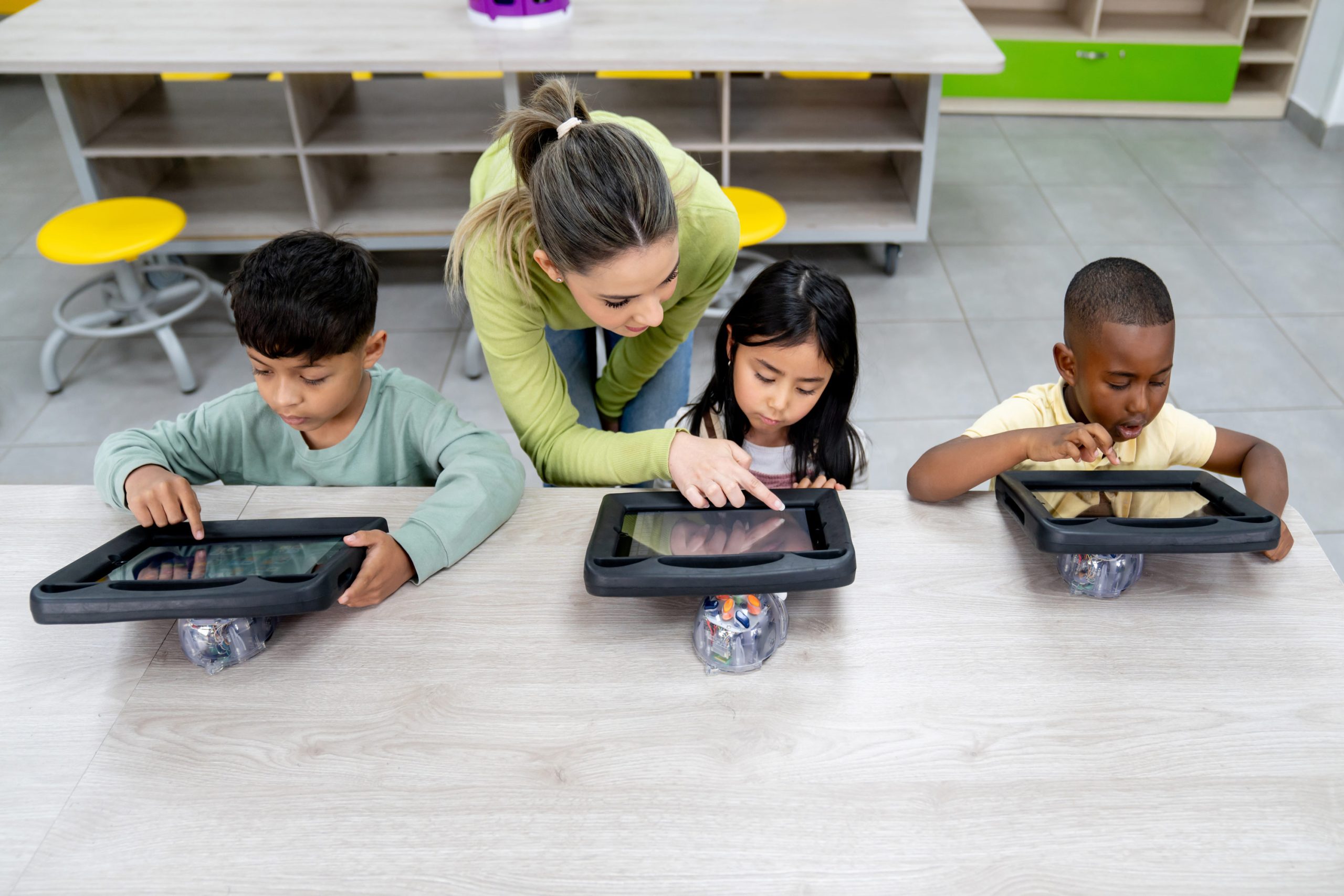
Exploring the Future of AI in Classrooms
AI in classrooms is rapidly reshaping the educational landscape, offering both promising advantages and significant challenges. Recent education conferences in California brought together experts, educators, and industry leaders to discuss the evolving role of artificial intelligence in teaching and learning environments.
At gatherings such as the American Educational Research Association (AERA), National Council on Measurement in Education (NCME), and the ASU+GSV Summit, participants examined the impact of AI on student outcomes, teacher roles, and educational equity. These discussions revealed a nuanced picture: while AI tools hold transformative potential, their integration into real-world classrooms remains complex.
AI Skepticism and Human Oversight
One recurring theme was the critical importance of human oversight when using AI in classrooms. Victoria Yaneva, director of data science and AI at the National Board of Medical Examiners, highlighted research suggesting that educators who are enthusiastic about AI may be less likely to spot errors generated by these systems. Conversely, AI skeptics are often better at catching inaccuracies or biases, underscoring the value of diverse perspectives in ensuring safe and effective use of technology in education.
Further, a review of over 250 studies on AI-generated test questions and grading found that only one examined potential biases against specific student groups. This significant oversight, according to John Whitmer of Learning Data Insights, points to a broader need for rigorous research and careful scrutiny as AI tools become more prevalent in classrooms.
Shifting Expectations for AI in Education
While previous years at the ASU+GSV Summit echoed the mantra that “AI will transform everything,” this year’s mood was more cautious. AI in classrooms remains a hot topic, but there’s growing awareness of the practical challenges. Superintendents and school leaders voiced concerns about shrinking budgets and the need for evidence-based investment, signaling an end to the era of “buy and try” technology adoption.
Dan Meyer of Amplify, an educational curriculum provider, captured this shift by noting that AI tutors, once heralded as revolutionary, are not being used by students as much as anticipated. Many students are not engaging with AI tools in ways that promote meaningful learning, raising important questions about user adoption and the actual impact on educational outcomes.
Teacher Training and Practical Integration
Despite these hurdles, major ed tech companies are pivoting toward supporting teachers in the integration of AI in classrooms. Google is introducing “snackable, stackable” resources—bite-sized approaches that allow teachers to experiment with AI without overhauling their entire curriculum. Apple is also expanding its network of educators who can serve as coaches, guiding their colleagues in leveraging AI technology effectively.
These efforts reflect a growing understanding that successful implementation of AI in classrooms depends on teacher buy-in, professional development, and practical, incremental changes rather than sweeping reforms.
Emerging Evidence and Ongoing Research
Industry research continues to shed light on the real-world efficacy of AI in classrooms. A recent exploratory study reported positive outcomes from an AI-powered math tutor that provided instant feedback, helping students quickly recognize and correct their misconceptions. This tool, powered by Google’s AI technology, demonstrated measurable gains in learning for participants.
However, a much larger study involving 1,600 students is now underway, with results expected later this year. These findings will be critical in determining whether AI in classrooms can deliver sustained improvements at scale and whether students will engage with these tools in ways that truly enhance their education.
The Path Forward for AI in Classrooms
As the education sector stands at a crossroads, the future of AI in classrooms will be shaped by research, thoughtful implementation, and a commitment to equity and evidence-based practice. While AI offers the promise of personalized learning and increased efficiency, its success depends on addressing challenges related to bias, adoption, and real-world classroom dynamics.
Ultimately, the central question remains: can AI in classrooms not only improve how students learn, but also inspire them to utilize these tools in meaningful ways? As new research emerges and educators continue to experiment and adapt, the answers will shape the next chapter in educational innovation.
This article is inspired by content from Original Source. It has been rephrased for originality. Images are credited to the original source.