

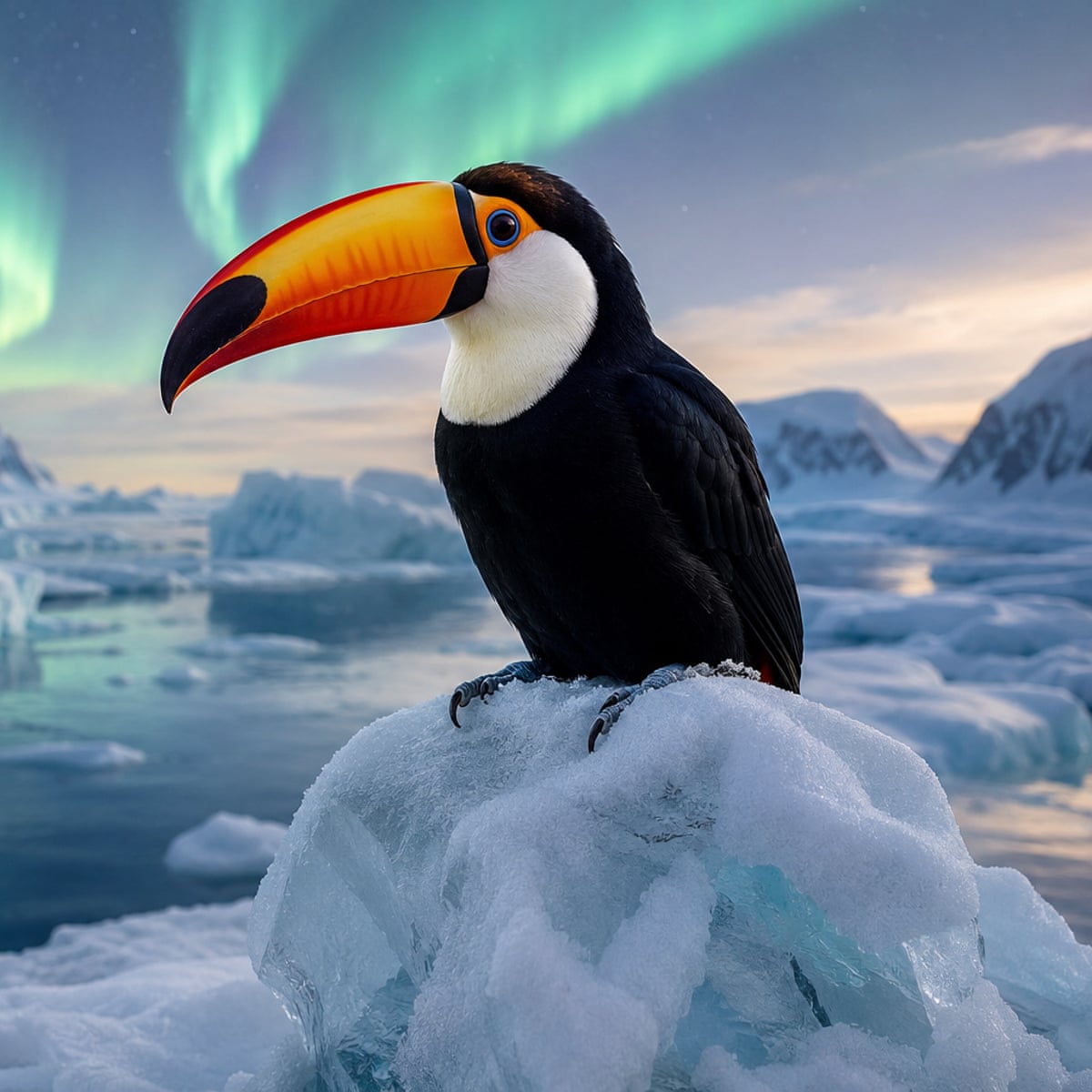
AI-Manipulated Bird Images: A Growing Challenge
AI-manipulated bird photos are increasingly appearing on popular birdwatching platforms, raising concerns about their impact on scientific research and the integrity of citizen science data. As the use of artificial intelligence expands in wildlife photography, experts are warning that these altered images could contaminate vital repositories used by researchers worldwide.
The Appeal and Risks of Birdwatching Photography
For birdwatchers, capturing a rare species outside its usual habitat is a major accomplishment, often celebrated in online forums and national headlines. Recent sightings, such as the western reef heron in North Wales, spotlight the excitement and credibility associated with genuine discoveries. However, the rise of generative AI tools like ChatGPT and Google Gemini is making it easier for users to create high-quality fake images or enhance real photographs, sometimes introducing misleading details that can easily go unnoticed.
Impact on Research and Citizen Science Platforms
Platforms such as iNaturalist and the Macaulay Library rely on public contributions of wildlife images to track species distribution and migration. These citizen science platforms are essential for monitoring environmental changes and informing conservation strategies. Yet, the proliferation of AI-manipulated bird photos is undermining the reliability of these databases. Scientists have already discovered hundreds of fake or altered images in popular species-recording databases, but the actual number could be much higher, as many cases likely slip through undetected.
Dr. Alexander Lees, an ecologist at Manchester Metropolitan University, highlights the problem: “My experience of looking at Facebook these days is that a huge volume of wildlife photos are now simply AI-generated imagery.” While outright hoaxes—like a toucan sighting in Siberia—are often easy to debunk, more subtle edits can be difficult to detect. Even minor enhancements, such as removing an obstructing branch, can lead to the accidental creation of hybrid images that misrepresent a species’ appearance or location.
Case Studies: When AI Alters Bird Sightings
One notable case involved a photo of a supposed red-winged blackbird in central Brazil, a species typically found in North America and never previously recorded in that region. Upon closer examination, the bird was actually an epaulet oriole, a common local species. The photographer had used an AI tool to “improve” the image, inadvertently introducing features of the red-winged blackbird. Such mistakes can have significant repercussions for scientific records and ecological studies, as they can skew data about species distribution and migration patterns.
The Scale of the Problem and Community Response
So far, iNaturalist has flagged only 1,400 out of more than 610 million images for potential AI manipulation. Tony Iwane, iNaturalist’s director of community support and co-author of a recent paper on the topic, acknowledges that most of these cases are not malicious but stresses the importance of vigilance. “On platforms like ours, regular people are posting information that a scientist could probably never get at scale. It is almost like a sensor of what is happening on Earth in real time,” Iwane explains. However, he emphasizes that the value of citizen science depends on the accuracy of the data submitted.
Preserving Data Integrity in Citizen Science
Citizen science has enabled groundbreaking discoveries, from tracking the effects of climate change on plant flowering times to documenting the movement of animal populations. The growing presence of AI-manipulated bird photos threatens to erode trust in these platforms and the research that depends on them. Scientists and platform administrators are encouraging users to limit their use of AI when editing wildlife images and to be transparent about any modifications made.
Conclusion: Safeguarding Scientific Research
As the capabilities of AI image generation continue to advance, the risk posed by AI-manipulated bird photos to citizen science and ecological research increases. Maintaining the integrity of wildlife databases is crucial for understanding our changing environment and making informed conservation decisions. Both casual birdwatchers and experienced researchers must work together to ensure that the data driving scientific discovery remains as accurate and authentic as possible.
This article is inspired by content from Original Source. It has been rephrased for originality. Images are credited to the original source.