

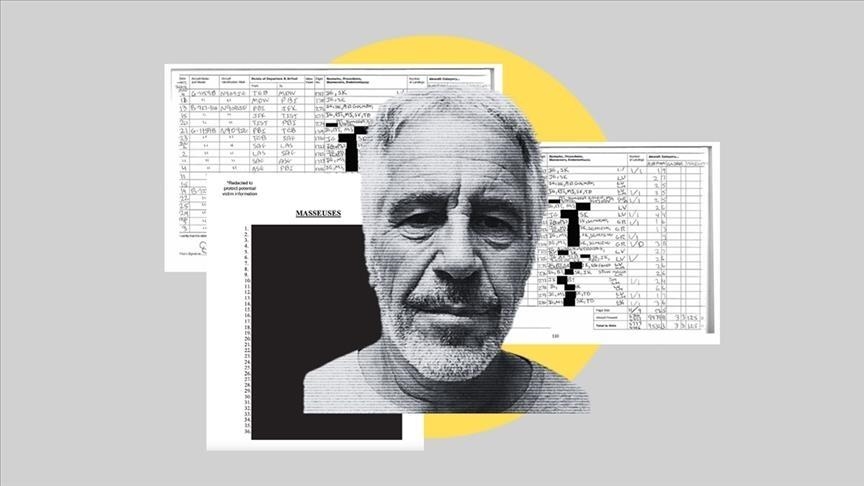
Jeffrey Epstein’s Financial Ties to AI Researcher Revealed
Newly unveiled documents have shed light on the financial involvement of disgraced financier Jeffrey Epstein in the development of artificial intelligence research projects. According to a report by the South China Morning Post, Epstein played a pivotal role in helping prominent American computer scientist Ben Goertzel secure at least HK$8.9 million (approximately $1.14 million) in funding from the Hong Kong government.
The report highlights that between 2010 and 2015, Epstein provided at least $113,000 in financial support to Goertzel’s open-source AI initiative. This support was facilitated through the US-based non-profit Humanity+, which transferred the funds to Novamente, a company owned by Goertzel.
Strategic Funding to Meet Government Criteria
This financial backing was not merely philanthropic. Under the rules of Hong Kong’s Innovation and Technology Fund, research projects are required to secure at least 10% of their total costs from an industry sponsor to qualify for public funds. With Epstein’s money acting as seed funding via Novamente, Goertzel’s projects became eligible for government grants.
According to the report, three Hong Kong Polytechnic University (PolyU) projects associated with Goertzel received HK$8.9 million in public funding between 2010 and 2016. The funding helped sustain projects focused on advanced AI research, including those connected to Hanson Robotics, the company behind the famed humanoid robot Sophia.
Communications Reveal Ongoing Financial Requests
Emails released by the US Department of Justice show that Goertzel actively pursued financial assistance from Epstein over the years. In a 2011 email, Goertzel wrote, “Let me know if you’re game to donate the additional $10K. If not, I will explore other options … I really can’t afford $10K personally right now.”
In 2015, amid growing public scrutiny of Epstein’s criminal background, Goertzel sought another $25,000. Although an assistant initially replied that funding was suspended due to the “current environment,” Epstein eventually authorized the transfer later that same day.
Correspondence between the two men continued until at least 2018, just a year before Epstein’s arrest on federal sex trafficking charges. Epstein was later found dead in a Manhattan jail cell in 2019 under circumstances that continue to fuel speculation and investigation.
Goertzel Expresses Regret Over Association
Goertzel, known for his advocacy of artificial general intelligence (AGI), later expressed deep regret over his association with Epstein. In comments to the South China Morning Post, he stated, “Looking back, I regret knowing the guy, or taking his money, or having anything to do with the guy.”
He further elaborated on the difficulties of securing funding for AGI research during that period, saying, “The reason any scientist dealt with Jeffrey Epstein was very simple – getting research money is hard. Particularly back at that time … getting research money for AGI was almost impossible. When your research has essentially no funding, it’s hard to say no.”
Epstein’s Broader Influence on Scientific Research
Epstein’s financial patronage extended beyond AI. Over the years, he developed relationships with numerous scientists and institutions, often using his wealth to gain access to elite academic circles. His involvement in scientific funding has come under renewed scrutiny in the wake of his criminal investigations and subsequent death.
Goertzel’s case adds another layer to the complex narrative of how Epstein used his fortune to embed himself in the scientific community, raising ethical questions about the sources of funding in academic research.
Ongoing Debate About Research Ethics
The revelations have reignited discussions around the ethical responsibilities of researchers when accepting funding. While many scientists, like Goertzel, may not have been aware of the full extent of Epstein’s criminal activities at the time, the association now casts a long shadow over their work.
As funding for cutting-edge research continues to be a challenge, the scientific community faces increasing pressure to establish more transparent and ethical funding sources. Goertzel’s experience serves as a cautionary tale about the potential consequences of overlooking the background of financial benefactors.
This article is inspired by content from Original Source. It has been rephrased for originality. Images are credited to the original source.