

Innovative Smart Glasses for Real-Time ASL Translation
Two North Texas high school seniors, Shiven Velagapudi and Aadi Sanghvi, are breaking new ground in sign language translation technology. Driven by a passion for problem-solving and inspired by personal experience with hearing loss in their families, the teens have developed an application called Hand Wave. This innovative software translates American Sign Language (ASL) in real time, leveraging smart glasses equipped with an integrated camera.
Origins of the Hand Wave Project
The idea for Hand Wave did not originate in a classroom or a formal research lab. Instead, Velagapudi and Sanghvi transformed a home office into their makeshift artificial intelligence lab. They spent months programming and training their machine learning application to recognize and translate ASL letters and phrases. Their goal: to bridge the gap between the ASL community and those who do not understand sign language.
“This was completely unrelated to school. We picked this up for fun, mainly because we saw a real-world problem we wanted to solve,” Velagapudi said. The necessity for sign language translation technology became apparent through their own families—Sanghvi has an uncle who communicates using ASL, while Velagapudi’s father experienced sudden hearing loss in one ear.
How the Technology Works
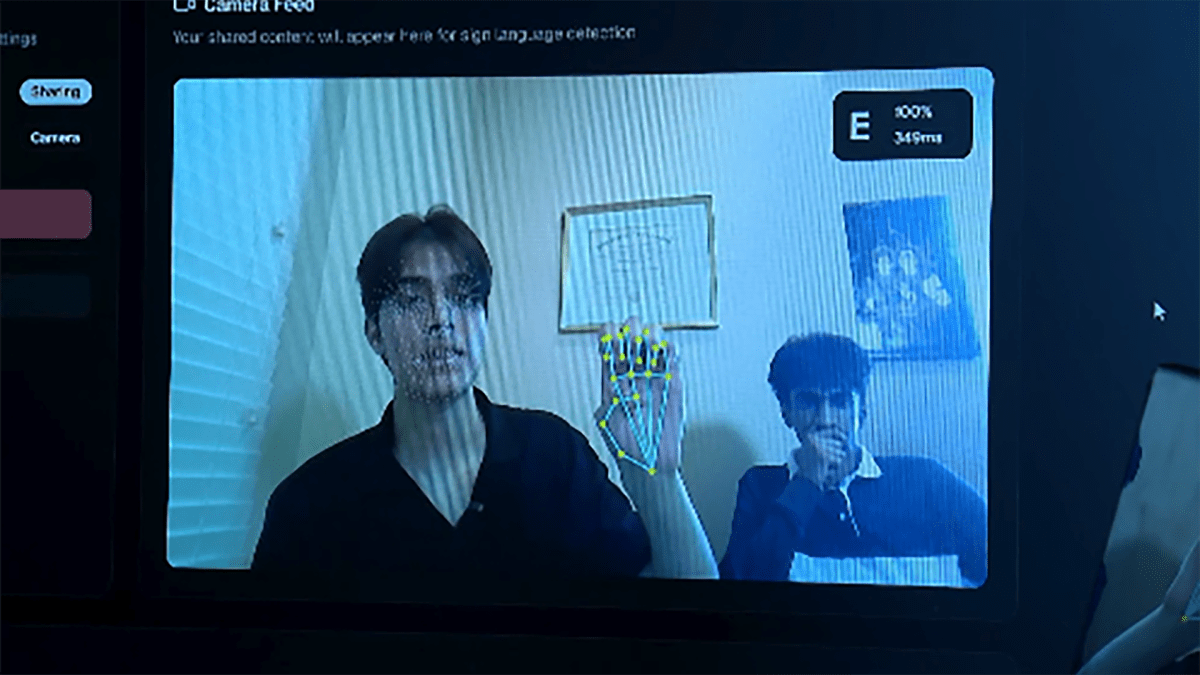
Hand Wave works through smart glasses that feature a built-in camera. This camera captures hand movements and gestures, which the application then processes using advanced machine learning algorithms. The gestures, appearing like a digital hand skeleton, are instantly translated and delivered via audio to the user’s ear. As Sanghvi explained, “I can look at you, and behind the camera, you can be signing. I can hear the translations live in my ear.”
This real-time translation is a major step forward in sign language translation technology, allowing seamless communication between those using ASL and those who do not. The teens believe this tool will help make the ASL community more accessible and better understood by the wider public.
Bridging Communities and Fostering Understanding
For Velagapudi and Sanghvi, Hand Wave represents more than just a technical achievement—it’s a way to bring people together. “Sign language is what connects these communities, and this technology helps us better understand and connect with them,” Velagapudi said. Their project aims to foster unity and encourage deeper conversations, even about personal topics such as fears, strengths, weaknesses, and dreams.
Sanghvi added, “I think it fosters unity. There are so many things in our world that make it easy to feel divided, but this reminds us that we are more similar than we might expect. Being able to communicate on a human level is something we must strive for.”
Looking Ahead: The Future of Hand Wave
With further development and additional resources, the teens are hopeful about expanding their sign language translation technology project. They envision a future where their prototype is ready for broader use beyond their home office, potentially benefiting countless individuals who rely on ASL for daily communication.
Their determination and innovative spirit have already made a significant impact, proving that meaningful technological advancements can come from anyone with curiosity and commitment, regardless of age or institutional backing.
Empowering Accessibility Through Technology
Hand Wave stands as a testament to the potential of emerging sign language translation technology. By addressing a real-world communication barrier, Velagapudi and Sanghvi are not only helping the ASL community but are also setting an inspiring example for young inventors everywhere. Their work underscores the importance of empathy-driven innovation and the transformative power of technology in fostering inclusion.
This article is inspired by content from Original Source. It has been rephrased for originality. Images are credited to the original source.