

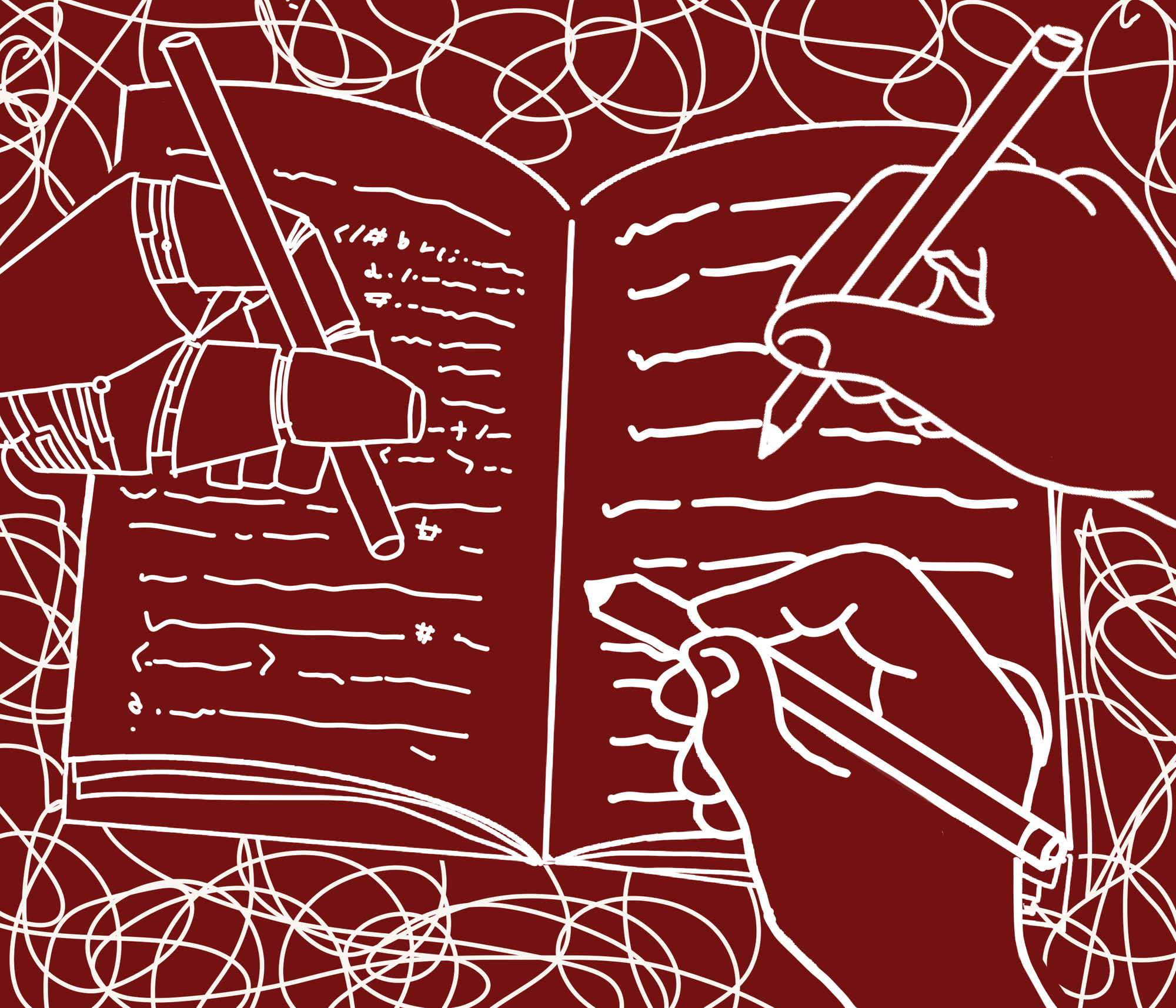
The Impact of AI Notetaking on Student Support Services
Peer notetaking has long been a vital resource for students requiring academic accommodations. But with the rapid advancement of artificial intelligence, questions are emerging: Will AI notetaking replace human peer notetakers, or can both coexist to support diverse student needs?
Aria-Vue L. Daugherty ’29 experienced firsthand the significance of peer notetaking after a severe concussion sidelined her during a debate tournament in Washington, D.C. Returning to Harvard, she relied heavily on the Disability Access Office’s (DAO) Peer Notetaker program, finding human-generated notes more helpful than her own as she recovered. “Being able to go back and look at the notes that someone else had taken for that class was way more helpful than looking at my own notes,” Daugherty shared, emphasizing the essential role of peer notetaking during her recovery.
How Peer Notetaking Supports Accessibility
The DAO offers a $600 stipend per eligible course to students who share lecture notes with peers requiring accommodations. Each year, around 50 undergraduates and graduate students benefit from this service, and for the 2025-26 school year, 84 students were hired as notetakers. This model ensures timely, relevant, and context-rich notes for those who cannot always attend class due to health challenges or disabilities.
Even as AI tools such as Claude, NotebookLM, and Otter.ai become more sophisticated, many students, including Daugherty, continue to trust human notetaking over AI-generated notes. “I’m really scared of hallucinations,” Daugherty admitted, referring to the phenomenon where AI systems produce plausible but inaccurate information. Indeed, research has shown that up to 79 percent of outputs from newer AI systems may contain such errors, which can undermine their reliability for academic purposes.
Strengths and Limitations of AI Notetaking
Some students, like Eman A. Seyal ’26, have experimented with AI transcription tools alongside DAO services. Seyal, who manages rheumatoid arthritis, finds peer notes more “directly oriented” toward coursework. “Peer notes capture not only the content, but also the way the instructor frames key concepts, which is critical,” Seyal explained. She also pointed out that AI often struggles with non-textual information like images, equations, and graphics—elements frequently encountered in academic lectures.
However, the debate is not one-sided. Lia T. Zheng ’27, president of the Harvard Undergraduate Society for Artificial Intelligence, believes AI could match or even surpass the quality of peer notetaking, especially in large lecture-based courses where content is more standardized. “I think that AI could likely be just as good as, if not better, at peer notetaking,” Zheng remarked, highlighting the growing capabilities of AI-driven tools.
Human Elements in Peer Notetaking
Despite AI’s technical advancements, students like Michael Isayan ’29 see intrinsic value in the human element of peer notetaking. Isayan notes that while AI can replicate much of the content, it lacks the unique thought process and subtle cues that come from a student’s lived classroom experience. “Even if AI produces the same work that you as a human being could produce, there is something lost in the sense that you did not think it through,” Isayan observed, suggesting that the act of interpreting another student’s notes can stimulate deeper engagement with course material.
Carolina G. “Callie” Loeffel ’28 echoed this sentiment, noting that in seminar-style courses where so much is transmitted verbally and contextually, AI notetaking may fall short. “The majority of information must be attained from being seated in class,” Loeffel said, indicating the limitations of automated approaches in capturing nuanced discussions.
The Future: Coexistence or Replacement?
As AI notetaking technology improves, proponents like Ege Cakar ’27 argue for its broader adoption within the DAO, citing lower costs and increased accessibility. “It ends up being cheaper and increases the access to people requesting peer note taking,” Cakar stated, emphasizing potential system-wide benefits.
Yet, concerns remain about the loss of income for student notetakers and the risk of eroding genuine human connection in academic support services. Jesus N. Barrios Jr. ’29, cofounder of an AI exam grading startup, cautioned, “The quality of AI and the way it could write notes is not that high, and it’s not the same as a genuine human connection.” Barrios also noted the importance of peer notetaking as a source of income for many students.
Harvard’s DAO recognizes the nuanced needs of its students by offering both peer notetaking and AI transcription services, with senior director Kate Upatham affirming that both have unique value. The challenge ahead lies in balancing technological efficiency with the irreplaceable benefits of human insight—a challenge mirrored in universities nationwide as they navigate the evolving intersection of peer notetaking and AI-powered tools.
This article is inspired by content from Original Source. It has been rephrased for originality. Images are credited to the original source.